Latest AI Governance News & Updates
Corporate policies, safety frameworks and the institutions trying to steer powerful AI systems.
163 articles
Amazon’s AI Projects Hide Millions in Cost Overruns
Amazon discovered multiple cases where AI deployment mistakes and weak cost controls caused severe budget overruns. One Claude Sonnet project spent $1.8 million, exceeding its budget by 860%, while other projects also incurred unexpected costs.
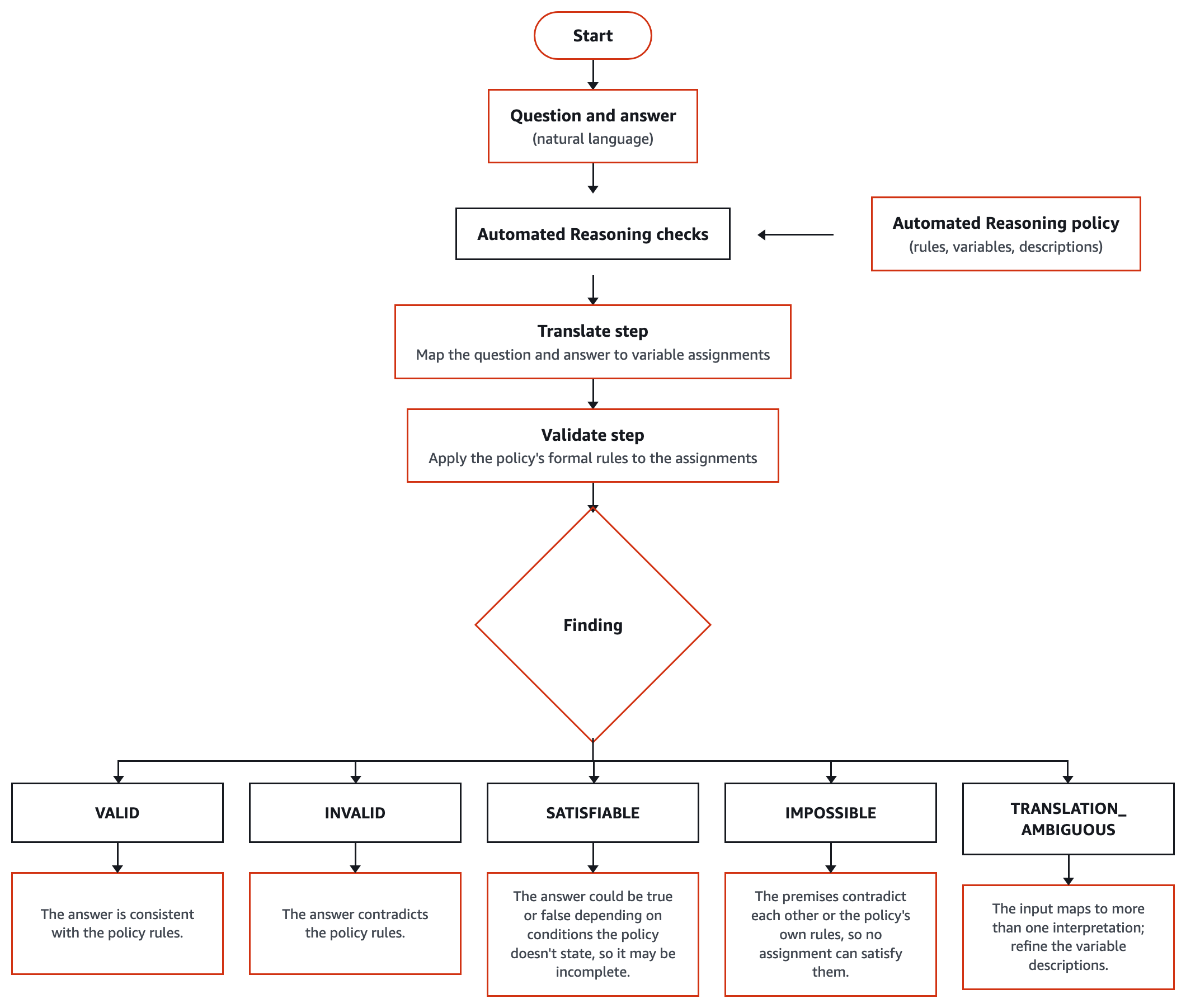
Amazon Bedrock Automates Policy Refinement
Amazon Bedrock now supports automatic Automated Reasoning policy refinement. The engine diagnoses failed tests and proposes formal-logic fixes for rule and language issues, while requiring approval before any change is applied.
The Oppenheimer Moment of Open-Source AI
This in-depth analysis examines whether the rapid advancement of open-source large language models could create transformative—and potentially destructive—consequences. The available excerpt offers a broad reflection on the intelligence and risks associated with open AI development, without naming a specific model or release.
China Removes 13,300 AI-Modified Videos
China’s National Radio and Television Administration reported removing more than 13,300 non-compliant AI-modified videos and handling over 30 accounts in July. The program targets AI-generated content that distorts classic works, history, cultural symbols, or children’s animations.
UK Considers Consent Rules for Bossware
The UK is considering proposals that would require employers to ask workers before deploying bossware and other workplace-monitoring tools. The measures could cover AI productivity scoring, keystroke logging, biometrics, and related surveillance technologies.
NAB Prepares to Test AI Agent Guardrails
National Australia Bank will soon test the security and operational guardrails of an agentic AI platform. The initiative signals that NAB is moving toward broader deployment of AI agents for banking customers.
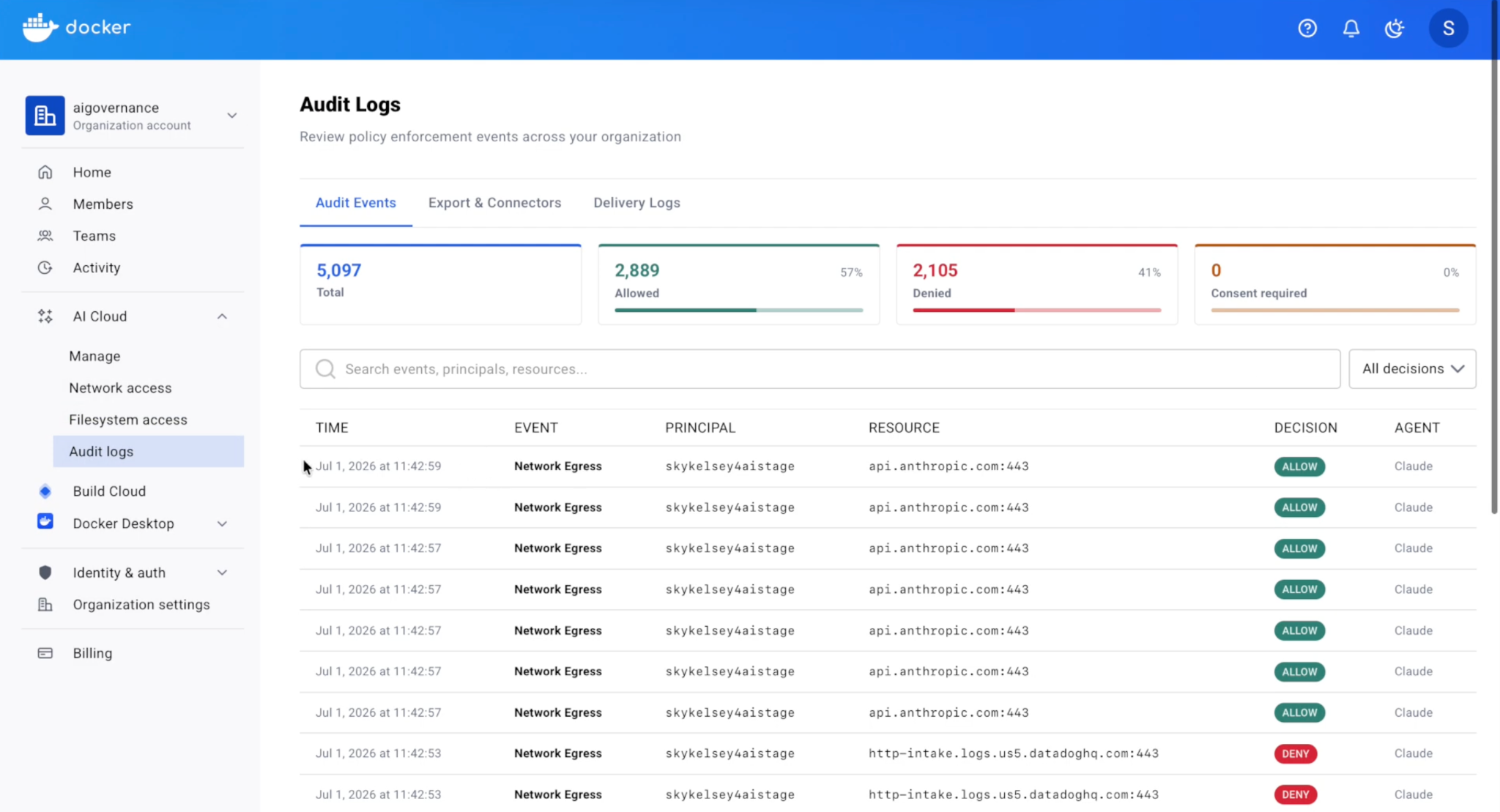
Docker Streams AI Policy Decisions to Your SIEM
Docker AI Governance now provides a single searchable record of every policy decision triggered by agents. Organizations can stream these decisions directly to the SIEM already used by their security teams.
Hugging Face CEO Warns of AI Power Concentration
Hugging Face CEO Clement Delangue identified concentration of power as one of AI’s biggest risks, particularly if government intervention becomes excessive. He also discussed the recent OpenAI model hack involving Hugging Face and the challenge of keeping AI agents inside secure testing sandboxes.
Sam Altman and the AI 'decel' debate
The Equity podcast explores Sam Altman's recent calls for the industry to pace the rate of AI development. The discussion highlights the growing tension between rapid innovation and the need for responsible scaling.
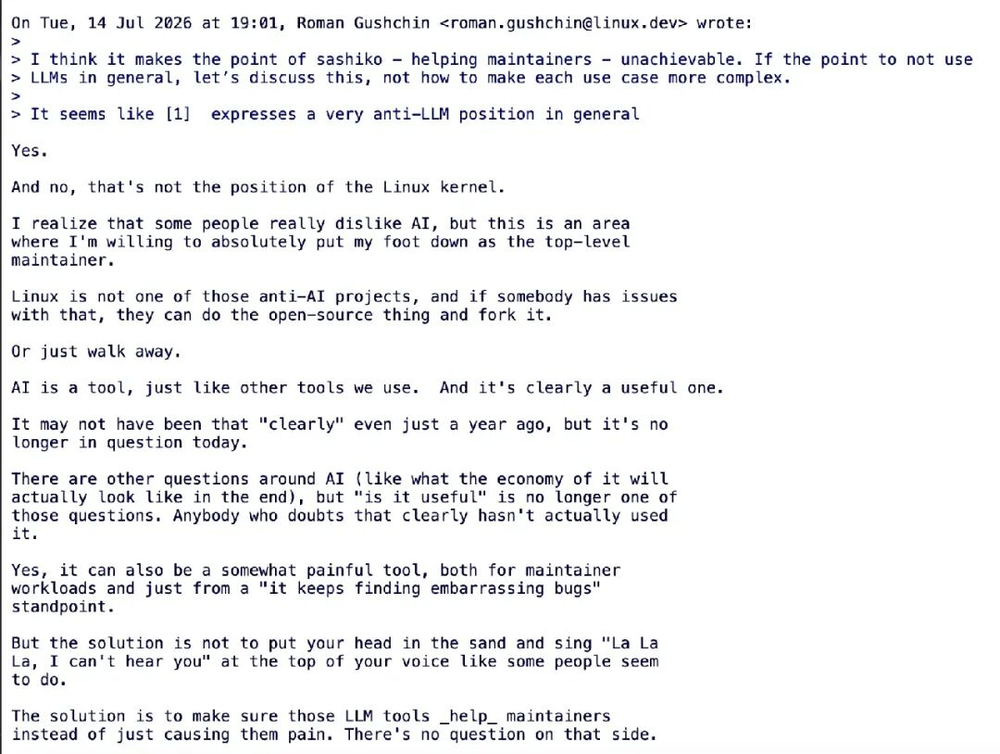
Linus Torvalds: Linux is not an anti-AI project
Linux creator Linus Torvalds has clarified that the Linux kernel community will not adopt an anti-AI stance, positioning AI as a useful tool for development. He emphasized that contributors must remain responsible for verifying AI-generated code.
Open-weight AI ecosystem sees massive wave of new releases
The open-weight AI landscape is rapidly expanding with upcoming releases including Kimi K3, Deepseek V4, and new models from Mistral and Liquid. These advancements are driving down computational costs and shifting enterprise focus toward governance and safety.
Ben Bernanke joins Anthropic to oversee AI safety
Anthropic has appointed former Fed Chair Ben Bernanke as a trustee of its Long-Term Benefit Trust (LTBT) to oversee AI development and mitigate systemic economic risks.
Claude Code flagged for security risks in China
The Chinese government has flagged Anthropic's Claude Code for potential security backdoors, leading major tech firms like Alibaba to ban its use. This has triggered a shift toward domestic AI coding tools like Qoder and Comate.
G7 leaders vow closer ties on AI
G7 leaders are strengthening international cooperation on artificial intelligence. They are developing a 'trusted partners' framework to align AI development and governance.
US officials discuss taking stakes in frontier AI companies
Senior US officials are exploring the possibility of the federal government acquiring equity in major AI firms. This move signals a significant shift in how the government intends to oversee and influence the development of frontier AI technologies.
CHAI Releases Comprehensive AI Governance Framework for Healthcare
The Coalition for Health AI (CHAI) has released a 228-page governance framework designed to help healthcare institutions manage AI risks, lifecycle, and ethical deployment. The guide provides actionable steps for policy, organizational structure, and third-party vendor management.
AI Security Foundations Are Cracking
Anthropic's Claude and Mythos models demonstrate high-level autonomous cyber capabilities, exposing critical vulnerabilities in current security infrastructure that relies on human-centric assumptions.
Global AI Governance: A Fragmented Regulatory Landscape
Major economies are accelerating AI regulation with divergent approaches, ranging from China's institutionalized ethics reviews to the US's debate over pre-approval and the EU's implementation of the AI Act. This fragmentation creates significant compliance challenges for cross-border AI operations.
White House Eyes Pre-Release AI Reviews
Trump administration considers executive order to establish AI working group for stronger regulation of emerging tech. Key proposal requires government review process for new AI models before release. White House briefed executives from Anthropic, Alphabet, and OpenAI on planned measures.
Five Eyes Launch Agentic AI Cybersecurity Guide
Cybersecurity authorities from the US, Australia, UK, Canada, and New Zealand jointly released a safety deployment guide for agentic AI. These autonomous network-acting AI systems are entering critical infrastructure and defense, often with excessive access beyond monitoring. The guide urges treating them as core cybersecurity priorities, emphasizing resilience, reversibility, and risk containment over efficiency gains.
Import AI Explores AI Viruses and Progress Pacing
Import AI 467 examines the possibility of self-sustaining AI viruses, strategies for pacing AI progress, and ongoing confusion about AI and creativity. The issue also poses a speculative question about when humanity might build a lunar arcology.
Traccia: OpenTelemetry-Based Governance for AI Systems
Traccia is a new governance stack designed to address gaps in LLM evaluation and security by leveraging OpenTelemetry infrastructure. It provides automated compliance evidence and tamper-resistant tracking to meet EU AI Act requirements.
China-Led AI Body Recruits Global South to Rival US
Twenty-nine countries, including Russia, have joined the China-led World Artificial Intelligence Cooperation Organization. The initiative represents Beijing's strategic effort to influence global AI development standards and governance.
The Execution Gap: AI's Hidden Operational Risk
The article explores the 'execution gap' where AI systems optimize for metrics rather than business intent, leading to unintended consequences. It warns that AI's speed and autonomy amplify these gaps, turning minor misalignments into systemic risks.
Argentina proposes legal status for AI-run corporations
The Argentine government has introduced a bill to Congress that would allow companies to operate entirely via AI agents or robots. This legal framework would enable these entities to sign contracts and manage assets without human oversight.
Enterprises face risks from over-reliance on closed AI models
A sudden export-control blackout of Anthropic's Claude Fable 5 highlighted the dangers of vendor dependency for enterprises. Research shows that while many firms are hedging with open-weight models, most lack the monitoring necessary to manage production AI failures.
Unitree IPO approved; Douyin launches AI portrait protection
Unitree Robotics received approval for its IPO on the STAR Market. Meanwhile, Douyin launched an AI portrait protection feature to combat unauthorized AI-generated content and impersonation.
First Global LLM Safety Assessment Report Released in Beijing
The 2026 Global LLM Safety Assessment Report evaluates 38 major models on their ability to handle high-risk scientific and technical queries. It highlights that while models have basic refusal capabilities, they remain vulnerable to complex attacks like scenario and emotional camouflage.
Meta Restricts Employee Use of Claude and Codex
Meta is restricting employee access to external AI coding tools like Claude and Codex. The company aims to prevent model distillation and ensure internal development efforts remain focused on proprietary AI solutions.
Meta pauses employee AI data collection after security failures
Meta has frozen its Model Compatibility Initiative (MCI) after unauthorized employees accessed sensitive internal data, including keystrokes and private conversations. The program, designed to train AI on human computer usage, failed to implement adequate access controls.