Zuckerberg Unveils Meta’s Superintelligence Vision
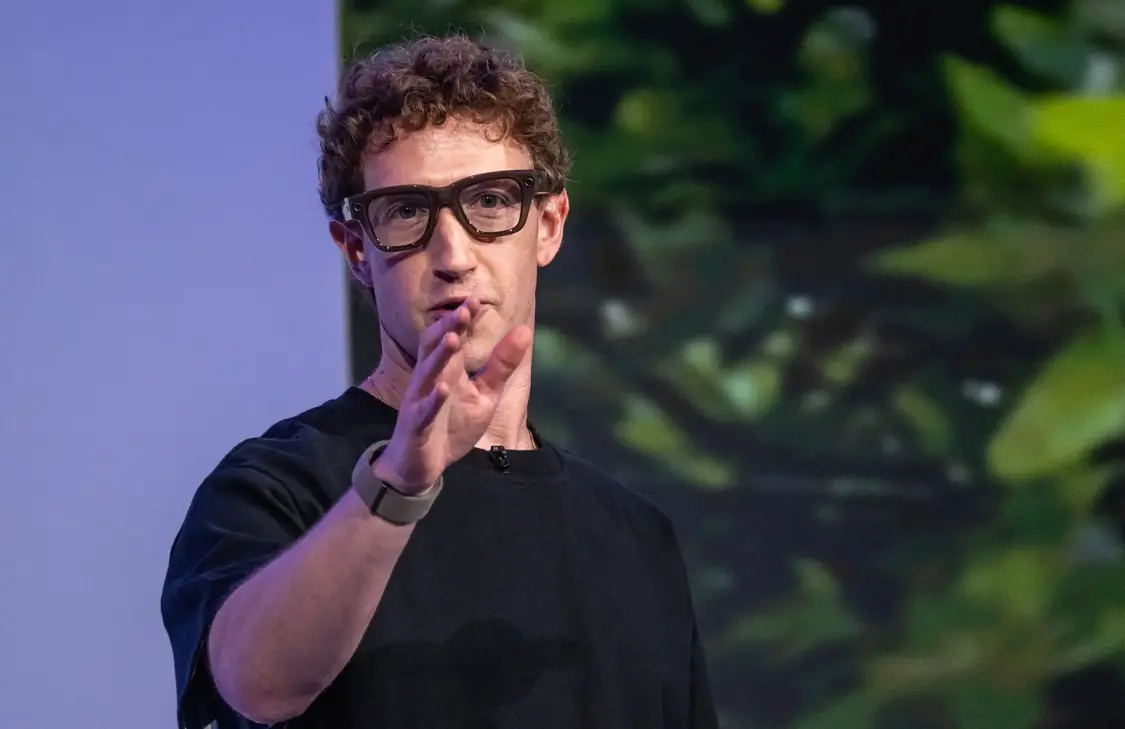
Meta’s AI strategy could reshape who controls and accesses future superintelligent systems.
30-Second TL;DR
What Changed
Zuckerberg presented a strategic roadmap for Meta’s Superintelligence efforts.
Why It Matters
The letter signals that Meta may continue prioritizing widespread access and individual empowerment as core principles for its AI strategy. For AI companies, this could intensify competition around distribution, user control, and the governance of highly capable systems.
What To Do Next
Monitor Meta AI’s developer documentation and product announcements for concrete Superintelligence access, model, or API details before committing to a platform strategy.
Key Points
- •Zuckerberg presented a strategic roadmap for Meta’s Superintelligence efforts.
- •Meta believes advanced AI should empower individuals instead of being monopolized by institutions.
- •Broad distribution is positioned as a way to encourage innovation, social prosperity, and safer technology governance.
Deep Insight
AI-generated analysis for this event — not the original article.
Enhanced Key Takeaways
- •Meta is leveraging its Llama model series as the primary vehicle for this open-access strategy, positioning open weights as a counter-narrative to closed-source 'walled garden' models.
- •The strategy explicitly emphasizes 'sovereign AI,' aiming to help nations and organizations build and control their own infrastructure rather than relying on US-based cloud providers.
- •Zuckerberg’s vision includes the integration of AI agents into the Meta ecosystem, specifically targeting the Ray-Ban Meta smart glasses as a primary hardware interface for superintelligence.
- •Meta has significantly increased its capital expenditure on H100 and B200 GPU clusters, aiming to reach a compute scale that rivals or exceeds the largest training runs currently conducted by OpenAI and Google.
- •The open-access approach is framed as a security feature, with Meta arguing that public scrutiny and community-led red teaming are more effective at mitigating existential risks than secretive, internal safety protocols.
Competitor Analysis
- Meta (Llama/Open)
- Open Weights/Open Source
- OpenAI (GPT/Closed)
- API/Closed
- Google (Gemini/Closed)
- API/Closed
- Meta (Llama/Open)
- On-prem/Cloud/Edge
- OpenAI (GPT/Closed)
- Cloud-only
- Google (Gemini/Closed)
- Cloud-only
- Meta (Llama/Open)
- Ecosystem/Hardware Integration
- OpenAI (GPT/Closed)
- Enterprise/Consumer SaaS
- Google (Gemini/Closed)
- Integrated Services/Search
| Feature | Meta (Llama/Open) | OpenAI (GPT/Closed) | Google (Gemini/Closed) |
|---|---|---|---|
| Model Access | Open Weights/Open Source | API/Closed | API/Closed |
| Deployment | On-prem/Cloud/Edge | Cloud-only | Cloud-only |
| Primary Strategy | Ecosystem/Hardware Integration | Enterprise/Consumer SaaS | Integrated Services/Search |
Technical Deep Dive
- Meta is utilizing a massive-scale training architecture based on the Llama 4 and subsequent architectures, optimized for distributed training across hundreds of thousands of GPUs.
- The infrastructure relies on a custom-built, high-bandwidth interconnect fabric designed to minimize latency during collective communication operations.
- Implementation focuses on 'compositional AI,' where smaller, specialized models are orchestrated by a larger reasoning engine to improve efficiency and reduce inference costs.
- The company is investing heavily in synthetic data generation pipelines to overcome the limitations of human-generated training data for superintelligence-level reasoning.
Future ImplicationsAI analysis grounded in cited sources
Timeline
- 2023-07Meta releases Llama 2, marking the beginning of its aggressive open-weights strategy.
- 2024-04Meta launches Llama 3, significantly closing the performance gap with proprietary models.
- 2025-02Meta announces the Llama 4 training initiative, signaling a shift toward superintelligence-scale compute.
- 2026-01Meta integrates advanced AI agents into its hardware product line, including Ray-Ban Meta glasses.
Event Coverage
Weekly AI Recap
Read this week's curated digest of top AI events →
Related Updates

AI-curated news aggregator. All content rights belong to original publishers.
Original source: cnBeta (Full RSS) ↗
This is a summary, not the original. Read the source, or get the weekly briefing.
The weekly digest
One email a week. Unsubscribe anytime.