Latest AI Regulation News & Updates
The EU AI Act, US executive actions and China’s rules — the legal frameworks being built around AI in real time.
687 articles
智元发放年中奖,离职员工也有份
智元机器人宣布向2026年上半年在职员工发放年中特别绩效奖,离职员工也可按实际在职天数折算领取。文章认为,此举可能同时反映公司业绩表现、人才竞争策略及赴港上市前的预期管理,但奖金并不能直接证明企业已实现盈利或商业化成熟。
Shanghai registers 11 new generative AI services
Shanghai has officially registered 11 additional generative AI services, bringing the city's total to 211. This update reflects the ongoing regulatory oversight and expansion of the local AI ecosystem.
EU mandates Google open Android and search data to AI
The EU has ordered Google to provide third-party AI assistants with system-level access to Android and share search data, aiming to break its monopoly in the AI era.
Anthropic disables Claude models following US foreign access order
Anthropic has disabled access to its Claude Fable 5 and Claude Mythos 5 models worldwide following a US government order to block foreign nationals. Rather than enforcing selective nationality checks, the company opted for a global shutdown.
US Government Pulls Anthropic's Fable 5 Offline
Anthropic's Fable 5 model was removed by the US government shortly after outperforming GPT 5.5 on major benchmarks. The model had set a new standard for coding performance and reasoning capabilities before its sudden withdrawal.
NDRC releases AI Cooperation Development Action Plan
The National Development and Reform Commission (NDRC) has released an action plan outlining eight key areas for AI development, including data supply, computing power, and safety governance.
OPPO completes regulatory filing for on-device AI
OPPO and other major manufacturers have completed the mandatory regulatory filing for their on-device generative AI services. The company states this is a standard compliance action to align with national AI model regulations.
Edge AI Daily: AI regulation and coding tool updates
Google DeepMind CEO proposes a FINRA-style AI regulatory body. Meanwhile, Nvidia reports strong Q1 revenue, and OpenAI's Codex is evolving into an enterprise knowledge platform to compete with Cursor and Copilot.
DeepMind CEO proposes US-led Frontier AI regulatory body
Google DeepMind CEO Demis Hassabis proposes a US-led regulatory body for frontier AI models, modeled after the financial industry's FINRA. The goal is to mandate safety evaluations before public release to ensure AGI development remains secure.
New York imposes one-year moratorium on new AI datacenters
New York Governor Kathy Hochul has signed an executive order enacting a one-year pause on the construction of large, resource-intensive AI datacenters. This move makes New York the first US state to officially regulate the rapid expansion of AI infrastructure.
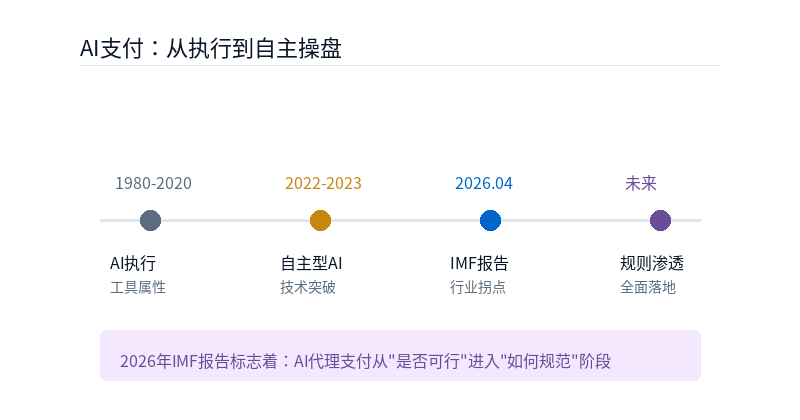
IMF Report: How Agentic AI Will Reshape Payments
The IMF released a note on the impact of Agentic AI on payment infrastructure, proposing a three-layer model (Intent, Authorization, Settlement) to manage risks while enabling innovation.
New York State halts construction of all new data centers
New York has become the first state to temporarily pause the approval of large data centers. Governor Kathy Hochul cited concerns over rising electricity costs, water consumption, and the need for greater local control amidst the AI-driven infrastructure boom.
New York bans data center construction for one year
New York has implemented a one-year moratorium on the construction of new data centers. This regulatory move is being viewed as a potential turning point for the anti-AI movement and infrastructure development.
New York Imposes First Statewide Data Center Moratorium
New York Governor Kathy Hochul has signed an executive order imposing a one-year moratorium on the construction of new data centers. The move aims to address the significant environmental and energy challenges posed by these large-scale facilities.
China considers restricting overseas access to top AI models
Beijing is reportedly discussing new regulations to limit international access to China's most advanced AI models. The Ministry of Commerce has held meetings with major tech firms including Alibaba and ByteDance to discuss these potential restrictions.
New Regulations Define 'Important Data' for AI Training
China has issued new guidelines quantifying 'important data' thresholds for financial information services, impacting how AI companies handle large-scale user datasets. This marks a shift toward stricter, standardized data classification for AI training and inference.
US Will Not Establish FDA-Style AI Regulatory Agency
A former AI advisor to the Trump administration stated that the US will not implement a formal licensing regime for AI, rejecting the idea of an FDA-style regulatory body. Despite this, the White House continues to use executive powers to manage the release of top-tier models.
OpenAI Proposes 5% Equity Stake to US Government
OpenAI is reportedly offering a 5% equity stake to the US government to mitigate increasing political and regulatory pressure. With a valuation of $852 billion, this stake is estimated to be worth approximately $42.6 billion.
US Clears Anthropic's Mythos 5 for Wider Use
Anthropic PBC has received US government approval to expand access to its Mythos 5 AI model. The clearance follows a resolution of national security concerns raised by the Trump administration.
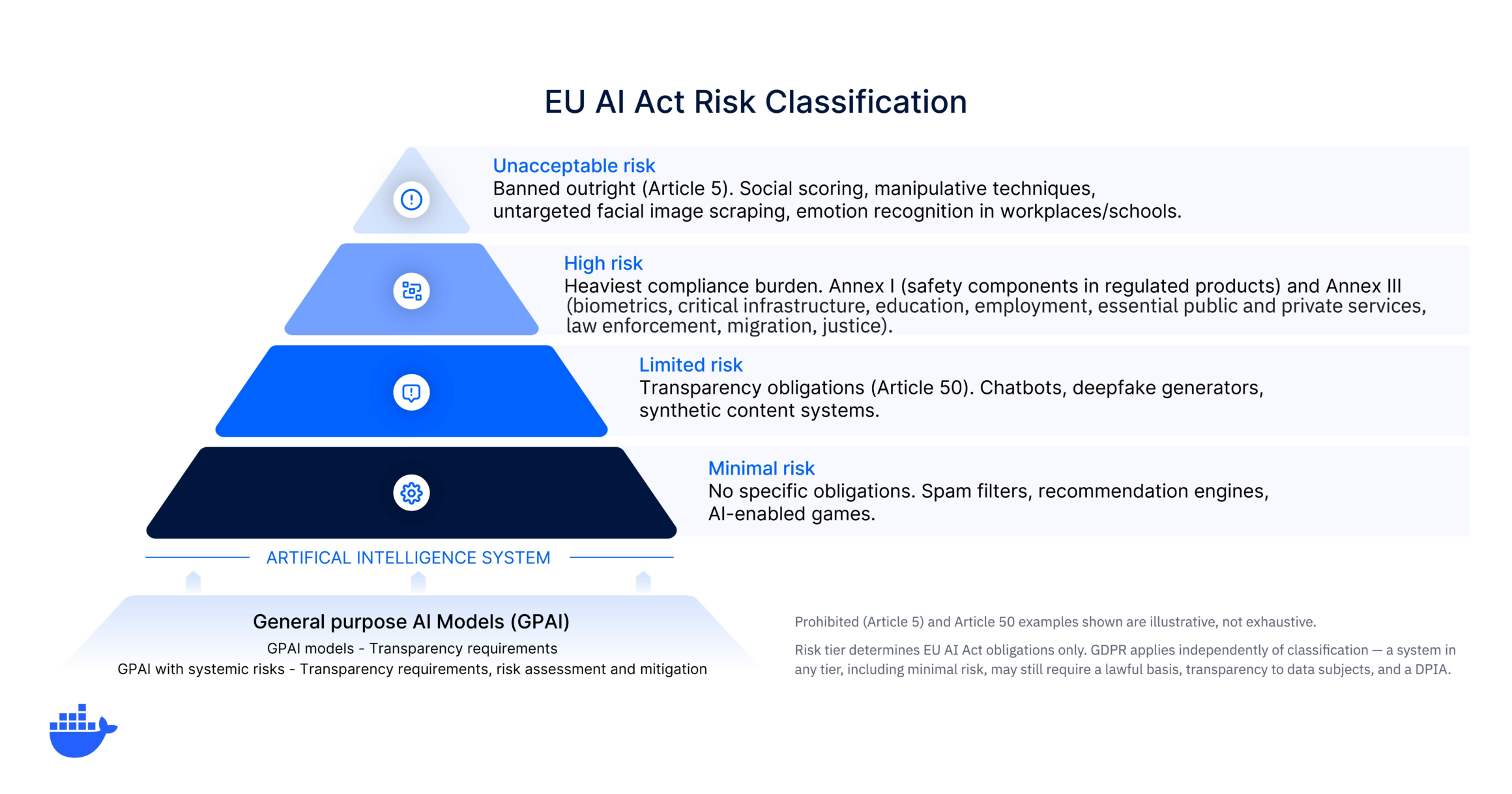
EU AI Act Compliance Guide for Engineering Teams
This article outlines the compliance requirements for the EU AI Act across different risk tiers. It provides a roadmap for engineering teams to operationalize AI governance through 2027.
US Clears Anthropic Mythos 5 for Wider Use
The US Commerce Department has eased restrictions on Anthropic's Mythos 5 AI model. This allows trusted partners broader access to the powerful model.
OpenAI Staggers New AI Model Release Under US Pressure
OpenAI is rolling out a preview of its latest AI model to select partners. This phased approach follows pressure from the Trump administration to manage the release timeline.
US government restricts OpenAI's GPT-5.6 release
The Trump administration has requested that OpenAI limit the release of its upcoming GPT-5.6 model to a small group of 20 trusted partners. This move reflects growing government concern over the rapid scaling and capabilities of frontier AI models.
EU Discusses Anthropic Model Access with White House
The European Union has initiated talks with the Trump administration regarding access to Anthropic's advanced AI models. This follows recent US restrictions that blocked foreign nationals from accessing the technology.
UN approves first global technical regulation for autonomous driving
The UN has officially approved the first global technical regulation for autonomous driving systems (ADS GTR), led by China and several other nations. This framework establishes unified safety standards and testing methods for the entire lifecycle of autonomous vehicles.
China releases first mandatory autonomous driving safety standards
The Ministry of Industry and Information Technology (MIIT) has released a draft for the first mandatory national standard regarding autonomous driving system safety. The regulations cover critical safety requirements, including system exit protocols during emergencies.
NRTA Mandates AI Labels for Micro-dramas
The National Radio and Television Administration (NRTA) has released a draft regulation requiring all micro-dramas generated or produced using AI technology to include clear, prominent disclosure labels.
Anthropic Sued Over US AI Export Restrictions
An AI startup is suing the US government over restrictions preventing Anthropic from providing advanced AI models to foreign nationals. The case challenges the scope of government control over AI model access.
Workday to face lawsuit over AI hiring bias
A US federal judge ruled that Workday must face a class-action lawsuit alleging its AI-powered screening software discriminates against job applicants. This case is a landmark challenge to the algorithms used in automated hiring processes.
Grassroots opposition blocks $130B in US data center projects
A report by 10a Labs reveals that local opposition has successfully blocked or delayed at least 75 data center projects worth $130 billion in early 2026. This trend is significantly impacting the expansion capabilities of the AI industry in the United States.