Docker Streams AI Policy Decisions to Your SIEM
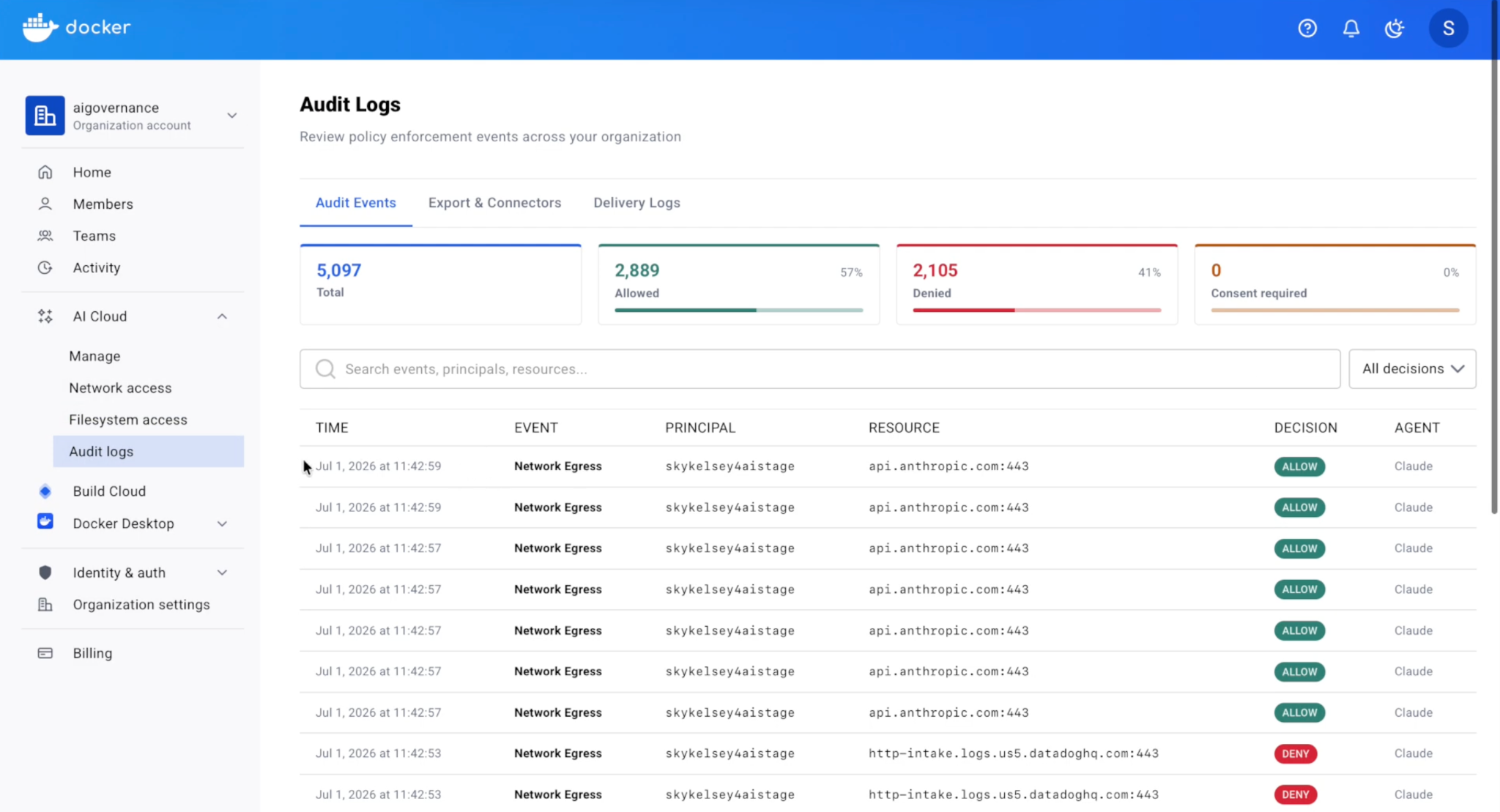
Connect agent policy audits to the SIEM your security team already monitors.
30-Second TL;DR
What Changed
Records every policy decision triggered by agents in one searchable location
Why It Matters
Security teams can investigate agent behavior using their established monitoring and incident-response workflows instead of a separate console. This improves auditability and can make governance controls easier to demonstrate across enterprise AI deployments.
What To Do Next
Connect Docker AI Governance audit-log streaming to your existing SIEM and create an alert for blocked agent actions or unexpected policy decisions.
Key Points
- •Records every policy decision triggered by agents in one searchable location
- •Streams organization-wide policy decisions to an existing SIEM
- •Helps security teams review agent actions and policy enforcement outcomes
Deep Insight
AI-generated analysis for this event — not the original article.
Enhanced Key Takeaways
- •Docker AI Governance integrates with major SIEM platforms including Splunk, Datadog, and Elastic to facilitate centralized security operations.
- •The policy engine utilizes a centralized audit log that captures metadata such as agent identity, policy ID, decision timestamp, and the specific resource accessed.
- •This feature addresses compliance requirements for AI-driven development environments by providing immutable logs for SOC 2 and ISO 27001 audits.
- •The streaming capability leverages standard webhook and API-based delivery mechanisms to ensure low-latency ingestion into security data lakes.
- •Docker has implemented role-based access control (RBAC) specifically for the AI governance dashboard, allowing security teams to manage policy visibility independently from developers.
Competitor Analysis
- Docker AI Governance
- Native Streaming
- Snyk AI
- API-based
- JFrog Security
- Plugin-based
- Docker AI Governance
- Agent-level
- Snyk AI
- Code-level
- JFrog Security
- Artifact-level
- Docker AI Governance
- Per-seat/Usage
- Snyk AI
- Per-seat
- JFrog Security
- Per-instance
- Docker AI Governance
- High (Container focus)
- Snyk AI
- High (AppSec focus)
- JFrog Security
- High (Supply Chain)
| Feature | Docker AI Governance | Snyk AI | JFrog Security |
|---|---|---|---|
| SIEM Integration | Native Streaming | API-based | Plugin-based |
| Policy Enforcement | Agent-level | Code-level | Artifact-level |
| Pricing | Per-seat/Usage | Per-seat | Per-instance |
| Benchmarks | High (Container focus) | High (AppSec focus) | High (Supply Chain) |
Technical Deep Dive
- Architecture: Utilizes a centralized event bus that captures policy evaluation events from the Docker Desktop and Docker Hub AI agent runtime environments.
- Data Format: Policy decisions are exported in standardized JSON schema, compatible with Common Event Format (CEF) and Syslog protocols for SIEM ingestion.
- Security Model: Employs mTLS for secure transmission of audit logs from the Docker environment to the customer's SIEM endpoint.
- Policy Engine: Based on Open Policy Agent (OPA) framework, allowing for custom Rego policy definitions that are then logged upon evaluation.
Future ImplicationsAI analysis grounded in cited sources
Timeline
- 2024-05Docker introduces initial AI-powered developer productivity tools.
- 2025-02Launch of Docker AI Governance framework for enterprise security.
- 2025-11Docker expands AI policy capabilities to include multi-agent orchestration support.
- 2026-04Docker announces expanded SIEM integration partnerships for security observability.
Weekly AI Recap
Read this week's curated digest of top AI events →
AI-curated news aggregator. All content rights belong to original publishers.
Original source: Docker Blog ↗
This is a summary, not the original. Read the source, or get the weekly briefing.
The weekly digest
One email a week. Unsubscribe anytime.