All Updates
Page 469 of 1664
June 1, 2026
Post-Training Autonomous Vehicle Models with NVIDIA Alpamayo
NVIDIA Alpamayo addresses the gap between open-loop training and real-world deployment for autonomous vehicle models. It enables closed-loop post-training, allowing models to learn from the environmental impact of their actions.
NVIDIA Launches Cosmos 3 Open Omni-model for Physical AI
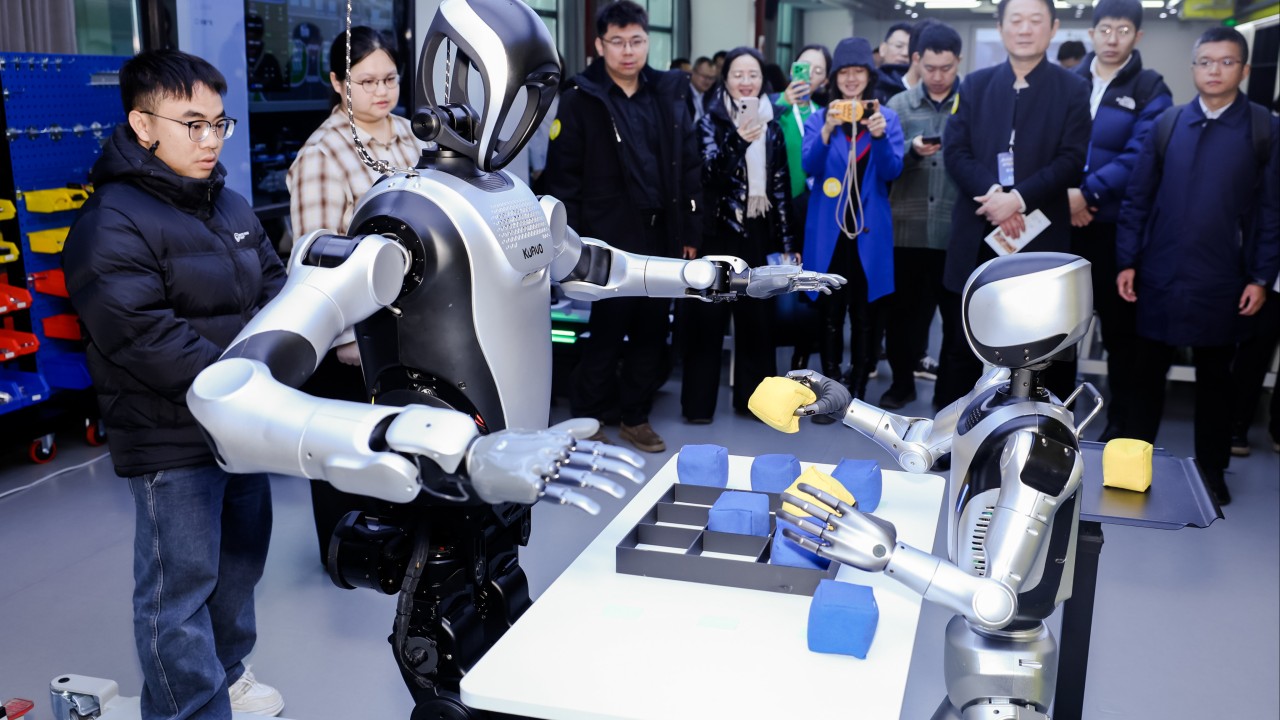
NVIDIA has released Cosmos 3, an open-weights omni-model designed specifically for physical AI reasoning and action. It aims to bridge the gap between digital intelligence and real-world robotic interaction.
Australia launches new security labeling for smart devices
Australia has introduced a new security labeling scheme for smart devices to improve consumer transparency. This initiative aims to establish cybersecurity as a competitive advantage for manufacturers in the IoT space.
Nvidia Announces RTX Spark PC Processor with MediaTek CPU
Nvidia unveiled the RTX Spark, a new PC processor combining a 20-core MediaTek Grace CPU with a Blackwell-based RTX GPU. The platform is designed for high-performance AI tasks, delivering up to 1 petaFLOP of AI performance.
NVIDIA Advances Local AI Agent Capabilities on RTX and DGX
NVIDIA is expanding support for local AI agents, enabling developers to run complex, multi-step workflows directly on RTX PCs and DGX Spark hardware. This initiative focuses on improving the performance and privacy of agents like OpenClaw and Hermes by leveraging local compute.
Nvidia enters PC chip market with RTX Spark processor
Nvidia is expanding into the consumer PC chip market with the RTX Spark, a new processor designed for laptops and mini-PCs. The company claims it is the most efficient PC chip ever built, leveraging technology from its high-end DGX data center hardware.
Founders Back Baldertonโs โBuilt in Europeโ Tech Campaign
Balderton Capital has launched the 'Built in Europe' campaign to shift the narrative of European tech from 'catching up' to 'leading'. The initiative is backed by prominent founders from companies including Mistral AI, Revolut, and Wayve.
Uncertainty-Aware RL Improves Autonomous Driving Safety
Researchers introduced an uncertainty-aware reinforcement learning framework that uses expert advice to guide exploration in autonomous driving. By dynamically triggering guidance based on uncertainty thresholds, the method improves navigation success in complex, unsignalized intersections.
Procedural FPS Map Generation Using MAP-Elites
Researchers applied the MAP-Elites quality-diversity algorithm to FPS level design, introducing two novel map representations: Point-Line and Spatial-Layout. The study demonstrates that these representations significantly enhance both the diversity and quality of procedurally generated game maps.
PhyDrawGen: Physically Grounded Diagram Generation from Text
PhyDrawGen is a neuro-symbolic pipeline that generates physically accurate diagrams by combining LLM-based scene understanding with deterministic geometric solvers. It addresses common generative model failures like force vector hallucinations and geometric constraint violations.
Moving Beyond Observation-Predictive Models for Embodied AI
This research argues that current world models for embodied AI fail because they prioritize visual prediction over physical viability. It proposes a modular, query-conditioned framework that identifies the simplest physical abstraction necessary to answer specific intervention queries.
MAVEN: Boosting Agentic Tool Calling via Symbolic Verification
MAVEN is a new lightweight symbolic reasoning scaffold designed to improve agentic tool orchestration and verification. It significantly boosts accuracy on complex benchmarks without requiring additional model training.
LLM-Driven Mechanism Design for Strategic Healthcare Systems
Researchers introduced a framework using LLM-guided evolutionary code search to optimize healthcare policy mechanisms. By simulating strategic provider responses, the system successfully mitigates up-coding and patient selection bias while maintaining financial efficiency.
GRiD: Generating Graph-like Rules for Knowledge Graph Reasoning
GRiD is a new framework that uses diffusion models to discover complex, graph-like logical rules for knowledge graph reasoning. By combining supervised pre-training with reinforcement learning, it overcomes the limitations of traditional chain-like rule mining.
Encoding Factored Tasks for SAT-Based Planning Efficiency
This research explores novel methods for encoding factored transition systems (FTS) into propositional logic for SAT-based planning. It analyzes how different translation strategies and task transformations impact the performance of automated planners.
EHRBench: Large-Scale Benchmark for Clinical Decision Making
EHRBench is a new, automated, and reliable benchmark designed to evaluate LLM performance in clinical decision-making using real-world electronic health records. It features nearly 1 million QA items across diagnosis, treatment, and prognosis tasks, verified through a knowledge-base pipeline.
Disentangling Harness Updating and Benefit in LLM Agents
This research analyzes how LLM agents evolve through external harnesses like prompts and tools. It reveals that while models of various tiers can effectively update harnesses, the ability to benefit from these updates is non-monotonic, peaking in mid-tier models.
Chiba Bank Group slashes migration effort by 84% with AI
Chiba Bank Computer Service successfully reduced the migration effort for legacy VB.NET systems from 12.5 person-months to 2.0 person-months. This was achieved by implementing a custom AI-driven development framework.
AdaCoM: Adaptive Context Management for Long-Horizon AI Agents
AdaCoM is a new framework that trains an external LLM to manage the context of frozen agents, improving performance in long-horizon tasks like web search. It optimizes context by pruning stale information while preserving task-critical constraints.
Intel launches OpenVINO Physical AI Framework for robotics
Intel has integrated the new open-source OpenVINO Physical AI Framework into its Robotics AI Suite. This addition provides inference runtimes optimized specifically for Intel processors to solve complex robotics development challenges.