AI4S Goes Deep: Can Domestic Compute Keep Up?
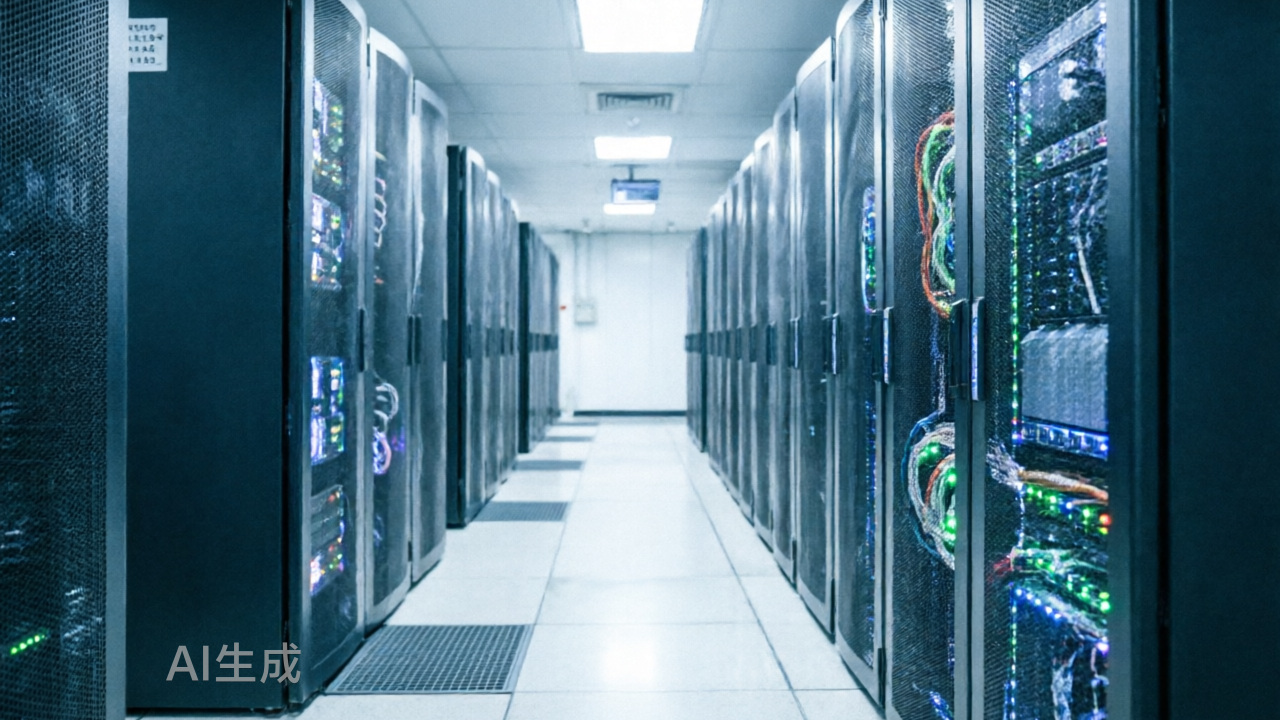
💡AI4S is exposing why stability and latency matter as much as raw compute.
⚡ 30-Second TL;DR
What Changed
AI4S applications are moving into more complex, demanding operational environments.
Why It Matters
AI4S deployments may need to evaluate compute infrastructure on more than peak performance, with reliability and latency becoming equally important. This could accelerate demand for domestic accelerators and systems optimized for specialized scientific and industrial workloads.
What To Do Next
Benchmark your target AI4S workload on candidate domestic accelerators, measuring inference latency, sustained stability, and real-time performance under marine-computing conditions.
Key Points
- •AI4S applications are moving into more complex, demanding operational environments.
- •Marine computing already requires high stability and real-time performance.
- •Adding AI raises the technical complexity and intensifies demand for capable domestic compute infrastructure.
🧠 Deep Insight
Background and context from public sources — not the original article. 13 sources cited.
🔑 Enhanced Key Takeaways
- •AI for Science (AI4S) is an emerging research field that leverages machine learning advancements to tackle complex scientific computational issues, aiming to enhance computational efficiency and accuracy.
- •China's national strategy for AI compute infrastructure involves building interconnected computing hubs and aims for significant self-sufficiency in AI chips, with projections suggesting domestic suppliers could meet 90% of the country's AI processor demand by 2026.
- •AI applications in marine environments are diverse, including AI-powered species identification, coral reef monitoring, predictive analysis for climate change impact, optimized fisheries management, and enhancing autonomous underwater vehicles (AUVs) for deep-sea exploration.
- •Key challenges for deploying AI in marine environments include the inherent difficulty in collecting and labeling vast ocean datasets, the harshness of the environment (high salinity, biofouling, extreme pressure on sensors and computing), and limited connectivity necessitating robust edge AI systems for offline processing.
- •China has deployed large AI4S-specific computing clusters, such as one in Henan province featuring 60,000 specialized processors, which is integrated into a national supercomputing network providing access to over 200,000 GPUs for AI4S infrastructure.
🛠️ Technical Deep Dive
- AI4S platforms are designed to leverage cloud-native strengths like elasticity, portability, and orchestration to unify heterogeneous workloads, including AI model training/inference, high-performance computing (HPC) tasks, large-scale scientific data processing, and AI4S AI Agents.
- China has developed homegrown high-speed network technology called 'scaleFabric,' which is its first domestically developed RDMA (Remote Direct Memory Access) network, enabling extremely fast data transfer between processors with minimal delay.
- Underwater data centers (UDCs) are being deployed, with one notable example in Shanghai directly linked to an offshore wind farm. These UDCs are engineered with marine-grade anti-fouling coatings and internal water-filled structural tubes to resist corrosion and withstand typhoon conditions.
- Marine AI systems utilize machine vision, deep learning capabilities, and continuously growing proprietary databases of millions of annotated marine objects to process images in real-time, detect floating hazards, and provide early warnings to crews.
- A significant technical hurdle in marine AI is the complexity of algorithmic models and the multi-source nature of marine data, which makes it difficult to establish uniform selection criteria for data quality and richness, impacting model construction.
🔮 Future ImplicationsAI analysis grounded in cited sources
⏳ Timeline
📎 Sources (13)
Factual claims are grounded in the sources below. Forward-looking analysis is AI-generated interpretation.
Weekly AI Recap
Read this week's curated digest of top AI events →
👉Related Updates

AI-curated news aggregator. All content rights belong to original publishers.
Original source: 钛媒体 ↗
This is a summary, not the original. Read the source, or get the weekly briefing.
Weekly AI briefing
One email a week. Unsubscribe anytime.