Compute Becomes the New Real Estate

💡See how Token demand and GPU assets could reshape AI infrastructure financing.
⚡ 30-Second TL;DR
What Changed
Banks may evaluate AI financing based on projected or observed Token consumption.
Why It Matters
If this model expands, AI startups may gain new ways to finance infrastructure without purchasing all hardware upfront. However, it could also increase concentration and expose compute providers and investors to demand, utilization, and hardware depreciation risks.
What To Do Next
Build a 12-month GPU utilization and Token-consumption forecast for your workloads, then compare ownership, cloud rental, and compute-financing scenarios.
Key Points
- •Banks may evaluate AI financing based on projected or observed Token consumption.
- •GPU infrastructure is being structured through SPVs as an investable asset.
- •Pension capital could become a source of funding for AI compute expansion.
- •Compute availability is increasingly linked to financial access, not only hardware procurement.
🧠 Deep Insight
Background and context from public sources — not the original article. 28 sources cited.
🔑 Enhanced Key Takeaways
- •NVIDIA is actively partnering with major financial institutions, including Apollo, BlackRock, Blackstone, Brookfield, Goldman Sachs, and KKR, to mobilize over $500 billion in third-party capital for AI infrastructure, shifting its role beyond a chip supplier to a facilitator of financial architecture.
- •The concept of 'Compute Credits' is emerging as a standardized financial asset, offering prepaid access to cloud compute capacity that can be consumed, traded for liquidity, or packaged as collateral in structured financial products.
- •The securitization of data center assets, including those supporting AI, has been an active market in the US since 2018, with over $21 billion in issuance by October 2024, and is now expanding into Europe.
- •Larry Fink, CEO of BlackRock, has articulated that compute may become a tradable financial asset, leading to the development of compute futures markets by entities like CME Group to allow hedging against price volatility.
- •Pension funds, particularly from Canada and Australia, are already significant investors in digital infrastructure, including AI data centers, with public pension assets having at least $500 billion to $600 billion concentrated in AI investments as of spring 2026.
🛠️ Technical Deep Dive
- Token consumption measures the intensity of AI product usage, encompassing every prompt sent, inference run, and output generated.
- It serves as a critical metric for FinOps and finance teams to monitor AI usage, costs, efficiency, and value, alongside other indicators like model calls and API requests.
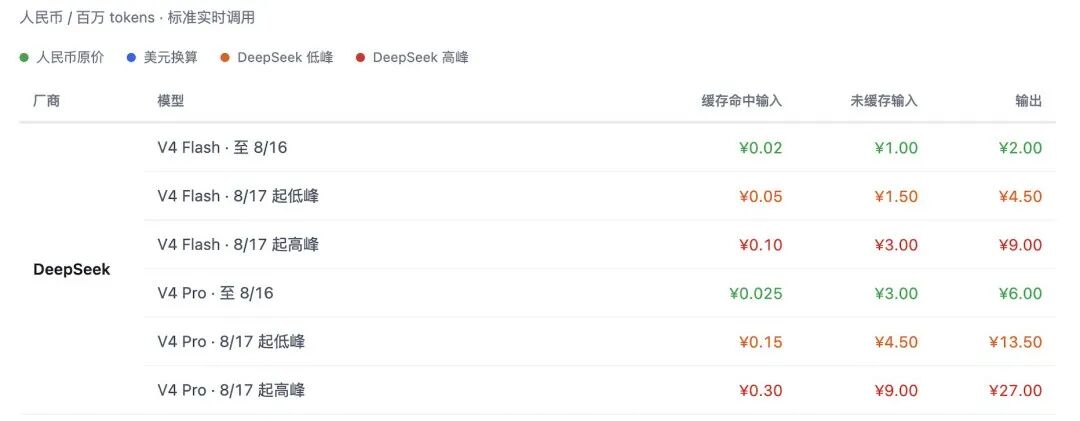
- AI coding tools often differentiate billing across input, output, and cache read/write token types, each with varying rates, contributing to significant cost discrepancies.
- Goldman Sachs projects a substantial 24-fold increase in global token demand by 2030, driven largely by the adoption of agentic AI.
- While token usage indicates cost, measuring the actual return on investment (ROI) of AI consumption remains challenging, necessitating evaluation against tangible business outcomes such as time savings or revenue generation.
- The fundamental measure of compute capacity itself is FLOPS (Floating Point Operations Per Second), representing the specialized hardware and software stack (processors, memory, networking) engineered for AI workloads.
🔮 Future ImplicationsAI analysis grounded in cited sources
⏳ Timeline
📎 Sources (28)
Factual claims are grounded in the sources below. Forward-looking analysis is AI-generated interpretation.
- nvidia.com
- nvidia.com
- forbes.com
- alcapitaladvisory.com
- fintechmagazine.com
- businessinsider.com
- trilliumtechnologiesinc.com
- arcratings.com
- crai.com
- diamond-hill.com
- percepture.com
- medium.com
- benefitsandpensionsmonitor.com
- dataffluent.com
- equable.org
- substack.com
- surveil.co
- jellyfish.co
- wipfli.com
- forbes.com
- olakai.ai
- medium.com
- oecd.ai
- substack.com
- reddit.com
- medium.com
- substack.com
- gisreportsonline.com
Weekly AI Recap
Read this week's curated digest of top AI events →
👉Related Updates
AI-curated news aggregator. All content rights belong to original publishers.
Original source: 钛媒体 ↗
This is a summary, not the original. Read the source, or get the weekly briefing.
Weekly AI briefing
One email a week. Unsubscribe anytime.