The AI Infrastructure Arms Race
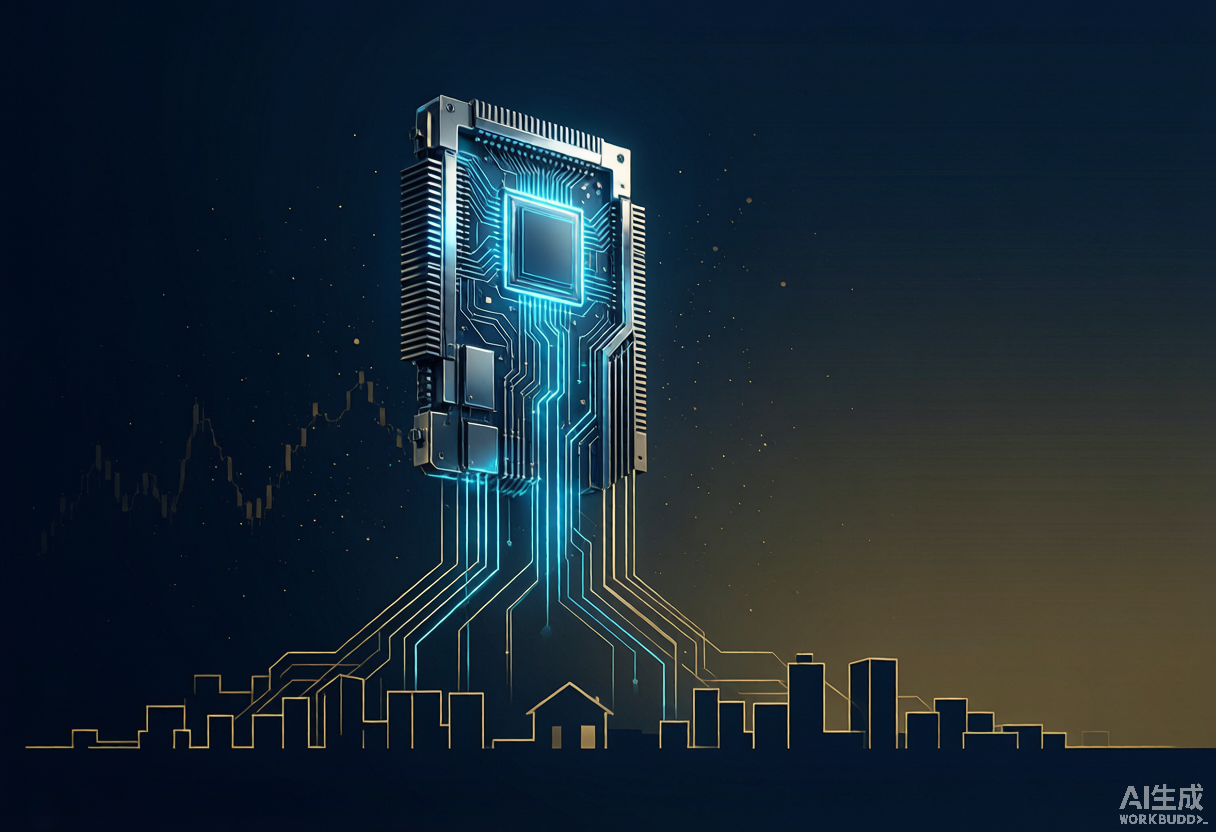
💡AI scaling is hitting physical limits: power, cooling, and data centers now shape deployment economics.
⚡ 30-Second TL;DR
What Changed
Electricity supply is emerging as a strategic constraint on AI expansion.
Why It Matters
AI companies may face longer deployment timelines and higher inference costs if power, cooling, or data-center capacity cannot scale alongside compute demand. Founders should treat infrastructure availability as a core product and financial planning variable.
What To Do Next
Before expanding GPU workloads, run a capacity audit covering cloud GPU availability, power usage, cooling limits, utilization, and total inference cost per request.
Key Points
- •Electricity supply is emerging as a strategic constraint on AI expansion.
- •Cooling capacity is becoming critical as high-density compute deployments grow.
- •Data-center construction and operations are absorbing a larger share of AI capital expenditure.
- •Infrastructure availability may determine the pace of AI scaling as much as model innovation.
🧠 Deep Insight
Background and context from public sources — not the original article. 26 sources cited.
🔑 Enhanced Key Takeaways
- •AI workloads can generate up to 10 times more heat than traditional servers, necessitating advanced cooling solutions.
- •Rack power densities in data centers have surged from a traditional 5-10 kW per rack to commonly 40-100 kW for AI servers, with some ultra-high-density deployments exceeding 120 kW.
- •Global data center electricity consumption is projected to double by 2030, reaching approximately 945 terawatt-hours (TWh), with AI identified as the primary driver of this growth.
- •Grid interconnection queues for new data centers in major markets can average five to seven years, making power availability, rather than real estate, the primary bottleneck for AI infrastructure expansion.
- •Hyperscale cloud providers like Amazon, Microsoft, Alphabet (Google), and Meta Platforms are on track to collectively spend over $735 billion on AI data centers in 2026 alone.
🛠️ Technical Deep Dive
- Immersion cooling involves submerging entire IT systems, including servers, motherboards, GPUs, and SSDs, in a non-conductive dielectric fluid.
- This method can transfer heat up to 1,000 times more efficiently than air, consuming only one-tenth of the energy required by traditional air-cooling systems.
- Modern immersion systems are capable of supporting cooling capacities exceeding 200kW per rack, with some designs pushing towards 600kW, enabling higher computing density.
- Immersion cooling can significantly reduce cooling energy consumption by up to 90%, leading to an approximate 50% reduction in overall IT cooling power consumption.
- Direct-to-chip liquid cooling is another prominent technology, expected to account for 47.0% of the AI data center liquid cooling market segment in 2026, driven by demand for precision thermal management in high-density GPU clusters.
- AI-powered energy management systems are being deployed to optimize cooling, predict peak demand, and dynamically route workloads, with reported energy savings of 15-30% in data center cooling.
🔮 Future ImplicationsAI analysis grounded in cited sources
⏳ Timeline
📎 Sources (26)
Factual claims are grounded in the sources below. Forward-looking analysis is AI-generated interpretation.
- northcdatacenters.com
- ssstc.com
- sttelemediagdc.com
- enkiai.com
- hanwhadatacenters.com
- aterio.io
- ifc.org
- arxiv.org
- iea.org
- brookings.edu
- arxiv.org
- futuremarketinsights.com
- jpmorgan.com
- fool.com
- vertiv.com
- futuremarketinsights.com
- serverion.com
- splunk.com
- indiatimes.com
- harvard.edu
- kaizen.com
- huawei.com
- packetpower.com
- dartpoints.com
- trgdatacenters.com
- submer.com
Weekly AI Recap
Read this week's curated digest of top AI events →
👉Related Updates
AI-curated news aggregator. All content rights belong to original publishers.
Original source: 钛媒体 ↗
This is a summary, not the original. Read the source, or get the weekly briefing.
Weekly AI briefing
One email a week. Unsubscribe anytime.