Oracle Pushes Reusable AI Outcomes
💡See why enterprise AI buyers now demand proven, repeatable business outcomes.
⚡ 30-Second TL;DR
What Changed
Chinese enterprise customers want proven AI success cases before adoption.
Why It Matters
The emphasis on reusable outcomes raises the bar for enterprise AI vendors, which must connect deployments to measurable business metrics. It also suggests that proof-of-concept projects alone may no longer be sufficient in the Chinese market.
What To Do Next
For your next enterprise AI pilot, define two measurable business KPIs and document a repeatable deployment playbook before scaling.
Key Points
- •Chinese enterprise customers want proven AI success cases before adoption.
- •Measurable business impact is a core purchase criterion.
- •Oracle aims to deliver repeatable AI outcomes rather than isolated demonstrations.
🧠 Deep Insight
Background and context from public sources — not the original article. 18 sources cited.
🔑 Enhanced Key Takeaways
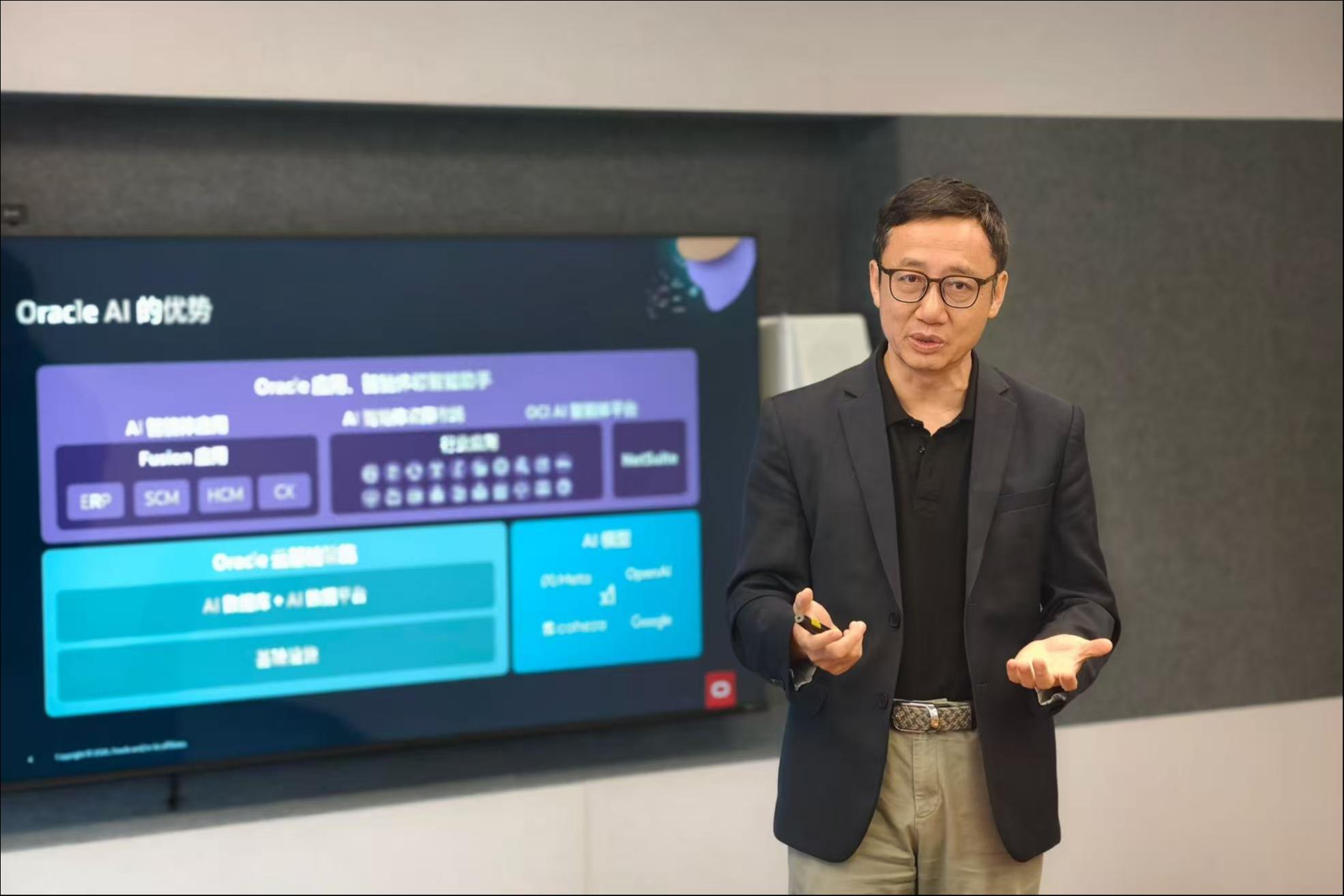
- •Oracle's AI strategy is data-centric, embedding AI directly into Fusion Cloud Applications where enterprise data already resides, aiming to reduce friction and improve reliability by processing AI within the data layer itself.
- •Oracle is shifting its AI strategy from merely assisting users to deploying 'agentic AI' that can execute end-to-end business processes, leveraging new offerings like AI Agent Studio and Fusion Agentic Applications.
- •Oracle Cloud Infrastructure (OCI) Enterprise AI provides an end-to-end platform for building, deploying, and governing production AI applications and agents, offering access to leading AI models and built-in security, observability, and governance.
- •Oracle AI Database 26ai, released in October 2025 and available on Linux x86-64 on-premises platforms since January 2026, natively architects AI into the database and SQL, including advanced features like Unified Hybrid Vector Search.
- •Oracle is making substantial investments in AI infrastructure, with industry estimates suggesting that five American hyperscalers, including Oracle, are projected to spend approximately $800 billion on capital expenditure in 2026.
🛠️ Technical Deep Dive
- Oracle's AI strategy integrates AI directly into its Fusion Cloud Applications and the underlying data layer, aiming to reduce data movement and complexity.
- OCI Enterprise AI leverages large language models (LLMs) combined with Retrieval-Augmented Generation (RAG) to allow users to query diverse enterprise data sources through a chat interface.
- Agentic AI systems are architected with several core components: a Planner/Controller (an LLM that defines objectives and generates plans), a Toolbox/Connectors (APIs, ERP functions, SQL, CRM calls for actions), a Retriever/RAG (to gather real-time facts from vector stores or databases), a Memory Store (for maintaining context), and an Orchestration Engine (to manage multi-step workflows).
- Oracle AI Database 26ai features Unified Hybrid Vector Search, enabling retrieval and reasoning across multimodal enterprise data, including PDFs, videos, and images.
- Oracle Cloud Infrastructure (OCI) Supercluster is designed to run demanding AI workloads, supporting configurations with up to 131,072 GPUs.
- The Oracle AI Data Platform offers a unified environment for the entire MLOps lifecycle, providing data scientists and ML engineers with a managed environment for building, training, tracking, and operationalizing machine learning models directly over lakehouse data, including reusable components for ML pipelines.
🔮 Future ImplicationsAI analysis grounded in cited sources
⏳ Timeline
📎 Sources (18)
Factual claims are grounded in the sources below. Forward-looking analysis is AI-generated interpretation.
Weekly AI Recap
Read this week's curated digest of top AI events →
👉Related Updates


AI-curated news aggregator. All content rights belong to original publishers.
Original source: 钛媒体 ↗
This is a summary, not the original. Read the source, or get the weekly briefing.
Weekly AI briefing
One email a week. Unsubscribe anytime.