🔥36氪•Freshcollected in 2h
OPPO completes regulatory filing for on-device AI

💡Understand the regulatory compliance requirements for deploying generative AI on mobile devices in China.
⚡ 30-Second TL;DR
What Changed
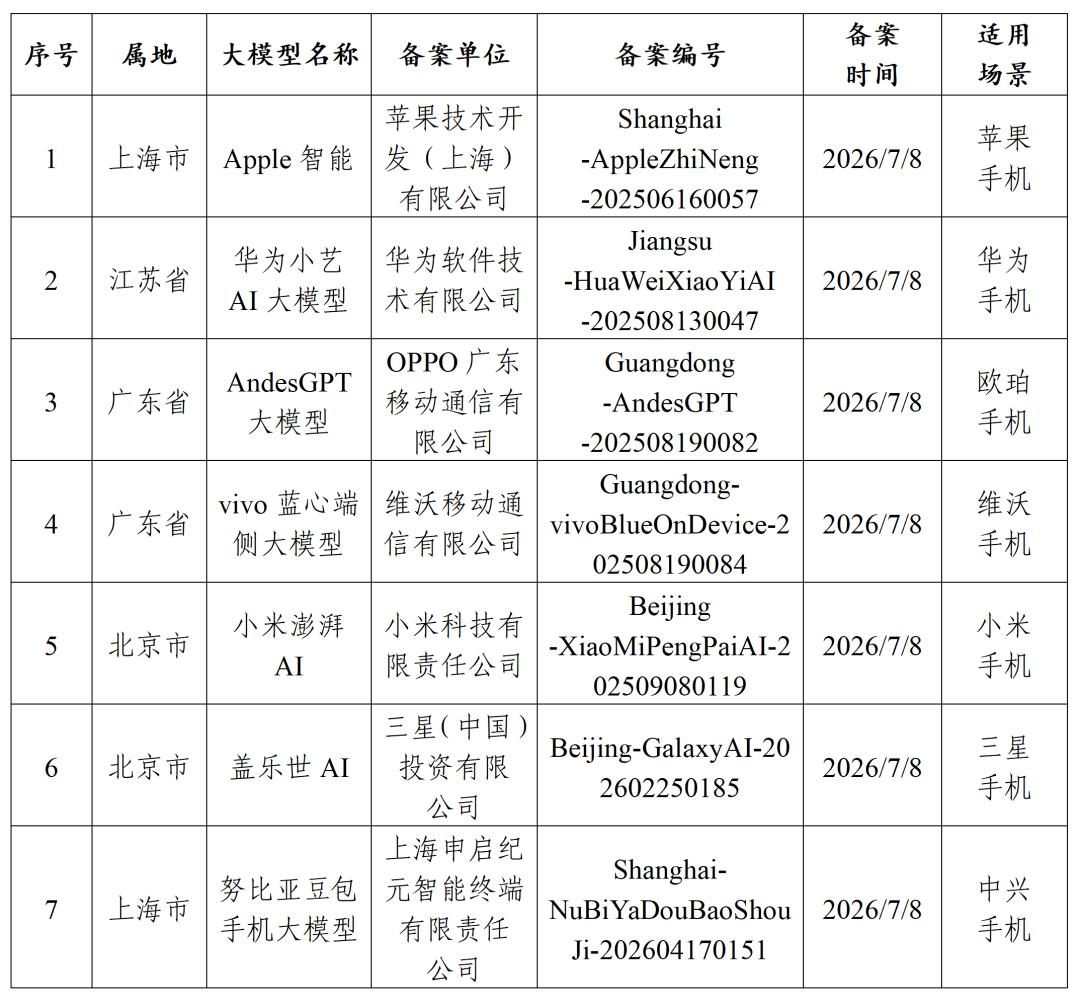
7 generative AI services completed regulatory filing
Why It Matters
This sets a precedent for how mobile manufacturers must navigate the regulatory landscape for deploying LLMs on edge devices.
What To Do Next
If developing edge AI, ensure your model architecture supports modular safety filters to comply with regional regulatory filings.
Who should care:Developers & AI Engineers
Key Points
- •7 generative AI services completed regulatory filing
- •Includes major brands like Huawei and OPPO
- •Focus on compliance with national AI model regulations
- •Reflects tightening oversight on on-device AI deployment
🧠 Deep Insight
AI-generated analysis for this event.
🔑 Enhanced Key Takeaways
- •The regulatory filings are mandated by the 'Generative AI Service Management Interim Measures' in China, which requires providers to undergo security assessments before public deployment.
- •OPPO's on-device AI strategy centers on its proprietary 'AndesGPT' model, which has been optimized for mobile NPU architectures to balance performance and power consumption.
- •The filing process involves submitting detailed training data sources, model alignment protocols, and safety guardrails to the Cyberspace Administration of China (CAC).
- •Beyond compliance, OPPO is integrating these AI capabilities into its ColorOS ecosystem to enable features like real-time translation, intelligent photo editing, and system-level resource scheduling.
- •This regulatory milestone allows OPPO to legally offer advanced generative AI features in the Chinese market, differentiating its flagship devices from those relying solely on cloud-based AI.
📊 Competitor Analysis▸ Show
| Feature | OPPO (AndesGPT) | Huawei (Pangu) | Xiaomi (MiLM) |
|---|---|---|---|
| Primary Focus | On-device efficiency | Enterprise & Cloud-Edge | Consumer IoT integration |
| Deployment | ColorOS Integration | HarmonyOS / Cloud | HyperOS / Cloud |
| Regulatory Status | Filed (2026) | Filed (2025-2026) | Filed (2026) |
🛠️ Technical Deep Dive
- OPPO utilizes a hybrid AI architecture that combines on-device small language models (SLMs) with cloud-based large language models (LLMs) for complex tasks.
- The on-device implementation leverages quantization techniques (4-bit/8-bit) to run models directly on mobile NPUs without requiring constant network connectivity.
- The system employs a dynamic task-routing mechanism that determines whether a query should be processed locally for privacy or sent to the cloud for higher computational power.
- Memory management is optimized through a dedicated AI-aware scheduler in ColorOS that prioritizes NPU allocation for generative tasks.
🔮 Future ImplicationsAI analysis grounded in cited sources
On-device AI will become a mandatory hardware requirement for mid-to-high-end smartphones in China by 2027.
Regulatory compliance and consumer demand for privacy-focused AI processing are forcing manufacturers to integrate dedicated NPU hardware across all price tiers.
OPPO will shift its AI monetization strategy toward subscription-based premium features within ColorOS.
As regulatory filings stabilize, the company is expected to move beyond basic AI tools to advanced, cloud-dependent generative services that require recurring revenue models.
⏳ Timeline
2023-11
OPPO officially announces its self-developed AndesGPT large language model.
2024-01
OPPO establishes the AI Center to consolidate resources for generative AI development.
2024-05
OPPO integrates generative AI features into the Find X7 series, marking the start of mass-market on-device AI deployment.
2025-09
OPPO updates ColorOS to include enhanced privacy-focused on-device AI processing capabilities.
2026-07
OPPO completes mandatory regulatory filing for its on-device generative AI services.
📰
Weekly AI Recap
Read this week's curated digest of top AI events →
👉Related Updates

AI-curated news aggregator. All content rights belong to original publishers.
Original source: 36氪 ↗