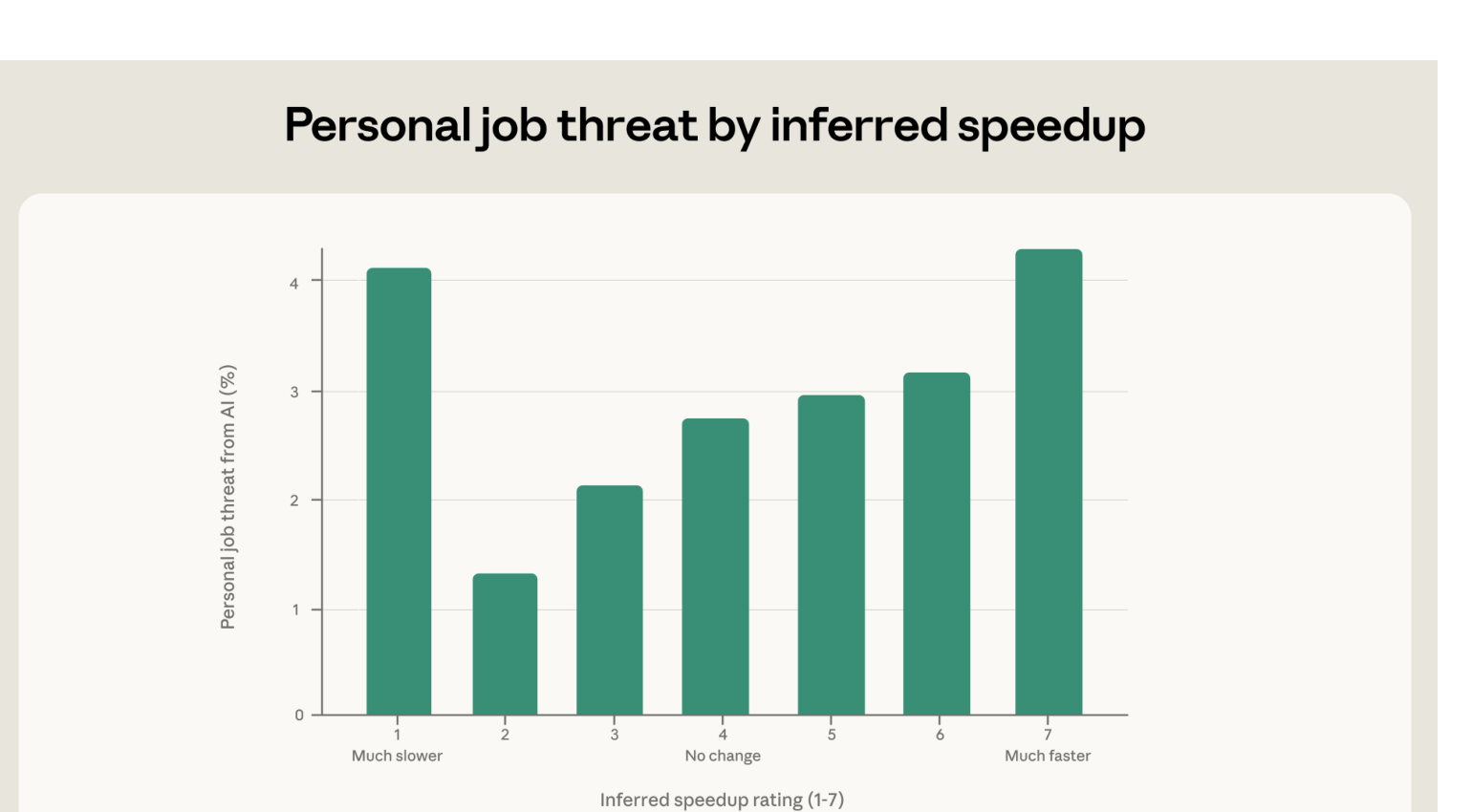
AI Replacing Its Creators: Anthropic Report
Anthropic's latest AI economic report reveals AI is displacing the very people building it. Younger workers express heightened anxiety about job impacts.
Tag: #workforce-impact10 results
Anthropic's latest AI economic report reveals AI is displacing the very people building it. Younger workers express heightened anxiety about job impacts.
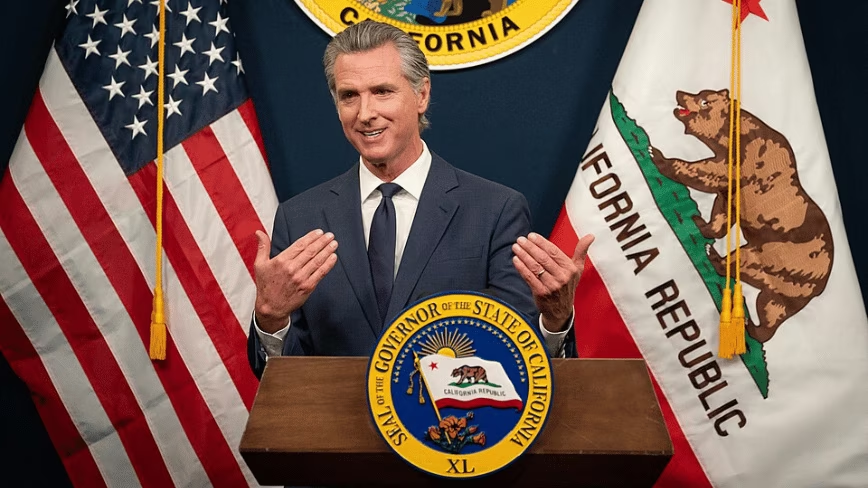
California has developed the first state-level monitoring tool designed to identify and track the impact of AI on the labor market. While initial data shows no mass layoffs yet, the system is flagging early warning signs in the Bay Area and among highly educated workers.

Anthropic has published a new indicator revealing that about 30% of people are less affected by AI advancements. The report highlights common characteristics of these individuals and specific job types that remain resilient. This insight comes from ITmedia AI+ coverage.

Anthropic CEO Dario Amodei says AI development is endless like a rainbow, with huge growth in capabilities and compute. He predicts AI could replace up to 50% of entry-level white-collar jobs within five years. Amodei stresses building trust by delivering real results amid skepticism.
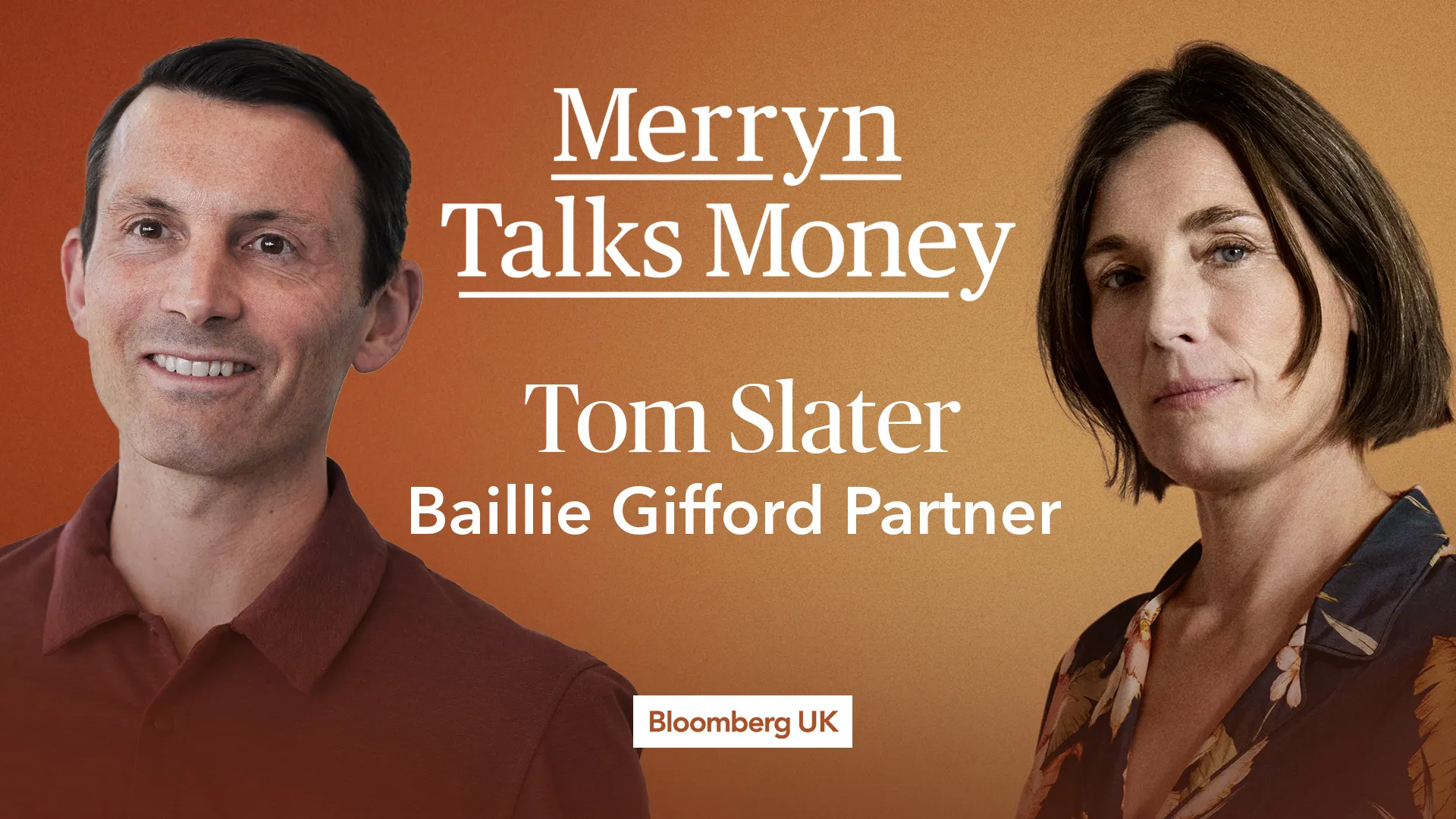
Tom Slater's paper argues AI's primary threat is to human judgment, learning, and expertise, not job displacement. In a Bloomberg podcast, Merryn Somerset Webb discusses this with Slater, manager of Scottish Mortgage Investment Trust. They explore implications for the future workforce and investment strategies.
A new survey indicates government leaders expect AI's workforce impact to surpass the internet, PCs, and smartphones. They anticipate government adoption of AI agents will outpace the private sector.

Lei Jun predicts AI will enable 3-day workweeks by doubling productivity, but the article counters that companies will assign more tasks instead of reducing hours. AI fails to address workplace inefficiencies like pointless meetings and performative busyness. Workers must upskill in AI to gain leverage, as capital won't voluntarily shorten workweeks.
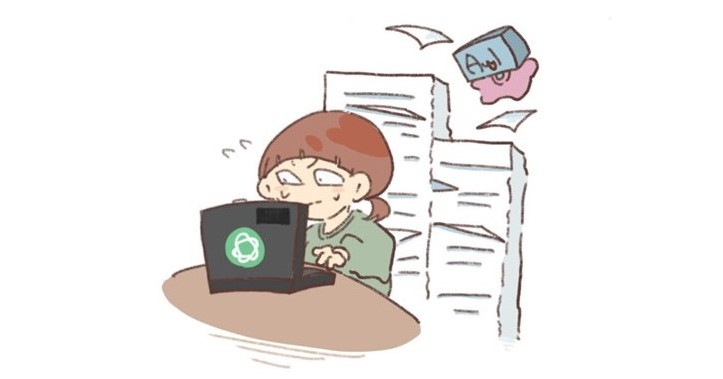
UC Berkeley researchers report generative AI intensifies work rather than reducing it. Study highlights issues from AI dependency in real-world settings.

Workers training AI feel devalued and warn of declining work quality amid rapid AI growth. IMF analysis reveals AI will affect 40% of global jobs. IMF head Kristalina Georgieva calls it a 'tsunami' hitting the labor market.

Young people are embracing hands-on jobs that AI cannot perform, as the stigma fades and competitive appeal grows. Cale Mouser, 23, earns over six figures as an expert in a specialized field, solving complex problems with human expertise beyond desk-bound computing.