Berkeley: GenAI Increases Workload
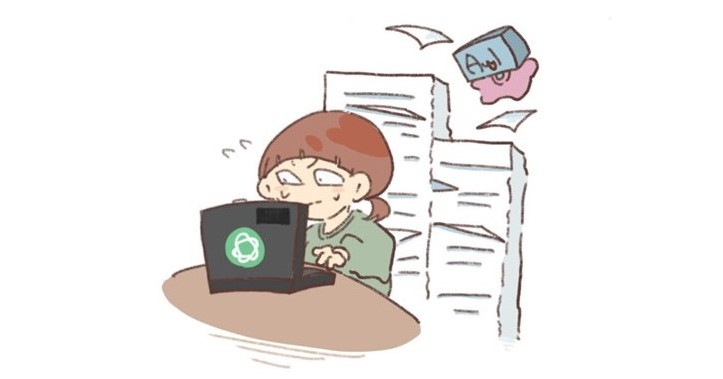
💡Berkeley study warns GenAI boosts workload—key for deploying AI without burning out teams.
⚡ 30-Second TL;DR
What Changed
GenAI causes work intensification, not reduction
Why It Matters
Prompts AI practitioners to reassess over-reliance on tools. Highlights need for balanced integration to avoid workload spikes in teams.
What To Do Next
Review your team's AI usage logs to identify dependency patterns increasing manual oversight.
Key Points
- •GenAI causes work intensification, not reduction
- •UC Berkeley researchers' new study findings
- •AI dependency leads to on-site operational issues
- •Challenges real-world AI productivity assumptions
🧠 Deep Insight
Background and context from public sources — not the original article. 8 sources cited.
🔑 Enhanced Key Takeaways
- •The eight-month ethnographic study at a 200-employee US tech company involved in-person observations two days a week, monitoring internal communications, and 40 interviews across engineering, product, design, research, and operations.[1][2][3]
- •Workers experienced task expansion where product managers wrote code, designers handled engineering tasks, and employees tackled previously outsourced or avoided responsibilities due to AI filling knowledge gaps.[1][2][4]
- •AI blurred work-life boundaries as employees sent prompts during lunch, before meetings, or evenings, dissolving natural pauses and leading to continuous work involvement.[1][3][4]
- •Increased multitasking included running multiple AI agents simultaneously, writing code while AI generated alternatives, and managing multiple threads, creating hidden cognitive load and self-reinforcing cycles of higher speed expectations.[2][3][4]
🔮 Future ImplicationsAI analysis grounded in cited sources
⏳ Timeline
📎 Sources (8)
Factual claims are grounded in the sources below. Forward-looking analysis is AI-generated interpretation.
- businessinsider.com — Is AI Making Jobs More Intense Study 2026 2
- thestreet.com — AI Productivity Has an Intense Downside New Study Says
- newsroom.haas.berkeley.edu — AI Promised to Free Up Workers Time Uc Berkeley Haas Researchers Found the Opposite
- youtube.com — Watch
- fortune.com — AI Future of Work White Collar Employees Technology Productivity Burnout Research Uc Berkeley
- cshe.berkeley.edu — New Study 31000 College Syllabi Shows Faculty Warming AI Classroom
- hbr.org — AI Doesnt Reduce Work It Intensifies It
- ischool.berkeley.edu — 11 Things Uc Berkeley AI Experts Are Watching 2026
Weekly AI Recap
Read this week's curated digest of top AI events →
👉Related Updates
AI-curated news aggregator. All content rights belong to original publishers.
Original source: ITmedia AI+ (日本) ↗
This is a summary, not the original. Read the source, or get the weekly briefing.
Weekly AI briefing
One email a week. Unsubscribe anytime.