
Waymo Builds Custom Chip for Smarter Robotaxis
Waymo has developed a custom chip designed to improve the performance of its robotaxis. The chip also reduces the company’s reliance on third-party suppliers such as Nvidia.
10 results on this page
Waymo has developed a custom chip designed to improve the performance of its robotaxis. The chip also reduces the company’s reliance on third-party suppliers such as Nvidia.
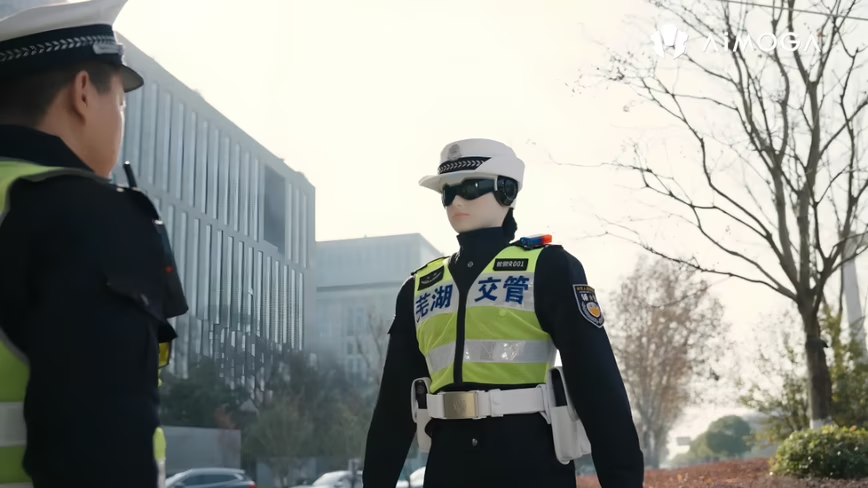
Humanoid robot traffic officers in China can direct vehicles, reprimand jaywalkers, and guide tourists to nearby metro stations. In Hangzhou, at least 15 robots have been deployed, but they are deliberately unable to physically stop people or vehicles.

This survey frames self-evolving LLM agents as dynamic graphs whose memories, tools, skills, workflows, and relationships change over time. It presents four evolution taxonomies, connects nine dynamic-graph-learning fields to agent capabilities, and proposes graph-aware evaluation and governance protocols.
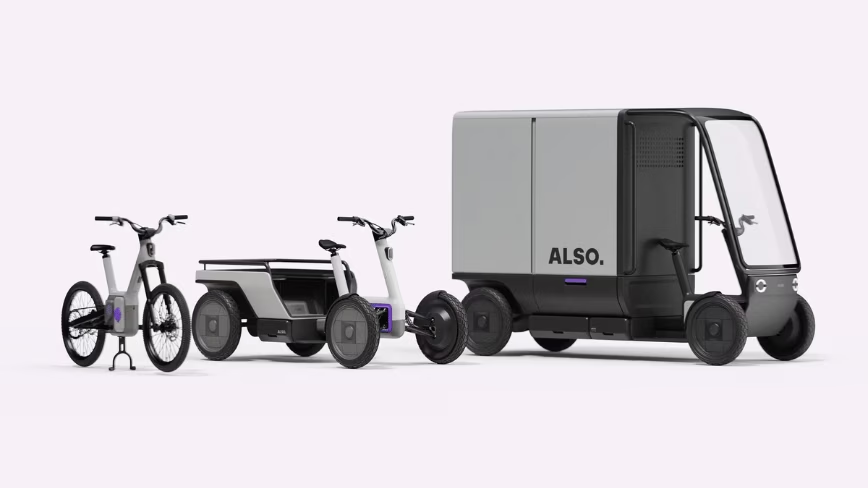
Also, a micromobility startup spun out of Rivian, has raised $150 million in a Series D round at a valuation above $1 billion. Although it currently focuses on e-bikes, the company says its larger goal is developing small autonomous vehicles.
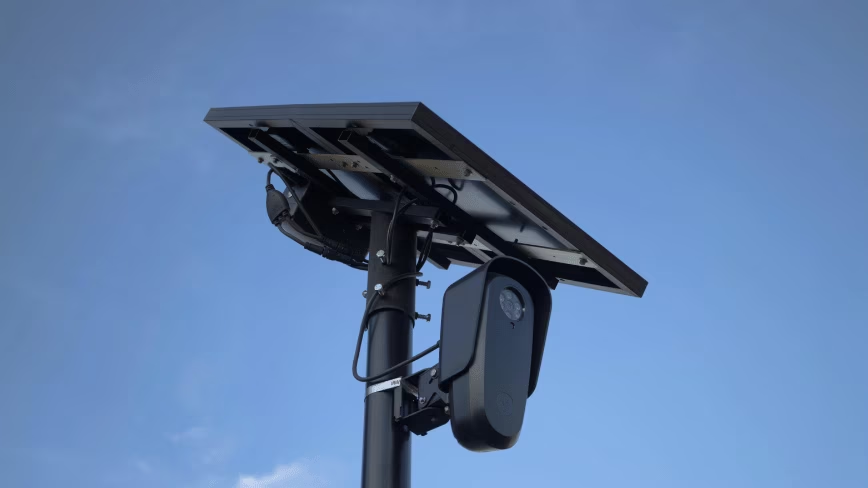
Flock Safety has developed an AI system that allows police to search for people and vehicles based on movement patterns. The capability appears to contradict the company’s longstanding claim that its cameras cannot identify or track individuals.
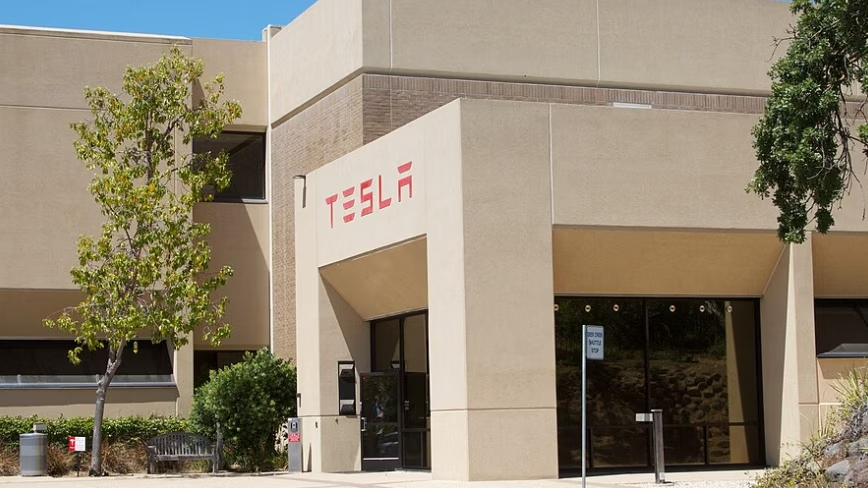
Tesla requested permission to operate up to 5,000 robotaxis in Las Vegas, but Nevada regulators approved only 10. The cap was included in an interim order from the Nevada Transportation Authority dated 27 July.

A driverless Tesla Robotaxi in Austin repeatedly stopped near plastic barriers before ultimately crashing through them and continuing to drive. The incident has renewed scrutiny of Tesla’s path planning and decision-making after an executive described the service’s safety record as “impeccable.”
Loudoun County, Virginia, has used more than 250 data centers to generate substantial local wealth and reduce property taxes. Its success is attracting attention from other jurisdictions despite growing national opposition to data center expansion.
The article reports that Anthropic and Amazon have reportedly purchased large volumes of physical books, scanned them, and destroyed the originals to reduce copyright risk in AI training. It argues that this strategy is tied to differences in US and Chinese copyright law, while also raising concerns about the irreversible loss of cultural artifacts.
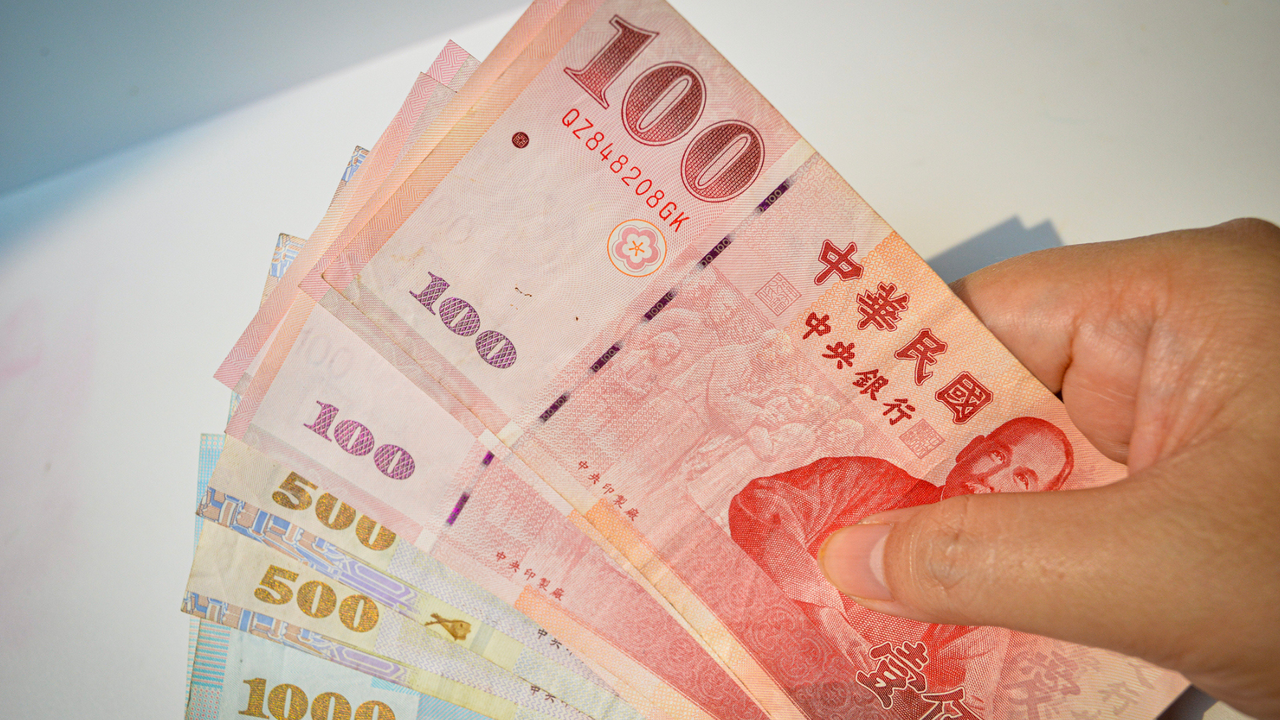
Taiwan plans to give each resident roughly $314 in cash next year, funded by stronger economic activity linked to the AI server boom. The 2027 central government budget allocates $7.4 billion for the payout.