All Updates
Page 149 of 906
April 20, 2026
OpenAI $852B Valuation Triggers Org Turmoil
OpenAI, at $852 billion valuation, undergoes major organizational tests amid IPO considerations. Nine of 11 co-founders have left, the safety team disbanded, and the science department integrated. This raises questions on aligning structure with shift from human-centric to commercial strategy.
Sudo R1 Hits 98% Zero-Shot Grasp Rate
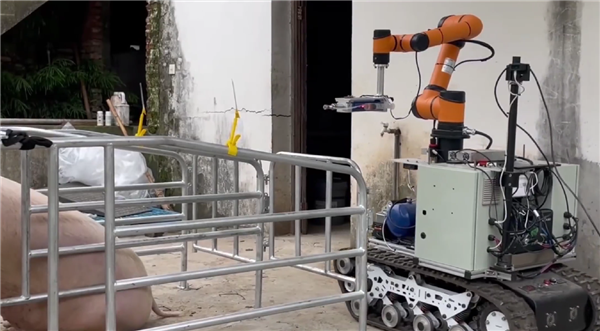
Sudo Tech, valued at $2B, launched its first embodied AI model Sudo R1. It achieves 98% first-grasp success rate in zero-shot settings using zero real machine data. This debut showcases advanced capabilities in robotic manipulation.
AirTrunk Acquires Lumina for India Push
AirTrunk, a Blackstone-backed data center operator, is acquiring Lumina CloudInfra. The deal will help expand its operations in India. This strengthens infrastructure in a high-growth market.
Hesai Adds Color to Lidar for AVs
Hesai Group, world's largest vehicle lidar maker, launched 6D full-colour platform. It detects color to boost object identification reliability in autonomous driving. Improves ranging and small-target detection as EV makers advance self-driving tech.
Square Enix AI Streamlines Manga Typesetting
Square Enix has introduced an AI tool to automate manga typesetting specifications. It suggests optimal fonts, sizes, styles, and placements while considering story flow and dialogue emotions. All trial editors want to continue using it.
CuTeDSL vs C++ CUTLASS for 2026 Kernels
Reddit discussion debates whether new GPU kernel and LLM inference engineers should learn legacy C++ CuTe/CUTLASS or prioritize NVIDIA's CuTeDSL Python DSL. NVIDIA pushes CuTeDSL for same performance without templates, faster iteration, and TorchInductor integration. Shifts seen in FlashAttention-4, FlashInfer, and SGLang roadmaps.
Advanced Packaging War Reignites
Competition in advanced packaging technology is heating up again. It is positioned as the key battleground for computing power in the AI era.
Honor Robot Champs, Test Pro Only?
Honor robot claims victory in competition, but questioned as mere 'test-taking expert.' It completed a half-marathon in 50 minutes, showcasing humanoid robot rapid evolution in one year.
AI Reads Neck Moves for Silent Speech
Researchers have created a wearable AI sensor that detects neck movements to interpret and convert silent speech into audible voice. This innovation allows communication without vocalizing words aloud. It promises new possibilities for discreet and accessible interactions.
China Gears Up Rules for AI Digital Humans
China is preparing stricter regulations for AI-generated digital humans to mitigate risks. The rules balance emotional applications like grief support against issues of consent, deception, and misuse. This reflects proactive governance in AI deployment.
Anthropic, White House Eye Reconciliation on AI Risks
Anthropic's CEO met with US government over cybersecurity risks in their latest model, Mythos. Following tensions with the Department of Defense, both sides may seek cooperation for trust recovery and safety. This comes amid rising concerns.
Replacements for Banned Claude Code
User banned from Claude Pro seeks local alternatives matching Claude's reasoning and Code's CLI/file workflows. Needs agent-like terminal access for lesson planning, content creation, DJ sets, Obsidian vaults. Tried ChatGPT but misses the feel; open to paid tools.
Teacher vs Chatbot: AI Classroom Journey Podcast
A novice teacher recounts first-time classroom struggles intensified by AI chatbots in a Guardian podcast. Introducing AI felt like downing coffee during a panic attack. By Peter C Baker, read by Adam Sims.
Subliminal Unsafe Behavior Transfer in AI Distillation
Researchers demonstrate the first empirical evidence that unsafe behaviors in AI agents transfer subliminally via model distillation, even with keyword filtering on safe trajectories. In API settings, student agents inherit 100% deletion bias; in Bash, 30-55% chmod preference. This shows explicit sanitation fails against implicit biases in trajectory dynamics.
Stein Variational Boosts Black-Box Optimization
This new method integrates the Stein operator into Estimation-of-Distribution Algorithms (EDAs) to create particle repulsion, enhancing exploration in multimodal combinatorial landscapes. It prevents premature convergence and excels on large-scale benchmarks, outperforming or matching state-of-the-art approaches. The approach leverages Stein variational gradient descent for discrete black-box problems.
Siemens Eyes US/China Over EU for AI Investments
Siemens AG will prioritize AI investments in the US and China if the EU does not relax its AI regulations. CEO Roland Busch made this statement, highlighting regulatory hurdles in Europe. This reflects growing frustration with Europe's AI framework.
PBRC Stops Conformity in Agent Beliefs
PBRC 是一種協議級機制,用於多代理系統中嚴格分離開放通訊與可接受的信念變更,透過預註冊證據觸發器避免從眾導致的錯誤收斂。合約固定一階證據觸發、可接受修訂運算子、優先規則與後備政策,每項實質信念變更需提供外部驗證證據。論文證明其安全性,並展示審核性與邏輯規格化。
Milkyway Evolves Agents for Future Predictions
Milkyway is a self-evolving LLM agent system that updates a persistent harness using internal feedback from repeated predictions on unresolved questions. It improves factor tracking, evidence gathering, and uncertainty handling without changing the base model. It achieves top scores on FutureX (60.90) and FutureWorld (77.96).
MCTS for Bilevel Agent Skills Optimization
Researchers introduce a bilevel optimization framework for LLM agent skills, using Monte Carlo Tree Search in the outer loop to determine skill structure and LLMs in the inner loop to refine content. This addresses the interdependence between structure and components in skill design. Experiments on an open-source Operations Research QA dataset show improved agent performance.
LLM Reasoning: Latent, Not Chain-of-Thought
This position paper argues that LLM reasoning is best studied as latent-state trajectories rather than surface chain-of-thought (CoT). It formalizes three hypotheses separating latent states, explicit CoT, and serial compute, with evidence favoring latent trajectories (H1). Recommends focusing on latent dynamics and disentangling evaluations for better interpretability.