Vietnam Aims to Become Global Semiconductor Hub
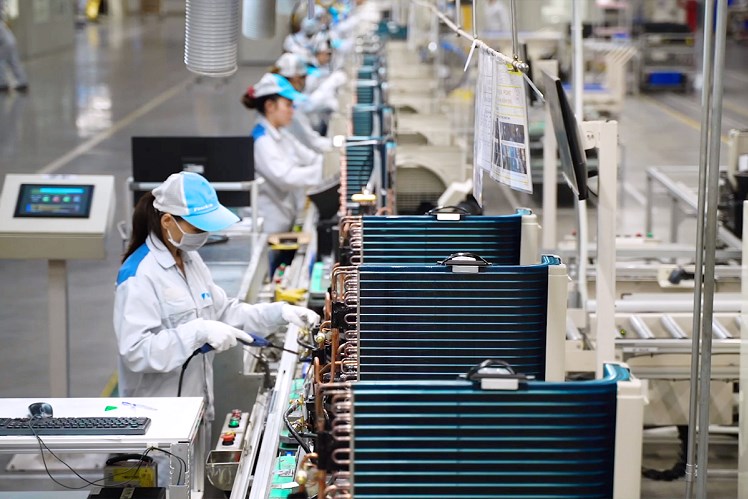
Shifts in semiconductor manufacturing hubs directly impact the availability and cost of AI-ready hardware.
30-Second TL;DR
What Changed
Vietnam targeting semiconductor hub status by 2030
Why It Matters
Vietnam's emergence as a semiconductor hub could reshape global hardware supply chains for AI chips and compute infrastructure.
What To Do Next
Evaluate your hardware supply chain dependencies and consider Vietnam as a potential manufacturing or R&D location.
Key Points
- •Vietnam targeting semiconductor hub status by 2030
- •Strong US interest in diversifying semiconductor supply chains
- •Digital transformation identified as a core economic growth strategy
Deep Insight
Background and context from public sources — not the original article. 22 sources cited.
Enhanced Key Takeaways
- •Vietnam's semiconductor development is guided by a comprehensive strategy, the 2024 National Strategy on Semiconductors and the 2025 Law on Digital Technology Industry, which aims to establish a full-stack semiconductor ecosystem by 2050, moving beyond its current strength in assembly, testing, and packaging (ATP).
- •The United States is a key partner, actively supporting Vietnam's semiconductor ambitions through initiatives like the International Technology Security and Innovation (ITSI) Fund, established by the CHIPS Act of 2022, to foster supply chain diversification and resilience.
- •Major global semiconductor companies are significantly expanding their investments in Vietnam; Intel is relocating production lines from Costa Rica to its Ho Chi Minh City facility, including advanced packaging technology, and Amkor Technology has invested $1.6 billion in a large-scale advanced packaging and test facility in Bac Ninh.
- •Vietnam has set an ambitious goal to train 50,000 high-skilled workers for its semiconductor industry by 2030, with numerous universities introducing specialized programs and collaborations with international firms like Intel and Synopsys to develop the necessary workforce.
- •Local Vietnamese companies, such as Viettel and FPT, are making strides in chip design and even small-scale wafer fabrication, signaling Vietnam's intent to move into higher-value segments of the semiconductor value chain beyond traditional backend operations.
Future ImplicationsAI analysis grounded in cited sources
Timeline
- 1979Z181 Semiconductor Factory established, marking Vietnam's early entry into semiconductor production.
- 2010Intel's $1 billion assembly and test facility in Saigon Hi-Tech Park became operational, establishing a major global player's presence.
- 2023-09The US State Department partnered with Vietnam under the ITSI Fund (CHIPS Act) to explore semiconductor supply chain diversification.
- 2023-10Amkor Technology officially opened its $1.6 billion advanced packaging and test facility in Bac Ninh, significantly expanding Vietnam's OSAT capabilities.
- 2024-09Prime Minister Pham Minh Chinh's Decision No. 1018/QD-TTg outlined Vietnam's comprehensive semiconductor strategy until 2030, with a vision to 2050.
- 2026-03Viettel broke ground on Vietnam's first domestic semiconductor fabrication plant, and FPT announced an advanced testing and packaging facility.
Sources (22)
Factual claims are grounded in the sources below. Forward-looking analysis is AI-generated interpretation.
Weekly AI Recap
Read this week's curated digest of top AI events →
Related Updates

AI-curated news aggregator. All content rights belong to original publishers.
Original source: cnBeta (Full RSS) ↗
This is a summary, not the original. Read the source, or get the weekly briefing.
The weekly digest
One email a week. Unsubscribe anytime.