Samsung Shifts DDR5 Expansion to Outsourcing
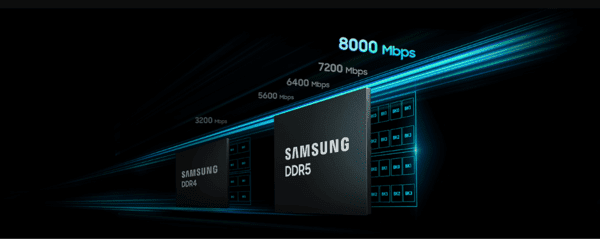
Samsung’s memory allocation shift could affect AI server costs, capacity, and supply planning.
30-Second TL;DR
What Changed
Samsung plans to stop expanding conventional DDR5 module capacity in-house
Why It Matters
The shift reflects the growing demand for AI-related advanced packaging and HBM. It could tighten the strategic focus of Samsung’s memory operations while increasing reliance on manufacturing partners for standard modules.
What To Do Next
Review HBM and DDR5 supplier dependencies in your AI server bill of materials and identify qualified second sources.
Key Points
- •Samsung plans to stop expanding conventional DDR5 module capacity in-house
- •New DDR5 capacity is expected to come from external partners
- •Backend resources will prioritize HBM and other higher-value products
Deep Insight
Background and context from public sources — not the original article. 6 sources cited.
Enhanced Key Takeaways
- •Samsung is reallocating physical cleanroom and packaging capacity at its flagship domestic back-end facilities in Cheonan and Onyang specifically for HBM3E and HBM4 production.
- •Major external OSAT partners tapped for outsourced assembly include Dreamtech (operating an Indian facility in Noida targeting over 50 million units annually), Hanyang Digitech (Vietnam), and SFA Semicon (Philippines).
- •Beyond conventional DDR5 modules, Samsung is also offloading additional capacity expansion for solid-state drive (SSD) module assembly to third-party partners.
- •Samsung is investing 6 trillion won into a dedicated HBM facility at its Onyang campus and up to 10 trillion won to upgrade advanced packaging infrastructure in Cheonan.
- •Samsung's new $1.5 billion backend packaging and testing facility in Thai Nguyen, Vietnam, is designated for legacy memory (DDR4, LPDDR4, older NAND/UFS) rather than absorbing commodity DDR5 surges.
Competitor Analysis
- Samsung Electronics
- Outsourcing all incremental DDR5 & SSD assembly to OSATs (Dreamtech, Hanyang Digitech, SFA Semicon)
- SK Hynix
- Primarily retains core module lines in-house while balancing hybrid packaging partners
- Samsung Electronics
- Repurposing Cheonan & Onyang domestic sites exclusively for HBM3E/HBM4 packaging
- SK Hynix
- Dedicated existing packaging capacity to HBM3E/HBM4 with dedicated TSV lines
- Samsung Electronics
- Scaling advanced packaging to regain ground on next-gen AI supply chains
- SK Hynix
- Captured majority share of HBM3E/HBM4 supply for Nvidia platforms (Blackwell, Rubin)
- Samsung Electronics
- 6T won (Onyang HBM site) + up to 10T won (Cheonan upgrades)
- SK Hynix
- Significant ongoing capex focused on MR-MUF and advanced packaging pipelines
| Metric / Focus Area | Samsung Electronics | SK Hynix |
|---|---|---|
| Module Expansion Strategy | Outsourcing all incremental DDR5 & SSD assembly to OSATs (Dreamtech, Hanyang Digitech, SFA Semicon) | Primarily retains core module lines in-house while balancing hybrid packaging partners |
| Backend Line Reallocation | Repurposing Cheonan & Onyang domestic sites exclusively for HBM3E/HBM4 packaging | Dedicated existing packaging capacity to HBM3E/HBM4 with dedicated TSV lines |
| Key AI Platform Market Share | Scaling advanced packaging to regain ground on next-gen AI supply chains | Captured majority share of HBM3E/HBM4 supply for Nvidia platforms (Blackwell, Rubin) |
| Packaging Capital Investment | 6T won (Onyang HBM site) + up to 10T won (Cheonan upgrades) | Significant ongoing capex focused on MR-MUF and advanced packaging pipelines |
Technical Deep Dive
- Packaging Differentiation: DDR5 memory module and SSD assembly relies on mature Surface Mount Technology (SMT) processes—soldering packaged DRAM/NAND dies onto printed circuit boards (PCBs)—which external OSAT vendors can execute without advanced cleanrooms.
- HBM Advanced Packaging: High Bandwidth Memory (HBM3E/HBM4) requires advanced 3D packaging technologies, including Through-Silicon Vias (TSVs), microbump bonding, and precise thermal-compression or specialized underfill processes requiring high-class cleanroom facilities.
- Economics & Margins: HBM yields a 3× to 4× price premium over standard commodity DDR5, incentivizing total domestic fab real estate utilization toward advanced heterogeneous integration over PCB module assembly.
Future ImplicationsAI analysis grounded in cited sources
Timeline
- 2025-06Samsung approaches OSAT partners to prepare module lines for DDR5 and SSDs
- 2026-09Samsung accelerates OSAT transition and shifts all incremental DDR5 capacity externally to prioritize HBM
Sources (6)
Factual claims are grounded in the sources below. Forward-looking analysis is AI-generated interpretation.
Weekly AI Recap
Read this week's curated digest of top AI events →
Related Updates
AI-curated news aggregator. All content rights belong to original publishers.
Original source: cnBeta (Full RSS) ↗
This is a summary, not the original. Read the source, or get the weekly briefing.
The weekly digest
One email a week. Unsubscribe anytime.