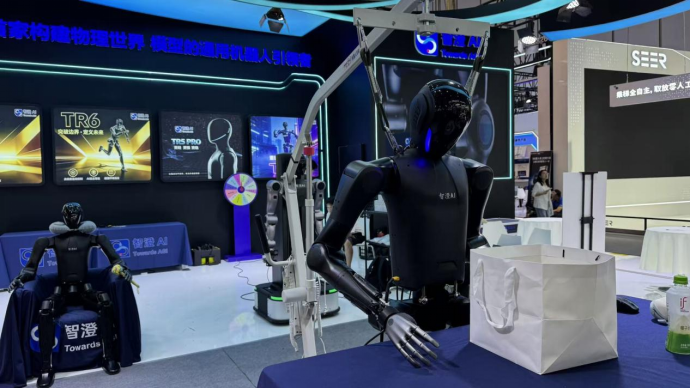
UBTECH humanoid robot faces quality and production challenges

💡Understand the real-world manufacturing hurdles facing the current generation of humanoid robots.
⚡ 30-Second TL;DR
What Changed
UBTECH humanoid robot sales are high but quality is inconsistent
Why It Matters
The gap between marketing and reality may hurt brand trust in the emerging embodied AI sector. It highlights the difficulty of scaling complex robotics hardware.
What To Do Next
If building embodied AI, prioritize rigorous hardware QA and supply chain transparency to avoid brand backlash.
Key Points
- •UBTECH humanoid robot sales are high but quality is inconsistent
- •Users report significant gaps between marketing claims and actual hardware
- •Company is struggling to meet production demand
🧠 Deep Insight
AI-generated analysis for this event — not the original article.
🔑 Enhanced Key Takeaways
- •UBTECH's Walker S series has faced scrutiny regarding the integration of large language models (LLMs) and their real-time latency in industrial settings.
- •Supply chain bottlenecks are primarily attributed to the sourcing of high-torque density actuators and specialized harmonic drives, which are critical for humanoid mobility.
- •Regulatory bodies in China have begun increasing oversight on humanoid robot safety standards, impacting the deployment timelines for UBTECH's factory-floor units.
- •Financial reports indicate that while UBTECH has secured significant partnerships with automotive manufacturers, the cost-per-unit remains high due to low yield rates in precision assembly.
- •Internal quality control audits have reportedly identified thermal management issues in the robot's torso, leading to unexpected shutdowns during extended operation cycles.
📊 Competitor Analysis▸ Show
| Feature | UBTECH (Walker S) | Tesla (Optimus Gen 2) | Figure AI (Figure 02) |
|---|---|---|---|
| Primary Focus | Industrial/Manufacturing | Mass Production/Consumer | General Purpose/AI-First |
| Actuator Tech | Proprietary Servo | Electro-mechanical | Electro-mechanical |
| Market Status | Pilot Deployment | Prototype/Testing | Pilot Deployment |
| Pricing | High (Custom) | Target <$20k | High (Custom) |
🛠️ Technical Deep Dive
- Actuator System: Utilizes proprietary high-torque servo actuators with integrated force sensors for compliant control.
- Control Architecture: Employs a hybrid control system combining traditional PID/MPC for locomotion and transformer-based models for task planning.
- Sensing: Equipped with multi-modal sensor fusion including LiDAR, depth cameras, and IMU arrays for SLAM and object manipulation.
- Power Management: High-density lithium-ion battery packs with active cooling systems to manage thermal loads during high-exertion tasks.
🔮 Future ImplicationsAI analysis grounded in cited sources
⏳ Timeline
Weekly AI Recap
Read this week's curated digest of top AI events →
👉Related Updates


AI-curated news aggregator. All content rights belong to original publishers.
Original source: 钛媒体 ↗
This is a summary, not the original. Read the source, or get the weekly briefing.
Weekly AI briefing
One email a week. Unsubscribe anytime.