World Models Meet Real-World Robots
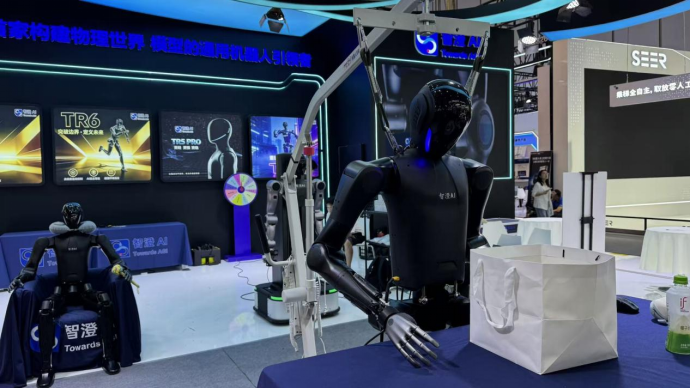
💡World models promise more capable robots, but data costs and deployment economics remain the real bottlenecks.
⚡ 30-Second TL;DR
What Changed
World models are becoming a major research and industry focus for embodied AI.
Why It Matters
If world models can reduce the amount of real-world data needed for training and planning, they could accelerate useful robotics applications. Until then, companies may need hybrid strategies that combine simulation, teleoperation, and carefully selected real-world deployments.
What To Do Next
Prototype your robot policy in NVIDIA Isaac Sim, then compare its failure cases against a small, labeled real-world dataset before scaling deployment.
Key Points
- •World models are becoming a major research and industry focus for embodied AI.
- •Real-world robot data is expensive and difficult to collect at scale.
- •Large-scale deployment will require both stronger models and lower operating costs.
- •The field faces a chicken-and-egg problem between data generation, model maturity, and deployment.
🧠 Deep Insight
Background and context from public sources — not the original article. 8 sources cited.
🔑 Enhanced Key Takeaways
- •Embodied intelligence is projected to reach a 'ChatGPT moment' by late 2027, transitioning from experimental research to transformative capability.
- •World models function as physical AI simulation systems, distinct from LLMs, specifically engineered for real-time navigation and interaction in novel environments.
- •Chinese manufacturers currently dominate the global humanoid market, accounting for 97% of the 19,100 units shipped in H1 2026.
- •The 2026 World Robot Conference saw a 69% increase in exhibitor participation, signaling a rapid acceleration in industry-wide investment and ecosystem growth.
- •Geopolitical trade restrictions on humanoid and quadruped robots are forcing a bifurcation in global supply chains, impacting the deployment of world-model-based systems.
🛠️ Technical Deep Dive
- World models utilize physical AI simulation architectures to process sensory input for real-time spatial reasoning.
- Systems are designed to bridge the gap between abstract simulation and physical execution by training on high-fidelity environmental data.
- Current architectures focus on predictive modeling of physical outcomes to enable autonomous decision-making in unstructured, non-static environments.
🔮 Future ImplicationsAI analysis grounded in cited sources
⏳ Timeline
📎 Sources (8)
Factual claims are grounded in the sources below. Forward-looking analysis is AI-generated interpretation.
Weekly AI Recap
Read this week's curated digest of top AI events →
👉Related Updates

AI-curated news aggregator. All content rights belong to original publishers.
Original source: 钛媒体 ↗
This is a summary, not the original. Read the source, or get the weekly briefing.
Weekly AI briefing
One email a week. Unsubscribe anytime.