Tesla Robotaxi Plan Cut to Just 10 Cars
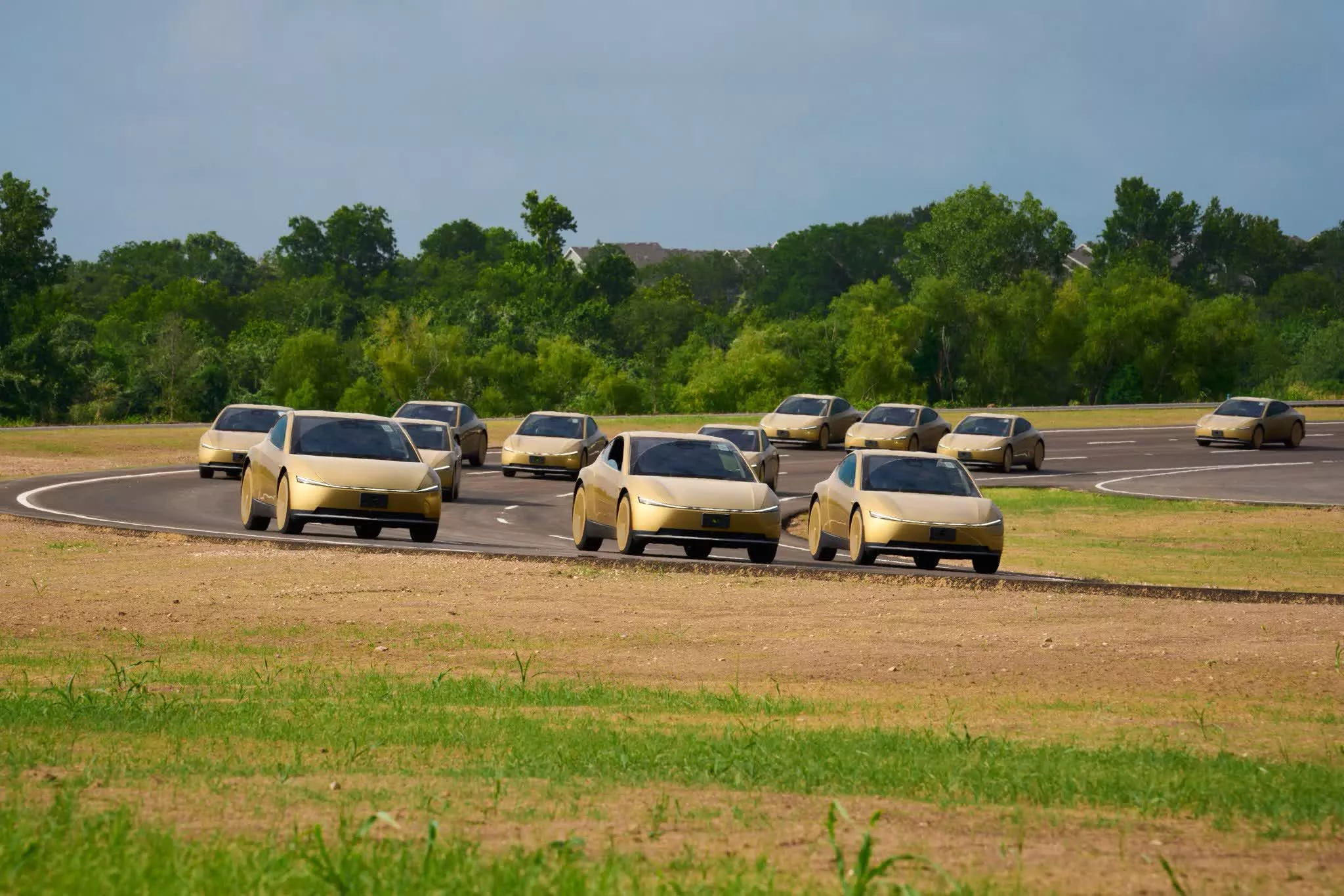
💡Tesla’s 5,000-car Robotaxi ambition has been reduced to an initial approval for only 10 vehicles.
⚡ 30-Second TL;DR
What Changed
Tesla sought approval for up to 5,000 Robotaxis in Clark County, Nevada.
Why It Matters
The limited approval may delay Tesla’s ability to validate autonomous ride-hailing at scale and could increase the importance of regulatory strategy for AI mobility companies. It also provides a contrast with Waymo’s broader California authorization.
What To Do Next
Review Tesla Robotaxi’s Nevada permit conditions and map them against your own autonomous-vehicle deployment checklist before planning a pilot.
Key Points
- •Tesla sought approval for up to 5,000 Robotaxis in Clark County, Nevada.
- •Nevada granted initial operating approval for only 10 vehicles.
- •Regulators, rather than Tesla’s expansion plans, will determine the pace of deployment.
🧠 Deep Insight
AI-generated analysis for this event.
🔑 Enhanced Key Takeaways
- •The Clark County regulatory decision was influenced by concerns regarding Tesla's 'Full Self-Driving' (FSD) safety record and the lack of a human driver in the proposed Robotaxi fleet.
- •Nevada's Department of Motor Vehicles (DMV) requires autonomous vehicle operators to provide extensive safety data and proof of insurance, which Tesla reportedly struggled to finalize for the full 5,000-vehicle request.
- •Local officials in Las Vegas expressed concerns about the potential for traffic congestion and the impact on existing taxi and ride-hailing labor unions if a large-scale autonomous fleet were deployed rapidly.
- •Tesla's proposal included a geofenced operational area limited to the Las Vegas Strip and surrounding tourist corridors, which regulators deemed too complex for an initial pilot phase.
- •This regulatory bottleneck mirrors similar challenges faced by Waymo and Cruise in other jurisdictions, where initial fleet sizes were strictly capped before being allowed to scale based on performance metrics.
📊 Competitor Analysis▸ Show
| Feature | Tesla Robotaxi | Waymo (Alphabet) | Cruise (GM) |
|---|---|---|---|
| Operational Status | Limited Pilot (10 units) | Fully Commercial (Multi-city) | Limited/Testing |
| Hardware | Vision-only (Cameras) | LiDAR + Radar + Cameras | LiDAR + Radar + Cameras |
| Driver Presence | None (Proposed) | None (Commercial) | None (Testing) |
| Primary Market | Private/Ride-hail | Ride-hail | Ride-hail |
🛠️ Technical Deep Dive
- The Tesla Robotaxi platform utilizes the Hardware 4.0 (HW4) computer suite, featuring increased processing power and higher-resolution camera inputs compared to previous generations.
- The vehicle architecture relies on an end-to-end neural network approach, where video input is processed directly into steering, braking, and acceleration commands without traditional hard-coded rules.
- The system incorporates a redundant power and steering architecture designed to meet safety requirements for driverless operation in urban environments.
- Data logging for the Nevada pilot requires real-time transmission of disengagement events and system health telemetry to a centralized monitoring center.
🔮 Future ImplicationsAI analysis grounded in cited sources
⏳ Timeline
Weekly AI Recap
Read this week's curated digest of top AI events →
👉Related Updates


AI-curated news aggregator. All content rights belong to original publishers.
Original source: cnBeta (Full RSS) ↗