Merops Drone Interceptor to Begin Production in Germany
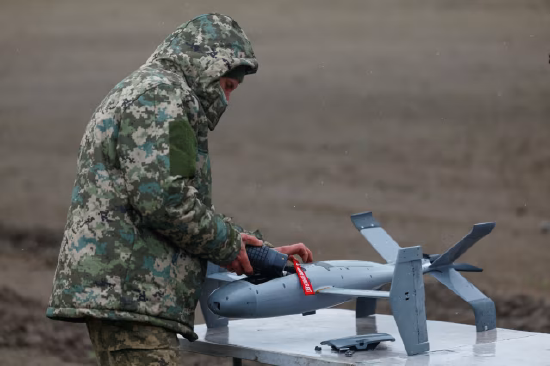
💡Combat-proven autonomous drone defense tech scaling in Europe; key for developers in the defense AI space.
⚡ 30-Second TL;DR
What Changed
Merops drone interceptor enters European manufacturing phase.
Why It Matters
The localization of combat-proven anti-drone technology in Europe highlights the growing demand for autonomous defense systems and rapid technology scaling.
What To Do Next
Analyze the integration of edge AI in defense hardware to understand how autonomous tracking systems are being scaled for mass production.
Key Points
- •Merops drone interceptor enters European manufacturing phase.
- •Partnership between Perennial Autonomous Technology and 24 Industrial Group.
- •System proven in real-world combat scenarios in Ukraine and Iran.
🧠 Deep Insight
Web-grounded analysis with 16 cited sources.
🔑 Enhanced Key Takeaways
- •The Merops system, built around the "Surveyor" interceptor drone, was developed by Perennial Autonomy, a U.S. defense firm formerly known as Project Eagle and initially White Stork, a venture launched by former Google CEO Eric Schmidt in 2023.
- •The U.S. Army rapidly acquired approximately 13,000 Merops interceptors within eight days after Iran began launching drones at U.S. positions in late February 2026, deploying them to the Middle East to counter Iranian Shahed-136 munitions.
- •Each Merops interceptor costs about $15,000, offering a significant cost advantage over the $30,000 to $50,000 Shahed drones it intercepts, with potential for prices to drop to $3,000-$5,000 per unit with increased production.
- •Beyond Ukraine and Iran, the Merops system has been deployed by NATO allies, including Poland, Romania, and Lithuania, with Lithuania purchasing 48 Merops interceptors in April 2026 to strengthen its air defenses along the alliance's eastern flank.
- •The Merops system is designed for rapid deployment from mobile platforms, such as pickup trucks, and can be operated by a small, four-person crew (commander, pilot, two technicians) after only two weeks of training.
🛠️ Technical Deep Dive
- Interceptor Drone: Named "Surveyor," it is a small, three-foot, fixed-wing, propeller-driven interceptor.
- Speed: Capable of reaching speeds over 280 km/h (175 mph), enabling it to intercept fast-moving attack drones like the Russian Geran-3.
- Range: Has an interception range of approximately 5–20 kilometers from its launch point.
- Warhead: Carries a two-kilogram fragmentation warhead, designed to destroy targets through either direct collision or proximity detonation.
- Guidance: Employs AI-based machine vision and onboard sensors for target tracking and terminal homing, capable of locking onto targets using radio frequency signals, radar guidance, or thermal signatures.
- Autonomy: Can operate autonomously or be remotely piloted, with the ability to autonomously home into targets even when GPS and radio links are jammed or unavailable.
- Electronic Warfare Resistance: Engineered to function effectively in GPS and radio-frequency (RF) contested environments.
- System Components: The complete system includes interceptor drones, mobile launch platforms, a ground control and command station, and integrated radar or other sensors for target detection.
- Recovery: If an interceptor misses its target, it can deploy a parachute for recovery and potential reuse.
🔮 Future ImplicationsAI analysis grounded in cited sources
⏳ Timeline
📎 Sources (16)
Factual claims are grounded in the sources below. Forward-looking analysis is AI-generated interpretation.
- Google Search Source
- Google Search Source
- Google Search Source
- Google Search Source
- Google Search Source
- Google Search Source
- Google Search Source
- Google Search Source
- Google Search Source
- Google Search Source
- Google Search Source
- Google Search Source
- Google Search Source
- Google Search Source
- Google Search Source
- Google Search Source
Weekly AI Recap
Read this week's curated digest of top AI events →
👉Related Updates



AI-curated news aggregator. All content rights belong to original publishers.
Original source: cnBeta (Full RSS) ↗