Lunar impacts show gradual decline, not single burst
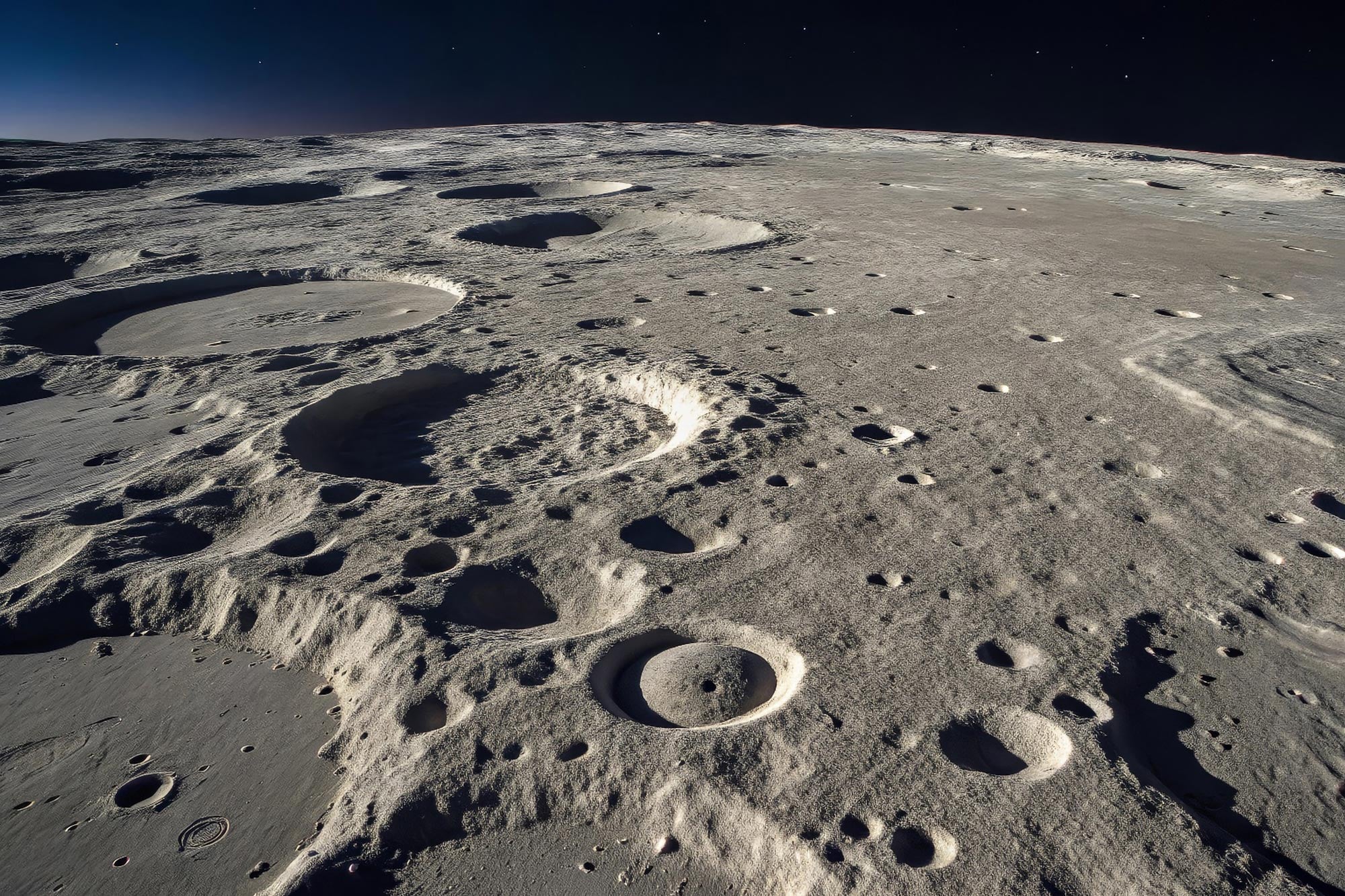
New lunar data from Chang'e-6 updates our understanding of solar system history and planetary geological modeling.
30-Second TL;DR
What Changed
Analysis of Chang'e-6 lunar far-side samples
Why It Matters
This research recalibrates the timeline of early solar system evolution. It provides a more accurate chronological baseline for planetary science.
What To Do Next
Use the updated lunar chronological data to refine your geological simulation parameters for planetary modeling.
Key Points
- •Analysis of Chang'e-6 lunar far-side samples
- •Evidence suggests gradual impact decay over time
- •Refutes the 'Late Heavy Bombardment' hypothesis
- •Collaborative research involving Curtin University
Deep Insight
AI-generated analysis for this event — not the original article.
Enhanced Key Takeaways
- •The Chang'e-6 mission successfully returned approximately 1,935 grams of lunar soil from the South Pole-Aitken basin, the largest and oldest impact crater on the Moon.
- •Researchers utilized high-precision U-Pb (Uranium-Lead) dating on impact-melted glass beads found within the regolith to establish a precise chronology of bombardment events.
- •The data indicates that the impact flux in the inner solar system has been relatively stable or slowly declining since the formation of the South Pole-Aitken basin roughly 4 billion years ago.
- •This study challenges the 'cataclysm' model which posited a spike in asteroid impacts approximately 3.9 billion years ago, suggesting instead a more continuous geological evolution.
- •The findings provide critical constraints for planetary formation models, implying that the early solar system's dynamical instability may have concluded earlier than previously estimated.
Technical Deep Dive
- Analysis utilized Secondary Ion Mass Spectrometry (SIMS) to date individual impact-melted glass spherules.
- The study focused on the age distribution of spherules to reconstruct the impact history of the lunar far side.
- Researchers applied Bayesian statistical modeling to integrate the age data with crater density counts from the landing site.
- The methodology relies on the assumption that the abundance of impact-melted glass is directly proportional to the frequency of large-scale impact events in the region.
Future ImplicationsAI analysis grounded in cited sources
Timeline
- 2024-05Chang'e-6 probe launches from Wenchang Spacecraft Launch Site.
- 2024-06Chang'e-6 lands on the lunar far side and collects surface and subsurface samples.
- 2024-06Chang'e-6 returner successfully lands in Inner Mongolia with lunar samples.
- 2026-07International research team publishes findings on impact history based on Chang'e-6 samples.
Weekly AI Recap
Read this week's curated digest of top AI events →
Related Updates


AI-curated news aggregator. All content rights belong to original publishers.
Original source: cnBeta (Full RSS) ↗
This is a summary, not the original. Read the source, or get the weekly briefing.
The weekly digest
One email a week. Unsubscribe anytime.