Grey market for EV battery upgrades exposed
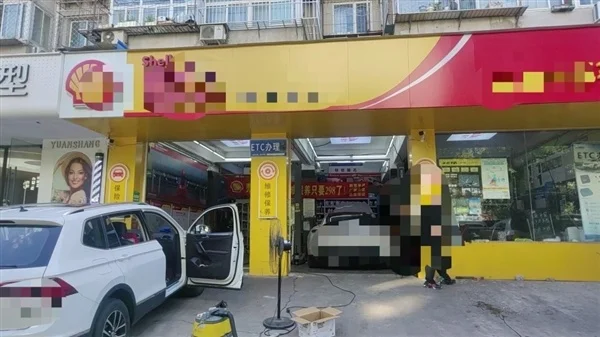
Understand the infrastructure and safety risks of unauthorized EV battery modifications as the fleet ages.
30-Second TL;DR
What Changed
Nearly 20 million EV batteries will lose warranty coverage in China over the next eight years.
Why It Matters
The rise of this grey market creates significant challenges for vehicle safety standards and long-term battery management infrastructure.
What To Do Next
If building AI-driven diagnostic tools for EVs, incorporate anomaly detection for non-standard battery voltage patterns.
Key Points
- •Nearly 20 million EV batteries will lose warranty coverage in China over the next eight years.
- •High costs of official battery replacements are driving owners toward unauthorized grey market modifications.
- •Grey market services use online lead generation to facilitate offline, potentially unsafe battery 'upgrades'.
Deep Insight
AI-generated analysis for this event — not the original article.
Enhanced Key Takeaways
- •Unauthorized battery upgrades often involve 'cell swapping' or 're-celling,' where individual degraded cells are replaced with mismatched chemistry or capacity, leading to severe thermal runaway risks.
- •Regulatory bodies in China, such as the Ministry of Industry and Information Technology (MIIT), have begun drafting stricter guidelines for EV battery recycling and secondary market certification to curb these practices.
- •Insurance companies are increasingly denying coverage for vehicles identified with modified battery management systems (BMS), citing the inability to verify the safety integrity of the altered hardware.
- •Grey market operators frequently bypass BMS software locks by using cracked diagnostic tools or 'emulator' devices that trick the vehicle's onboard computer into accepting non-OEM battery packs.
- •The rise of this market has created a secondary trade in 'black box' battery data, where hackers sell proprietary BMS communication protocols to aftermarket shops to enable unauthorized pack integration.
Technical Deep Dive
- BMS Spoofing: Aftermarket shops utilize CAN bus emulators to intercept and modify communication packets between the battery pack and the vehicle controller to prevent 'limp mode' or system lockout.
- Cell Mismatching: Unauthorized upgrades often mix cells with different State of Health (SoH) and internal resistance profiles, causing uneven charging and discharging that accelerates degradation.
- Thermal Management Bypass: Many grey market packs lack integrated cooling loop modifications, meaning the new, higher-density cells operate outside their designed thermal envelope.
- Firmware Patching: Technicians often flash modified firmware onto the Battery Management Unit (BMU) to override safety thresholds and capacity limits set by the original manufacturer.
Future ImplicationsAI analysis grounded in cited sources
Timeline
- 2023-05China's MIIT releases initial guidelines on EV battery traceability and recycling.
- 2024-11First major insurance industry report highlights rising fire risks linked to unauthorized EV battery repairs.
- 2025-09Major Chinese EV manufacturers implement encrypted BMS communication protocols to block third-party hardware integration.
- 2026-03Regulatory crackdown begins on online platforms facilitating illegal battery modification services.
Weekly AI Recap
Read this week's curated digest of top AI events →
Related Updates


AI-curated news aggregator. All content rights belong to original publishers.
Original source: cnBeta (Full RSS) ↗
This is a summary, not the original. Read the source, or get the weekly briefing.
The weekly digest
One email a week. Unsubscribe anytime.