LG and NVIDIA Plan 2027 Humanoid Robot Launch
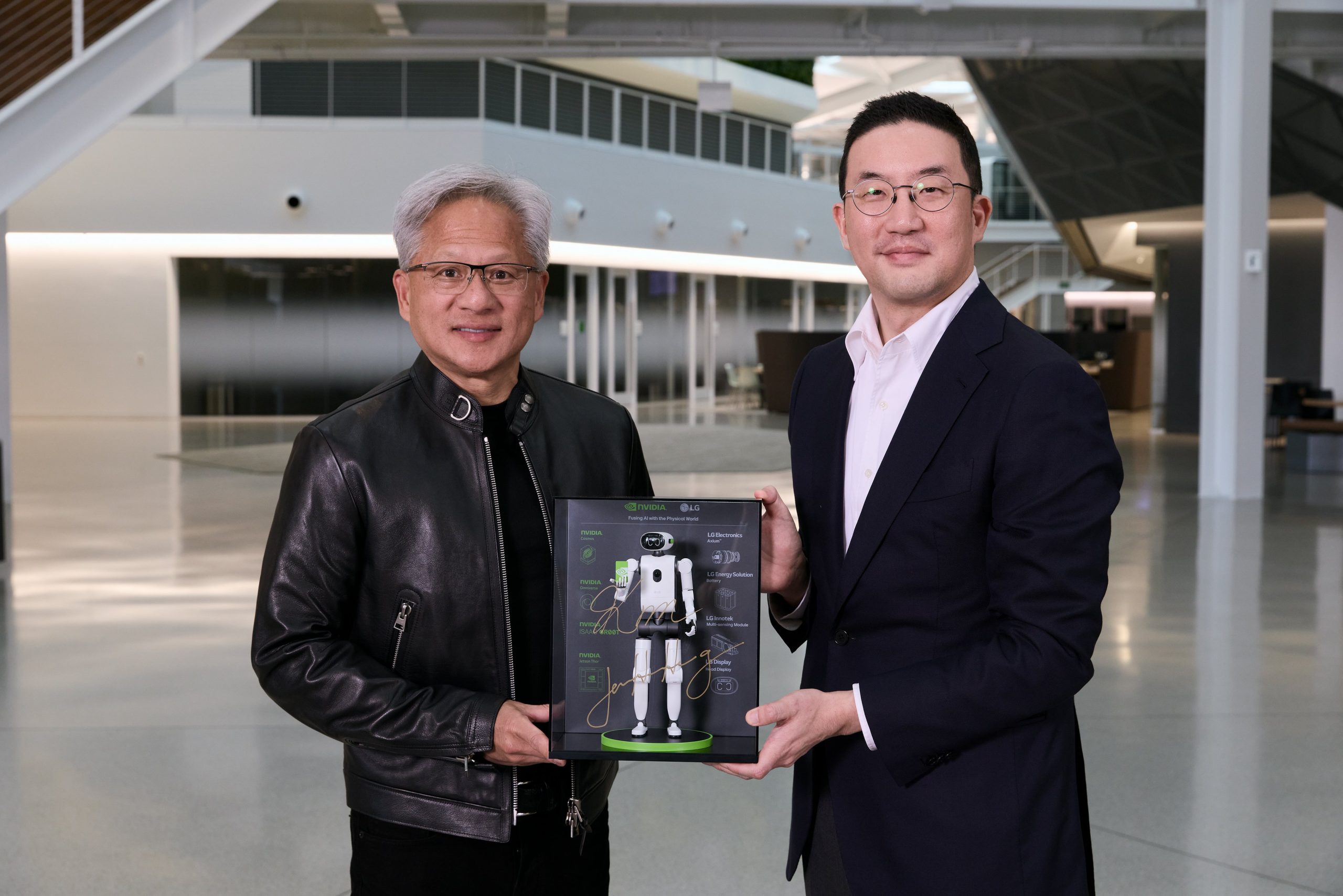
💡LG and NVIDIA are targeting a 2027 humanoid robot, opening a new embodied-AI platform opportunity.
⚡ 30-Second TL;DR
What Changed
LG plans to launch the next-generation bipedal humanoid robot in Q1 2027.
Why It Matters
The partnership signals LG’s intention to expand from consumer electronics into embodied AI and industrial automation. For AI companies, it could create future opportunities in robot software, simulation, perception, and factory integration.
What To Do Next
Track NVIDIA’s robotics platform roadmap and prototype a simulation workflow for humanoid perception and control before LG’s 2027 launch.
Key Points
- •LG plans to launch the next-generation bipedal humanoid robot in Q1 2027.
- •The robot will be built on NVIDIA’s robotics platform.
- •The memorandum also covers AI factories and future mobility applications.
- •LG Group Chairman Koo Kwang-mo and NVIDIA CEO Jensen Huang attended the signing ceremony.
🧠 Deep Insight
AI-generated analysis for this event.
🔑 Enhanced Key Takeaways
- •LG Electronics is leveraging its existing 'LG AI Research' division and the 'Exaone' multimodal AI model to integrate proprietary large language model capabilities into the humanoid's cognitive architecture.
- •The partnership utilizes NVIDIA's Isaac robotics platform and Omniverse digital twin technology to conduct extensive virtual training and simulation before physical deployment.
- •LG's strategy focuses on 'industrial-grade' humanoid robots initially, targeting complex manufacturing environments and logistics centers rather than consumer-facing domestic tasks.
- •This collaboration builds upon LG's previous acquisition of robotics startup 'Robostar' and its long-term investment in autonomous mobile robots (AMRs) for commercial spaces.
- •The initiative aligns with LG's broader 'Future Vision 2030' strategy, which aims to transform the company from a home appliance manufacturer into a 'Smart Life Solution' company.
📊 Competitor Analysis▸ Show
| Competitor | Platform/Architecture | Target Market | Status |
|---|---|---|---|
| Tesla | Optimus (FSD/Dojo) | Consumer/Industrial | In Development |
| Figure AI | OpenAI/Azure Models | Industrial/Logistics | Pilot Testing |
| Boston Dynamics | Atlas (Electric) | Industrial/Automotive | Commercialization |
| Sanctuary AI | Carbon/Phoenix | General Purpose | Field Testing |
🛠️ Technical Deep Dive
- Integration of NVIDIA Jetson Orin modules for edge AI processing to enable real-time object recognition and path planning.
- Utilization of NVIDIA Isaac Sim for high-fidelity physics simulation to accelerate reinforcement learning cycles.
- Implementation of transformer-based architectures for natural language understanding and human-robot interaction (HRI).
- Focus on proprietary actuator control systems to achieve high-torque, low-latency movement required for bipedal stability.
- Cloud-to-edge connectivity leveraging NVIDIA's AI Enterprise software suite for fleet management and remote updates.
🔮 Future ImplicationsAI analysis grounded in cited sources
⏳ Timeline
Weekly AI Recap
Read this week's curated digest of top AI events →
👉Related Updates
AI-curated news aggregator. All content rights belong to original publishers.
Original source: cnBeta (Full RSS) ↗