Pony.ai and Uber Expand Europe Robotaxi Fleet
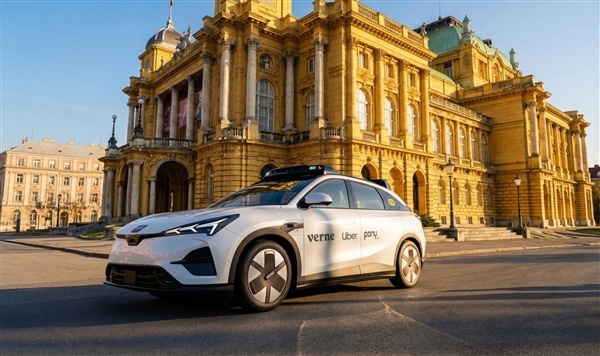
💡A 2,000-plus Robotaxi rollout could reshape Europe’s autonomous mobility economics.
⚡ 30-Second TL;DR
What Changed
The partnership targets more than 2,000 Robotaxis across five European cities.
Why It Matters
A multi-city deployment would provide Pony.ai with a larger real-world operating footprint and give Uber a scalable autonomous-ride option in Europe. Success will depend on regulatory approvals, fleet operations, safety performance, and the economics of sustained commercial service.
What To Do Next
Use Zagreb as a deployment benchmark and build a pilot model covering per-mile autonomy cost, remote assistance, regulatory approval, and fleet utilization before entering a new city.
Key Points
- •The partnership targets more than 2,000 Robotaxis across five European cities.
- •The expansion extends the existing commercial service in Zagreb, Croatia.
- •The remaining four cities and full deployment schedule will be announced in stages.
- •The companies are also considering expansion into Middle Eastern markets.
- •The report frames Pony.ai's operating cost as roughly one-quarter of Waymo's.
🧠 Deep Insight
AI-generated analysis for this event.
🔑 Enhanced Key Takeaways
- •Pony.ai utilizes a proprietary 'Virtual Driver' architecture that integrates multi-sensor fusion (LiDAR, radar, and cameras) specifically optimized for European urban environments with narrow streets and complex traffic patterns.
- •The partnership leverages Uber's existing 'UberX' and 'Uber Green' infrastructure, allowing users to toggle between human-driven and autonomous vehicles within the same app interface.
- •Pony.ai's cost efficiency advantage is attributed to its 'light-asset' hardware strategy, which utilizes lower-cost, high-performance sensor suites compared to the more expensive, custom-built hardware stacks used by competitors.
- •Regulatory approval for the expansion was facilitated by the EU's 'Type Approval' framework for autonomous vehicles, which Pony.ai secured following successful safety validation in Zagreb.
- •The expansion into the Middle East is reportedly centered on partnerships with sovereign wealth funds to establish localized R&D hubs for desert-climate autonomous driving testing.
📊 Competitor Analysis▸ Show
| Feature | Pony.ai (Uber) | Waymo (Alphabet) | Tesla (Cybercab) |
|---|---|---|---|
| Primary Market | Europe/Asia/Middle East | North America | Global (Planned) |
| Hardware Strategy | Light-asset/Modular | Custom/High-cost | Vision-only/Low-cost |
| Operating Cost | ~25% of Waymo | Baseline (High) | Projected Low |
| Deployment Model | Ride-hailing Integration | Dedicated Network | Consumer/Fleet Hybrid |
🛠️ Technical Deep Dive
- Pony.ai employs a deep reinforcement learning framework for path planning that adapts to non-standard European traffic signage and roundabouts.
- The sensor stack features a solid-state LiDAR configuration that reduces power consumption by 30% compared to traditional mechanical spinning LiDAR units.
- The system utilizes a dual-redundant computing platform (NVIDIA DRIVE Orin-based) to ensure fail-operational capabilities in the event of a primary processor fault.
- Data processing is handled via a hybrid edge-cloud architecture, where critical safety decisions are processed locally in milliseconds, while mapping updates are synchronized via 5G/6G networks.
🔮 Future ImplicationsAI analysis grounded in cited sources
⏳ Timeline
Weekly AI Recap
Read this week's curated digest of top AI events →
👉Related Updates



AI-curated news aggregator. All content rights belong to original publishers.
Original source: cnBeta (Full RSS) ↗