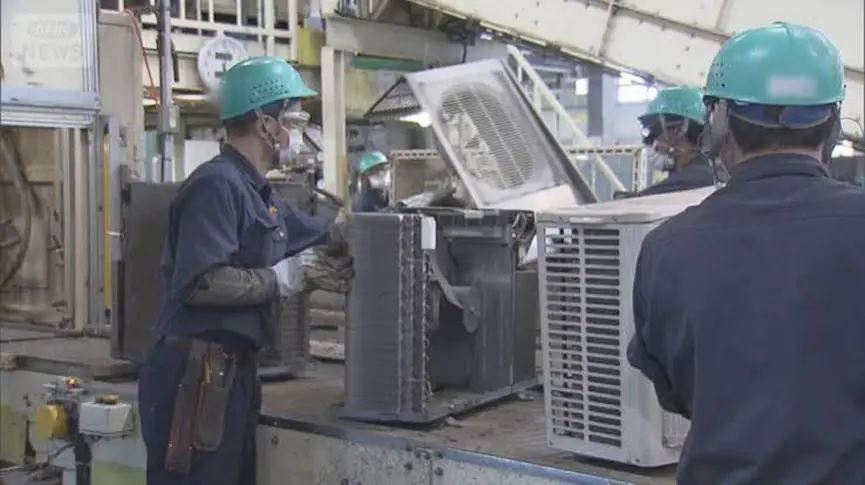
Japan extracts rare earth materials from old air conditioners
💡Rare earth supply chain stability is a critical bottleneck for the future of robotics and AI hardware manufacturing.
⚡ 30-Second TL;DR
What Changed
Japan initiates rare earth extraction from waste air conditioners
Why It Matters
Sustainable sourcing of rare earth elements is critical for the long-term stability of the hardware and robotics industry, which relies heavily on these materials for motors and sensors.
What To Do Next
Explore sustainable material sourcing strategies for hardware prototypes to mitigate risks associated with rare earth supply chain volatility.
Key Points
- •Japan initiates rare earth extraction from waste air conditioners
- •Driven by domestic resource scarcity and supply chain concerns
- •Public sentiment reflects concerns over the severity of resource shortages
- •First-of-its-kind large-scale recycling program in Japan
🧠 Deep Insight
AI-generated analysis for this event — not the original article.
🔑 Enhanced Key Takeaways
- •The initiative specifically targets neodymium and dysprosium, which are critical for the high-performance magnets used in air conditioner compressor motors.
- •Japan's Ministry of Economy, Trade and Industry (METI) is providing subsidies to recycling firms to bridge the cost gap between virgin rare earth mining and recycled material recovery.
- •Advanced automated dismantling robots are being deployed to separate motor components from plastic and copper housing, significantly increasing recovery efficiency compared to manual labor.
- •This program aligns with the 'Act on Recycling of Specified Kinds of Home Appliances,' which mandates high recovery rates for metals but has recently been expanded to include rare earth elements.
- •Major Japanese electronics manufacturers are partnering with specialized recycling facilities to create a 'closed-loop' supply chain, aiming to reuse recovered magnets directly in new product lines.
🛠️ Technical Deep Dive
- Recovery Process: Utilizes a dry-process magnetic separation technique that isolates neodymium-iron-boron (NdFeB) magnets from the rotor assembly without requiring chemical leaching.
- Efficiency Metrics: Current pilot programs report a recovery purity rate of 98.5% for neodymium, meeting industrial standards for new magnet manufacturing.
- Automation: Implementation of AI-driven computer vision systems to identify and sort different motor types from various air conditioner models, optimizing the dismantling sequence.
- Energy Footprint: The recycling process consumes approximately 60% less energy compared to the traditional mining and refining of rare earth oxides.
🔮 Future ImplicationsAI analysis grounded in cited sources
⏳ Timeline
Weekly AI Recap
Read this week's curated digest of top AI events →
👉Related Updates

AI-curated news aggregator. All content rights belong to original publishers.
Original source: cnBeta (Full RSS) ↗
This is a summary, not the original. Read the source, or get the weekly briefing.
Weekly AI briefing
One email a week. Unsubscribe anytime.