Hello Robot releases fourth-gen Stretch home assistant

💡See the latest hardware iteration in the race to bring embodied AI into the home.
⚡ 30-Second TL;DR
What Changed
Launch of the fourth-generation Stretch robot
Why It Matters
The iteration of home robots indicates a maturing market for embodied AI, moving from research labs to practical, albeit early, home deployment.
What To Do Next
Check the Hello Robot developer documentation to experiment with their ROS-based control APIs.
Key Points
- •Launch of the fourth-generation Stretch robot
- •Focus on home assistance and domestic utility
- •Advancements in mobile manipulation hardware
🧠 Deep Insight
Background and context from public sources — not the original article. 7 sources cited.
🔑 Enhanced Key Takeaways
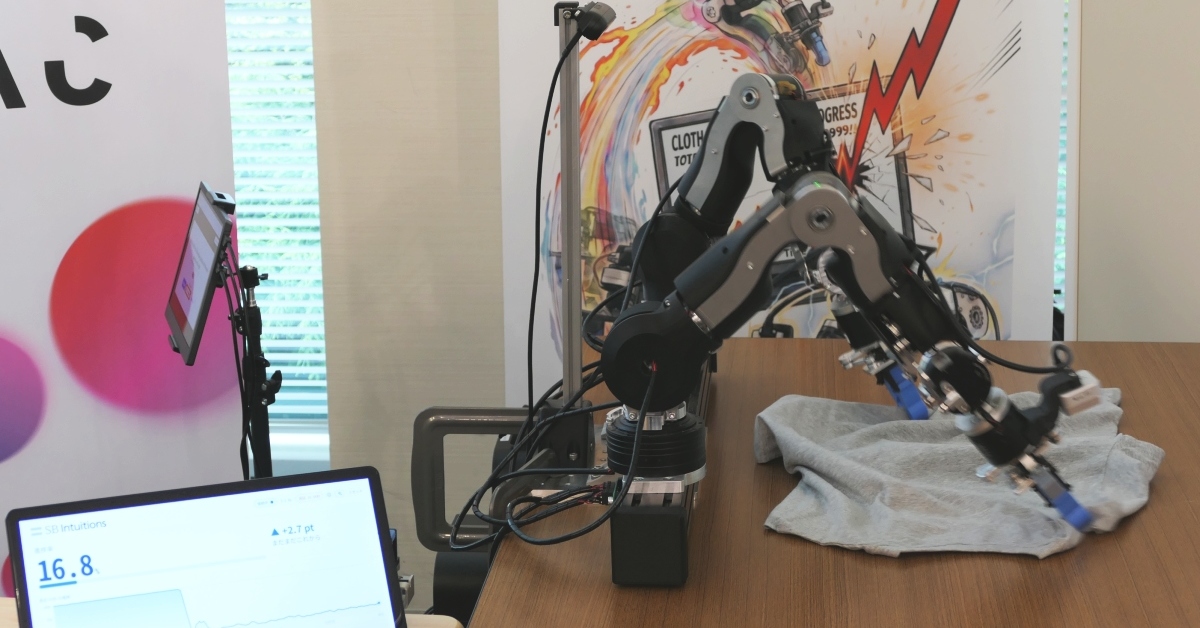
- •The fourth-generation Stretch robot, available for $29,950, features a 'sensor-rich' architecture, including two hemispherical 3D lidars, three high-resolution cameras, and six laser line sensors, to enhance safety and perception in dynamic environments.
- •Stretch 4's mobile manipulation capabilities have been significantly upgraded, with its arm, lift, and base operating at twice the speed of its predecessor, Stretch 3, and a 10% increase in total reach.
- •The robot is designed with an emphasis on safe human-robot interaction, prioritizing a lightweight, compact, and low-potential-energy design over complex humanoid forms, making it suitable for close collaboration with people in homes and workplaces.
- •Hello Robot has integrated an NVIDIA Jetson Orin NX into Stretch 4, providing robust compute power for running advanced AI models and supporting the development of Physical AI applications.
- •The Stretch platform has been piloted to support individuals with severe mobility impairments, demonstrating its practical utility in tasks such as fetching drinks, closing blinds, and assisting with feeding, controllable via a mobile phone app.
🛠️ Technical Deep Dive
- Software: Open-source ROS 2 and Python SDK, integrated and calibrated out of the box.
- Power & Charging: Self-charging capability with a docking station, offering up to 8 hours of runtime under light CPU load.
- Mobility: Omnidirectional base with 20 cm wheels, enabling traversal over various indoor terrains including carpets, rugs, and thresholds.
- Manipulation: Telescoping arm with a reach of 55 cm + 6 cm wrist; payload capacity of 2.5 kg (arm extended) and 4 kg (arm retracted).
- Degrees of Freedom: Features eight redundant degrees of freedom plus a gripper.
- End-Effector: Ambidextrous wrist with an integrated depth camera, configurable for left- or right-handed operation. Includes a quick-release mechanism for swapping between a compliant gripper, a parallel jaw gripper, and a tablet interface.
- Sensing System: Sophisticated sensor array including two hemispherical 3D LiDAR sensors, three high-resolution cameras (global-shutter fisheye RGB cameras for surroundings, one central high-resolution RGB camera for gripper workspace), and six laser line sensors around the base for detecting floor hazards.
- Compute: NVIDIA Jetson Orin NX for running AI models.
- Physical Dimensions: Total weight of 46 kg (33 kg with ballast removed for transport); height of 160 cm; footprint of 45 cm diameter.
🔮 Future ImplicationsAI analysis grounded in cited sources
⏳ Timeline
📎 Sources (7)
Factual claims are grounded in the sources below. Forward-looking analysis is AI-generated interpretation.
Weekly AI Recap
Read this week's curated digest of top AI events →
👉Related Updates


AI-curated news aggregator. All content rights belong to original publishers.
Original source: TechCrunch AI ↗
This is a summary, not the original. Read the source, or get the weekly briefing.
The weekly digest
One email a week. Unsubscribe anytime.