Japan Selects Teams for Robot Foundation Model Projects
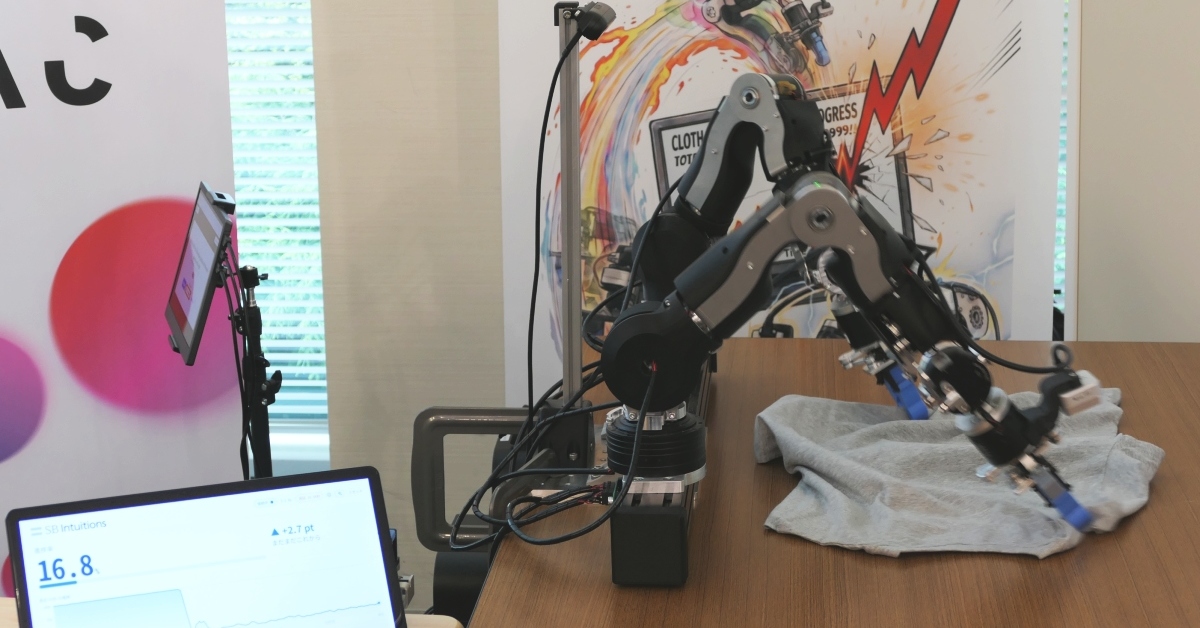
💡Japan is directing national AI funding toward reusable models and data for robotics.
⚡ 30-Second TL;DR
What Changed
GENIAC selected organizations for research on multi-purpose robot foundation models.
Why It Matters
The projects could strengthen Japan’s domestic capabilities in embodied AI, robot learning, and shared training data. Selected organizations may also contribute to a broader ecosystem for reusable models across multiple robot applications.
What To Do Next
Track the selected GENIAC projects and assess whether their future robot datasets or foundation models can support your embodied-AI prototypes.
Key Points
- •GENIAC selected organizations for research on multi-purpose robot foundation models.
- •A separate selection covers research on building data ecosystems.
- •The initiative expands Japan’s generative AI development efforts into robotics.
🧠 Deep Insight
Background and context from public sources — not the original article. 10 sources cited.
🔑 Enhanced Key Takeaways
- •KDDI leads a retail and logistics consortium alongside LLM venture ELYZA, KDDI Research, and Genki Robotics to develop models for grasping soft goods and restocking shelves.
- •Training data is being gathered on-site at Tokyo's Lawson S KDDI Takanawa store using lightweight AI glasses worn by staff to capture egocentric visual and manipulation feeds alongside digital twins.
- •FastLabel and Kyushu Electric Power were selected to build Vision-Language-Action (VLA) models for quadruped 'loco-manipulation' focused on thermal power plant inspection.
- •Japanese robotics startup Atom was selected under the solicitation to access national computing infrastructure and build foundation models for domestic humanoid robots.
- •The initiative mandates a hardware-agnostic architecture compatible with both domestic and foreign robotic platforms, with open technology disclosure targeted for around FY2028.
🛠️ Technical Deep Dive
- Vision-Language-Action (VLA) Architecture: Development of multimodal models combining locomotion and spatial manipulation (loco-manipulation) tailored for quadrupedal and humanoid platforms.
- Egocentric Multimodal Data Ingestion: Data pipelines incorporating first-person viewpoint capture via worker-worn AI smart glasses, robot-perspective camera feeds, and synthetic digital twin simulation data.
- Deformable Object Manipulation: Specific algorithmic optimization targeting irregular geometries and deformable packaging (e.g., bagged food items) for precise retail shelf placement.
- Hardware-Agnostic Model Decoupling: Abstraction layers designed to allow foundational actuation and planning weights to transfer across varied robotic embodiments without vendor lock-in.
🔮 Future ImplicationsAI analysis grounded in cited sources
⏳ Timeline
📎 Sources (10)
Factual claims are grounded in the sources below. Forward-looking analysis is AI-generated interpretation.
Weekly AI Recap
Read this week's curated digest of top AI events →
👉Related Updates


AI-curated news aggregator. All content rights belong to original publishers.
Original source: ITmedia AI+ (日本) ↗
This is a summary, not the original. Read the source, or get the weekly briefing.
The weekly digest
One email a week. Unsubscribe anytime.