Google I/O Preview: Gemini 4.0 and Ecosystem Strategy
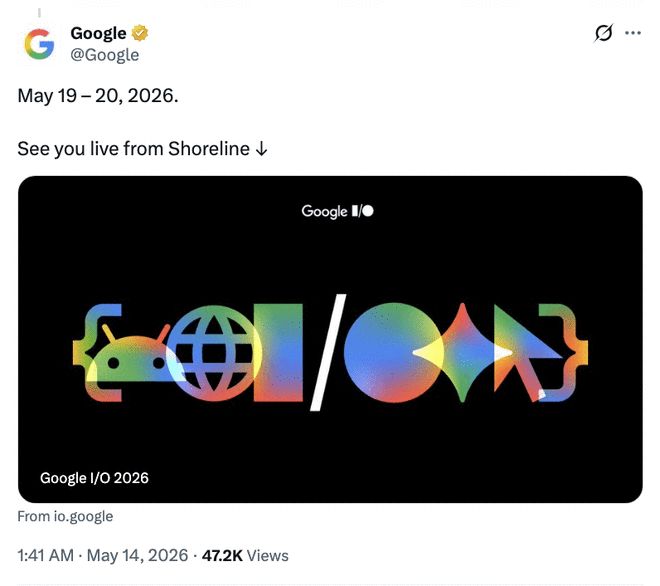
💡Understand if Google's ecosystem strategy can outpace OpenAI's rapid model iteration cycle.
⚡ 30-Second TL;DR
What Changed
Google faces intense pressure from OpenAI and Anthropic to maintain top-tier AI status.
Why It Matters
Google's strategy shift indicates that the AI war is moving from model benchmarks to platform dominance and developer ecosystem lock-in.
What To Do Next
Monitor the Google I/O developer sessions for new API capabilities in the Gemini ecosystem to prepare for potential integration.
Key Points
- •Google faces intense pressure from OpenAI and Anthropic to maintain top-tier AI status.
- •The focus is shifting from raw model capabilities to ecosystem-wide integration.
- •Gemini 4.0 is highly anticipated but may not be the only 'big move' from Google.
🧠 Deep Insight
Web-grounded analysis with 20 cited sources.
🔑 Enhanced Key Takeaways
- •Google's upcoming I/O conference is expected to unveil Gemini 4.0 with an anticipated 2-million-token context window, allowing it to process extensive data like entire codebases or long video/audio in a single prompt.
- •The strategy for Gemini 4.0 is to position it as the 'brain' for agentic AI assistants, capable of planning and executing multi-step tasks autonomously, moving beyond traditional chatbot functionalities.
- •Deep integration of Gemini is planned across Google's entire ecosystem, including Android 17 (with AI accessible from the lock screen and notification shade), Chrome, ChromeOS, and new Android XR glasses for real-time translation and contextual information.
- •Google is also expected to announce TPU v7, its custom AI accelerator chip for Google Cloud, signaling a comprehensive strategy that links AI models, hardware infrastructure, and enterprise AI tools.
- •Speculation suggests the potential debut of 'Aluminum OS,' a new lightweight operating system designed to merge Android and ChromeOS, further solidifying cross-device AI integration within Google's ecosystem.
📊 Competitor Analysis▸ Show
| Feature/Model | Google Gemini (e.g., 1.5 Pro, 3.1 Pro, 4.0 expected) | OpenAI (e.g., GPT-4o, GPT-4 Turbo) | Anthropic (e.g., Claude 3 Opus, Claude 4 Opus) |
|---|---|---|---|
| Context Window | Up to 2M tokens (1.5 Pro experimental, 4.0 expected); 1M tokens (1.5 Pro) | 128K tokens (GPT-4 Turbo) | 200K tokens (Claude 3/4 Opus/Sonnet) |
| Multimodality | Native processing of text, code, images, audio, video. | Unified "omni-modal" (text, audio, vision end-to-end). | Multimodal input (text, images, PDFs). |
| Ecosystem Integration | Deeply embedded across Google products (Android, Workspace, Search, Chrome, XR). | Strong third-party plugin ecosystem, powers ChatGPT, Microsoft Copilot. | Available via Claude web app, API, Amazon Bedrock. |
| Agentic Capabilities | Designed for multi-step task execution, "agentic era" focus. | Rumored focus on agentic AI, GPT-4o offers advanced intelligence. | "Extended thinking" mode for multi-step tasks, tool use. |
| Key Strengths | Long context window, deep ecosystem integration, multimodal reasoning, cost-efficient Flash variants. | Human-like inference, flexibility, strong coding, real-time conversational interaction. | Safety-first, careful reasoning, fewer hallucinations, strong coding, OCR, visual data interpretation. |
| Pricing (Small Models) | Gemini 1.5 Flash can be least expensive for prompts under 128K tokens. | GPT 4-o mini is cost-efficient, free tier for many features. | Claude 3 Haiku can be more expensive than competitors for input/output tokens. |
🛠️ Technical Deep Dive
- Gemini's architecture is trained natively on multiple data types, allowing it to process and generate text, computer code, images, audio, and video simultaneously within a single unified model.
- Gemini 1.5 Pro introduced a Mixture-of-Experts (MoE) design, which allows for increased intelligence without proportional computational costs, and supports a one-million-token context window, with experimental versions extending to two million tokens.
- The models utilize a transformer-based neural network architecture, a foundational technology introduced by Google in 2017.
- Google Gemini Agents are engineered with a "Containment-First" approach, emphasizing security through sandboxed execution, network isolation, and the use of short-lived credentials to ensure robust and isolated operational environments.
- Gemini 3 Flash is a production-optimized variant designed for speed and cost efficiency, achieving performance comparable to previous Pro models through distillation techniques and processing requests up to three times faster than Gemini 2.5 Pro.
🔮 Future ImplicationsAI analysis grounded in cited sources
⏳ Timeline
📎 Sources (20)
Factual claims are grounded in the sources below. Forward-looking analysis is AI-generated interpretation.
- Google Search Source
- Google Search Source
- Google Search Source
- Google Search Source
- Google Search Source
- Google Search Source
- Google Search Source
- Google Search Source
- Google Search Source
- Google Search Source
- Google Search Source
- Google Search Source
- Google Search Source
- Google Search Source
- Google Search Source
- Google Search Source
- Google Search Source
- Google Search Source
- Google Search Source
- Google Search Source
Weekly AI Recap
Read this week's curated digest of top AI events →
👉Related Updates

Microsoft plans to transform Minecraft into a global creator platform

SpaceX Rocket Debris to Impact Moon
Apple warns of potential AI compute resource shortages
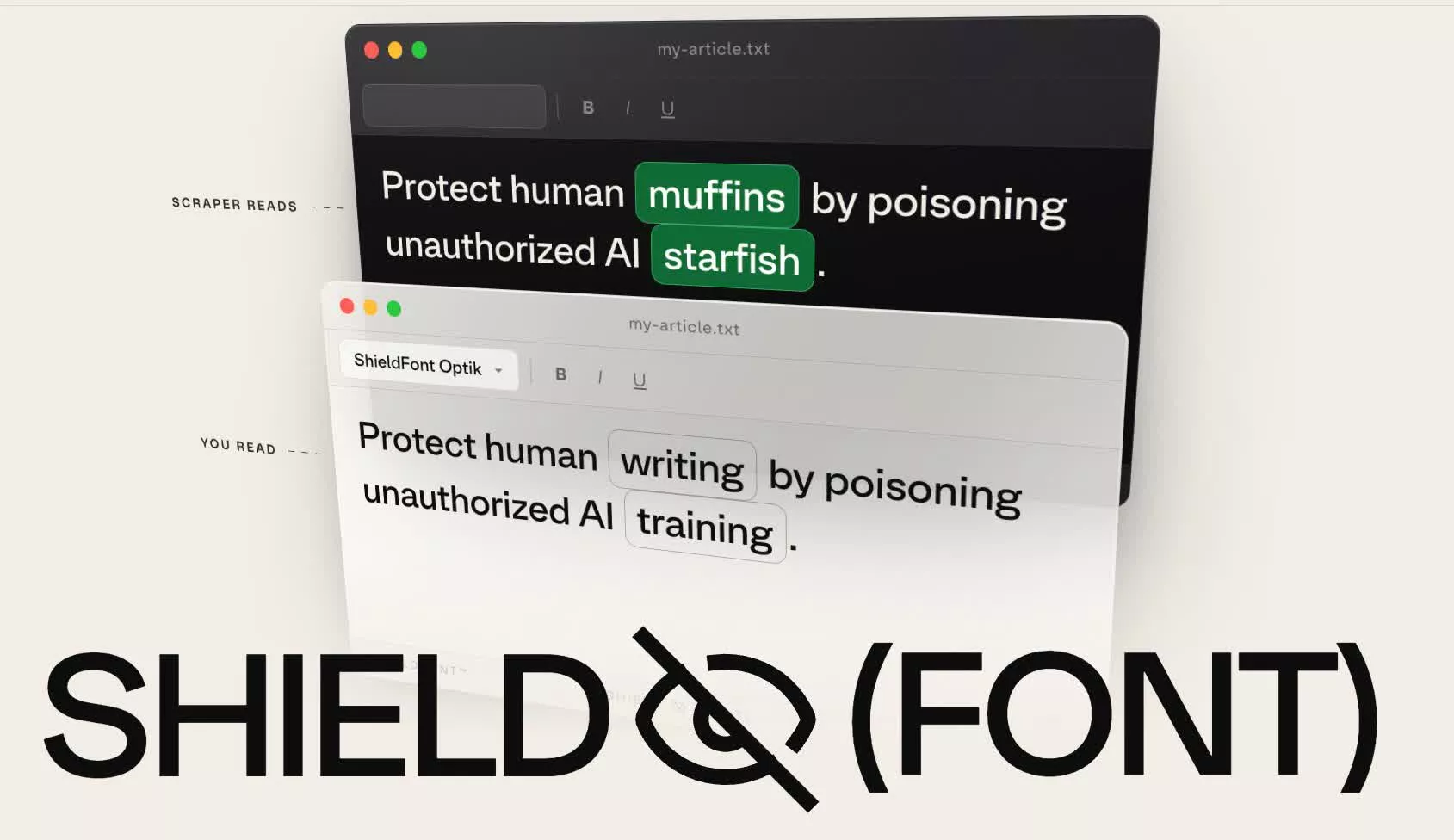
ShieldFont uses obfuscated typography to block AI scrapers
AI-curated news aggregator. All content rights belong to original publishers.
Original source: cnBeta (Full RSS) ↗