SpaceX Rocket Debris to Impact Moon
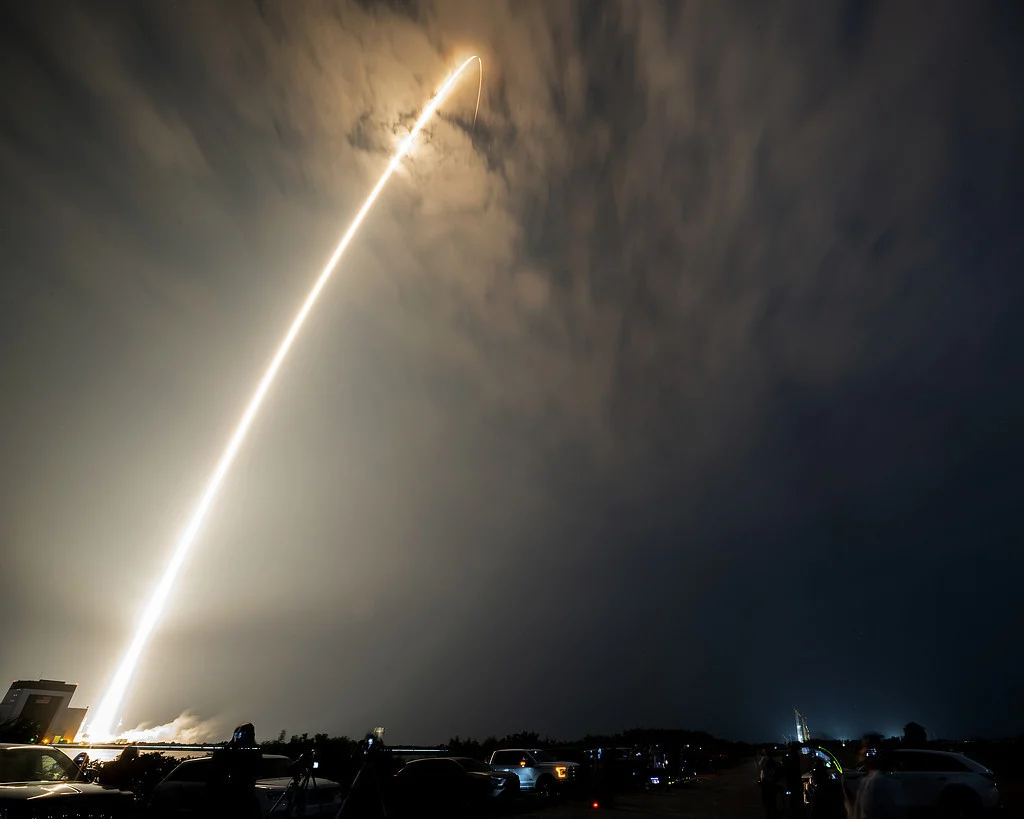
Rare opportunity to observe a high-velocity space debris impact on the Moon for planetary science validation.
30-Second TL;DR
What Changed
5-ton Falcon 9 upper stage will impact the Moon
Why It Matters
The event serves as a controlled, albeit accidental, experiment in planetary science. Researchers can use this to calibrate impact models for lunar surface dynamics.
What To Do Next
If you are working on aerospace simulation or trajectory prediction, use this event to validate your orbital mechanics models.
Key Points
- •5-ton Falcon 9 upper stage will impact the Moon
- •Collision scheduled for August 5th at 2:34 AM ET
- •Impact site identified near the Einstein crater
- •Provides rare data for lunar impact cratering research
Deep Insight
AI-generated analysis for this event — not the original article.
Enhanced Key Takeaways
- •The object in question is the second stage of a Falcon 9 rocket that launched the DSCOVR (Deep Space Climate Observatory) mission in February 2015.
- •The rocket stage was left in a high-elliptical orbit after completing its primary mission, lacking sufficient fuel to return to Earth's atmosphere or escape the Earth-Moon system.
- •Astronomers initially misidentified the object as a piece of a Chinese Long March 3C rocket before later correcting the identification to the SpaceX Falcon 9 stage.
- •The impact is expected to occur at a velocity of approximately 2.58 kilometers per second (about 5,770 miles per hour).
- •Because the impact will occur on the far side of the Moon, it will not be directly observable by Earth-based telescopes, though lunar orbiters may capture imagery of the resulting crater.
Technical Deep Dive
- Object: Falcon 9 second stage (spent booster).
- Mass: Approximately 4 metric tons (dry mass).
- Velocity at impact: ~2.58 km/s.
- Kinetic Energy: The impact will release energy equivalent to several tons of TNT, creating a crater estimated to be 10-20 meters in diameter.
- Orbital Dynamics: The object followed a chaotic trajectory influenced by Earth-Moon gravity, leading to its eventual lunar intercept.
Future ImplicationsAI analysis grounded in cited sources
Timeline
- 2015-02SpaceX launches the DSCOVR mission using a Falcon 9 rocket.
- 2015-02The Falcon 9 second stage is abandoned in a high-elliptical orbit after the mission.
- 2022-01Astronomers identify the object as being on a collision course with the Moon.
- 2022-02Correction issued identifying the object as a SpaceX Falcon 9 stage rather than a Chinese Long March 3C.
Weekly AI Recap
Read this week's curated digest of top AI events →
Related Updates


AI-curated news aggregator. All content rights belong to original publishers.
Original source: cnBeta (Full RSS) ↗
This is a summary, not the original. Read the source, or get the weekly briefing.
The weekly digest
One email a week. Unsubscribe anytime.