Glass Paper Bottlenecks AI World
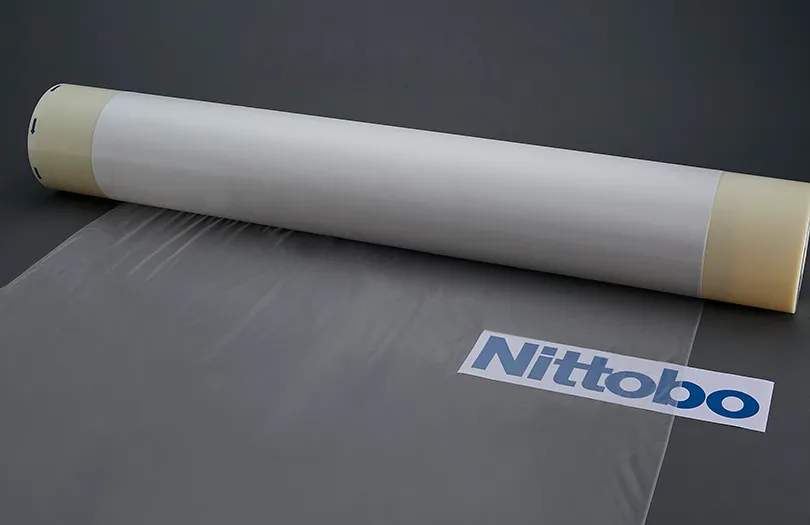
💡Uncover the hidden supply chain chokehold delaying GPT-5 and AI scaling
⚡ 30-Second TL;DR
What Changed
Thin glass paper critically bottlenecks AI hardware supply
Why It Matters
This supply constraint could delay major AI model releases and scaling efforts, forcing practitioners to rethink hardware dependencies and diversify suppliers amid rising costs.
What To Do Next
Monitor semiconductor news for glass substrate shortages and evaluate alternative packaging materials for your AI prototypes.
Key Points
- •Thin glass paper critically bottlenecks AI hardware supply
- •Impacts OpenAI GPT-5, Google Gemini Ultra, Anthropic Claude
- •Chips, memory, cables prices soar from AI infrastructure boom
- •Overlooked material thinner than hair strand controls AI fate
🧠 Deep Insight
Background and context from public sources — not the original article. 7 sources cited.
🔑 Enhanced Key Takeaways
- •T-glass is a specialized ultra-thin glass fiber fabric with low coefficient of thermal expansion (CTE) and high tensile strength, used as heat-dissipating layers within semiconductor substrates to enable thermal and dimensional stability in AI chips[2].
- •The T-glass shortage is creating a structural bottleneck across multiple AI infrastructure components: ABF substrates, SSD controllers, advanced packaging, and high-speed storage systems, with controller inventory pressure forecasted to build into mid-2026[1].
- •Nittobo, a major T-glass supplier, announced in February 2026 development of Vlex, a next-generation low-CTE glass material intended to become the de facto standard for electronics-grade fiberglass[2].
- •Glass substrates represent the next evolution beyond current CoWoS (Chip on Wafer on Substrate) packaging, with Intel launching first chips using glass cores in early 2026, though significant manufacturing challenges remain including copper adhesion issues and thermal expansion mismatches[3][4].
- •Material-level bottlenecks in T-glass are expected to surface as cost inflation and delayed deliveries before outright shortages, making upstream risk management and diversified sourcing critical for AI infrastructure procurement[1].
🛠️ Technical Deep Dive
- •T-glass composition: Ultra-thin glass fiber fabric with low coefficient of thermal expansion (CTE) and high tensile strength, used in epoxy laminates as heat-dissipating layers within semiconductor substrates[2]
- •Substrate architecture: T-glass and epoxy laminates enable thermal and dimensional stability by connecting the main silicon chip to the printed circuit board (PCB) via an ultra-thin, flat, multi-material platform[2]
- •Glass substrate challenges: Extreme flatness and smoothness prevent easy adhesion to copper wiring materials; CTE mismatch between glass and copper causes severe chip defects and delamination under high-temperature AI workload conditions; fragility and potential warpage as panel sizes increase[4]
- •Manufacturing precision requirements: Advanced packaging now requires ISO Class 5 cleanroom environments with fewer than 3,500 microscopic particles per cubic meter; specialized tools like hybrid bonders from Besi and lithography tools from ASML have lead times exceeding 12-18 months[3]
- •Panel-level packaging (PLP) development: Rapidus prototype uses glass interposer with large square glass panels replacing conventional 300mm round silicon wafers, intended for high-performance AI packages combining multi-chip GPUs and 12+ HBM dies, with mass production planned by 2028[4]
🔮 Future ImplicationsAI analysis grounded in cited sources
⏳ Timeline
📎 Sources (7)
Factual claims are grounded in the sources below. Forward-looking analysis is AI-generated interpretation.
- info.fusionww.com — Understanding the T Glass Shortage and Its Role in AI Growth
- compositesworld.com — On the Radar the Role of T Glass in AI
- markets.financialcontent.com — Tokenring 2026 1 28 the Cowos Conundrum Why Advanced Packaging Is the Sovereign Utility of the 2026 AI Economy
- manuelwalz.substack.com — The Glass Substrate Reality Check
- kochdisruptivetechnologies.com — The Next Tech Era Starts with Optics
- eetimes.com — Addressing the Biggest Bottleneck in the AI Semiconductor Ecosystem
- semiengineering.com — How the Eda Industry Will Evolve in 2026
Weekly AI Recap
Read this week's curated digest of top AI events →
👉Related Updates


AI-curated news aggregator. All content rights belong to original publishers.
Original source: cnBeta (Full RSS) ↗
This is a summary, not the original. Read the source, or get the weekly briefing.
Weekly AI briefing
One email a week. Unsubscribe anytime.