China’s Chip Expansion Threatens AI Memory Boom
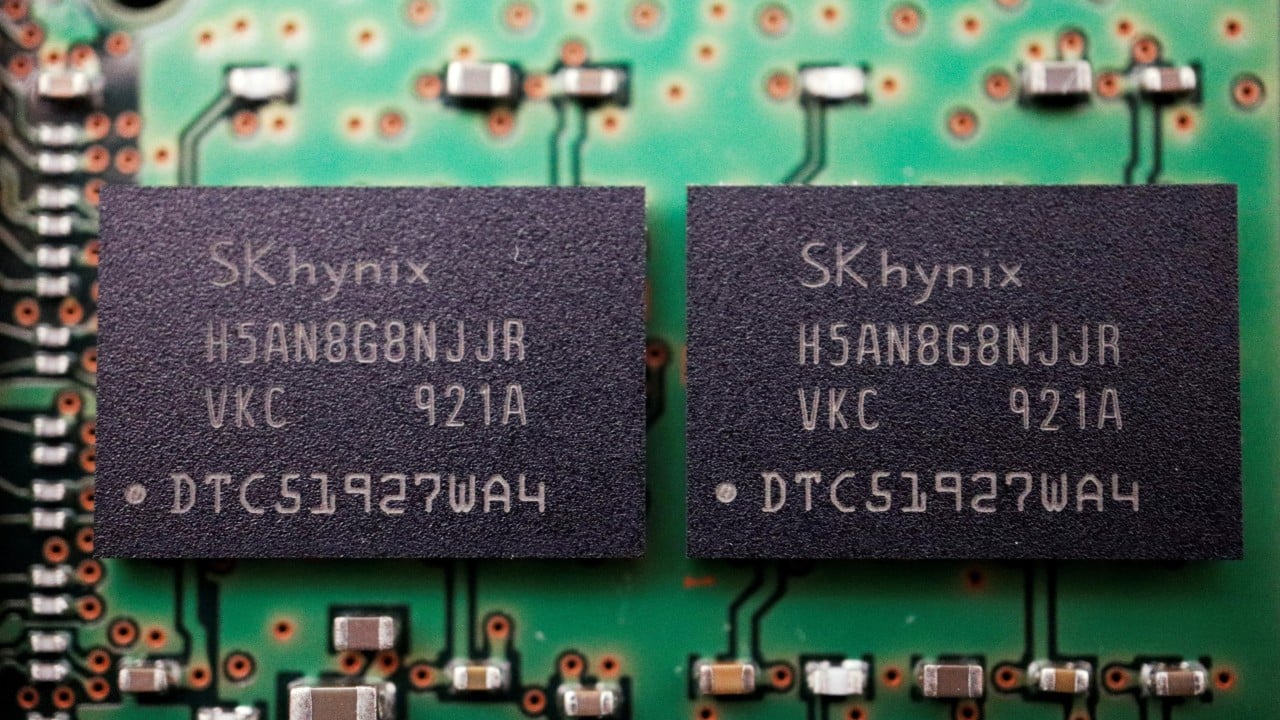
Understand how Chinese chip production could shift the cost and availability of AI compute hardware by 2027.
30-Second TL;DR
What Changed
Chinese chipmakers are aggressively scaling production capacity.
Why It Matters
If memory chip prices stabilize or drop due to oversupply, the cost of training large-scale AI models could decrease, potentially lowering barriers for AI infrastructure development.
What To Do Next
Diversify your hardware procurement strategy and monitor HBM supply chain reports to hedge against potential price volatility in AI infrastructure.
Key Points
- •Chinese chipmakers are aggressively scaling production capacity.
- •The AI memory chip 'super cycle' faces potential momentum loss by 2027.
- •Global tech firms are expected to curb spending, impacting future demand.
- •Samsung Electronics advises caution regarding long-term market stability.
Deep Insight
Background and context from public sources — not the original article. 23 sources cited.
Enhanced Key Takeaways
- •Chinese chipmakers, specifically ChangXin Memory Technologies (CXMT) and Yangtze Memory Technologies Co (YMTC), are significantly increasing their DRAM and NAND flash production capacity, with CXMT tripling its monthly DRAM wafer capacity from 2024 to 2025 and YMTC planning new fabs.
- •The current 'AI memory super cycle' is largely fueled by the insatiable demand for High Bandwidth Memory (HBM), with HBM capacity from major global suppliers like SK Hynix, Micron, and Samsung already sold out through 2026.
- •Unlike previous memory cycles, the current shortage is characterized by a structural demand concentration from AI data centers and deliberate capacity constraints by leading memory suppliers, leading to multi-year HBM contracts and a projected persistence of shortages into late 2027-2028 by some analysts.
- •Samsung Electronics, while advising caution, has also reported record profits in Q1 2026 driven by AI memory demand and anticipates the memory supply-demand gap to worsen in 2027, with some customers already securing supply allocations through that year.
- •China's state-backed 'Big Fund' has been instrumental in funding domestic semiconductor companies like YMTC and CXMT since 2014, with a third phase launched in 2024 aiming to raise around $40 billion to further accelerate the industry.
Technical Deep Dive
- High Bandwidth Memory (HBM) is crucial for AI due to the 'memory wall' bottleneck in large language models, which requires immense bandwidth to move parameters between memory and compute cores.
- HBM utilizes a 2.5D/3D architecture, involving the vertical stacking of multiple DRAM dies using Through-Silicon Vias (TSVs) and placement adjacent to the compute die on a silicon interposer.
- HBM3E, the current production standard, delivers over 1.2 TB/s bandwidth per stack through a 1024-bit interface and 16 independent channels. Micron's HBM3E, for instance, achieves pin speeds greater than 9.2 Gbps and offers capacities of 24GB (8-high) or 36GB (12-high).
- The production of HBM is significantly more complex and capital-intensive than conventional DRAM, requiring approximately three times the wafer output due to additional process steps like wafer thinning and chip stacking.
- HBM4 is anticipated to enter mass production in 2026, aiming for a bandwidth of 2.0 TB/s or more by doubling the interface width to 2048-bit while maintaining data transfer rates above 8.0 Gbps.
- Chinese memory makers like CXMT are advancing their DDR5 technology, with products supporting speeds up to 8000 MT/s and die densities of 16Gb and 24Gb, though they are currently one generation behind the most advanced 32Gb DDR5 chips from global leaders.
Future ImplicationsAI analysis grounded in cited sources
Timeline
- 2014-09China launches the National Integrated Circuit Industry Investment Fund ('Big Fund') to support domestic semiconductor development.
- 2016Yangtze Memory Technologies Corp (YMTC) and ChangXin Memory Technologies (CXMT) are founded, becoming key players in China's memory chip industry.
- 2023-10China's 'Big Fund' makes significant investments in memory chip companies like Changxin Xinqiao (linked to CXMT) and Yangtze Memory Technologies (YMTC).
- 2024-Q4Chinese vendors begin selling DDR5 products based on domestically made DRAM chips, marking commercial availability beyond demonstration.
- 2025-Q4DRAM spot prices nearly triple from a year earlier, and Samsung implements significant price increases for memory.
- 2026-Q1Samsung Electronics reports record financial performance, with semiconductor profits soaring due to strong AI memory demand and rising prices.
Sources (23)
Factual claims are grounded in the sources below. Forward-looking analysis is AI-generated interpretation.
Weekly AI Recap
Read this week's curated digest of top AI events →
Related Updates

AI-curated news aggregator. All content rights belong to original publishers.
Original source: SCMP Technology ↗
This is a summary, not the original. Read the source, or get the weekly briefing.
The weekly digest
One email a week. Unsubscribe anytime.