Apple explores Chinese memory chips amid supply pressure
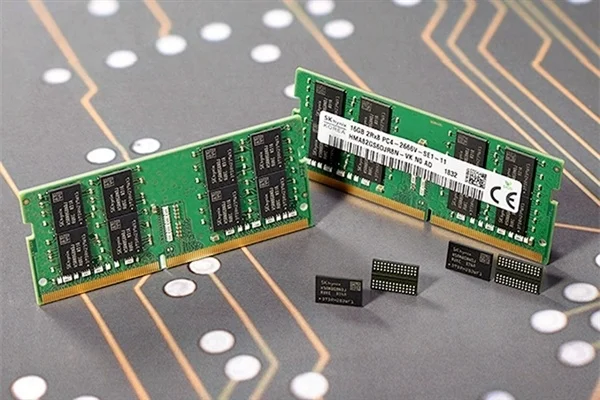
💡Understand how supply chain shifts in memory chips impact the hardware costs of AI-heavy infrastructure.
⚡ 30-Second TL;DR
What Changed
Apple faces supply chain pressure due to memory price volatility.
Why It Matters
Potential shifts in global memory supply chains could impact hardware costs for AI-capable devices and data center infrastructure.
What To Do Next
Monitor memory market pricing trends to forecast potential hardware cost fluctuations for your AI infrastructure deployments.
Key Points
- •Apple faces supply chain pressure due to memory price volatility.
- •Negotiations with Chinese vendors like CXMT are seen as leverage against incumbents.
- •Apple is lobbying the US government to ease restrictions on Chinese memory firms.
🧠 Deep Insight
AI-generated analysis for this event — not the original article.
🔑 Enhanced Key Takeaways
- •CXMT (ChangXin Memory Technologies) has been aggressively expanding its production capacity for LPDDR5 DRAM, which is the specific memory standard required for Apple's mobile and computing devices.
- •The US Department of Commerce added CXMT to the Entity List in 2024, significantly complicating Apple's ability to integrate these chips into products destined for the US market without specific export licenses.
- •Industry reports indicate that Apple's interest is focused on legacy-node memory for lower-tier devices, allowing them to reserve advanced-node capacity from Samsung and SK Hynix for flagship products.
- •Chinese memory manufacturers have been receiving substantial state subsidies under the 'Big Fund' Phase III initiative, which aims to achieve self-sufficiency in semiconductor manufacturing by 2030.
- •Apple's lobbying efforts are reportedly focused on securing 'de minimis' rule exemptions, arguing that the memory chips in question utilize a sufficient percentage of non-US technology to avoid violating current export controls.
📊 Competitor Analysis▸ Show
| Feature | Samsung (LPDDR5X) | Micron (LPDDR5X) | CXMT (LPDDR5) |
|---|---|---|---|
| Process Node | 12nm-class | 1beta nm | 17nm-19nm |
| Power Efficiency | Industry Leading | High | Moderate |
| Market Status | Tier 1 Supplier | Tier 1 Supplier | Emerging/Restricted |
| Pricing | Premium | Premium | Competitive/Subsidized |
🛠️ Technical Deep Dive
- CXMT utilizes a proprietary DRAM architecture that relies on a modified 17nm process node, which is less dense than the 10nm-class nodes used by South Korean competitors.
- The chips in question are primarily LPDDR5, which supports data rates up to 6400 Mbps, suitable for mid-range smartphone and tablet applications.
- CXMT's manufacturing process involves a higher reliance on DUV (Deep Ultraviolet) lithography, as access to EUV (Extreme Ultraviolet) equipment remains blocked by international sanctions.
- The memory modules are designed with a focus on power-saving features like Dynamic Voltage Scaling (DVS) to compete with the power profiles of established Western and Korean vendors.
🔮 Future ImplicationsAI analysis grounded in cited sources
⏳ Timeline
Weekly AI Recap
Read this week's curated digest of top AI events →
👉Related Updates



AI-curated news aggregator. All content rights belong to original publishers.
Original source: cnBeta (Full RSS) ↗
This is a summary, not the original. Read the source, or get the weekly briefing.
Weekly AI briefing
One email a week. Unsubscribe anytime.