Alibaba Reins in Delivery, Bets Big on AI
💡Alibaba’s AI capex surged 75%—see whether its cloud and MaaS revenue can cover the bill.
⚡ 30-Second TL;DR
What Changed
Q2 revenue reached RMB 268.953 billion, up 9% year over year, while adjusted EBITA fell 30% to RMB 27.329 billion.
Why It Matters
Alibaba is making AI infrastructure its primary growth investment, but the scale of spending is creating near-term cash-flow pressure. For enterprise AI buyers, the stronger cloud, chip, and MaaS integration could improve the availability of full-stack services and model deployment capacity.
What To Do Next
Evaluate Alibaba Cloud’s Bailian MaaS APIs for a pilot workload and compare token costs, latency, and margin against your current inference provider.
Key Points
- •Q2 revenue reached RMB 268.953 billion, up 9% year over year, while adjusted EBITA fell 30% to RMB 27.329 billion.
- •Capital expenditure jumped to RMB 67.678 billion, driving free cash flow to a negative RMB 44.67 billion.
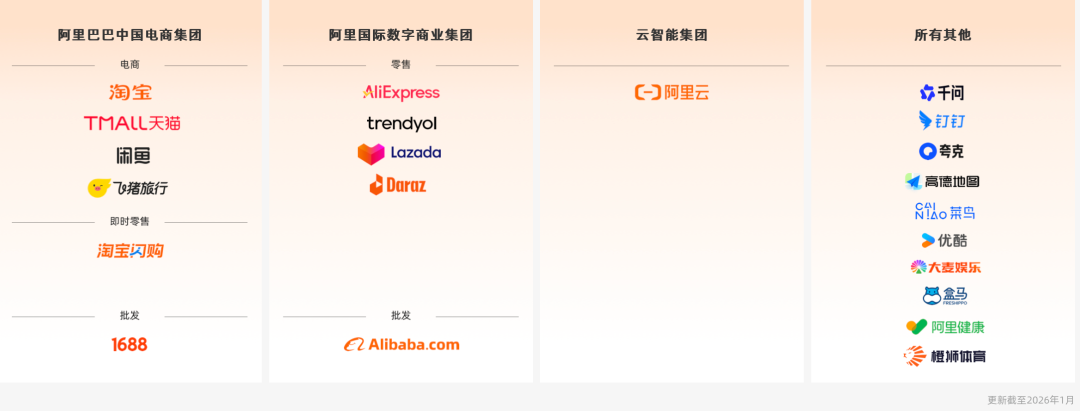
- •Alibaba Cloud and T-Head were consolidated into an AI cloud and computing services segment, which grew 45% year over year.
- •AI-related cloud revenue reached RMB 12.376 billion and has recorded triple-digit growth for 12 consecutive quarters.
- •Alibaba Cloud’s Bailian MaaS platform ARR reached RMB 16 billion in August, with a year-end target of RMB 30 billion.
🧠 Deep Insight
Background and context from public sources — not the original article. 16 sources cited.
🔑 Enhanced Key Takeaways
- •Alibaba's CEO Eddie Wu has explicitly shifted the company's strategy to be "AI-first" and "user-first," personally overseeing foundational AI initiatives and integrating AI across its consumer ecosystem.
- •Alibaba Cloud holds a dominant position in China's AI cloud market, with a 38.1% market share as of Q1 2026, significantly ahead of its domestic rivals.
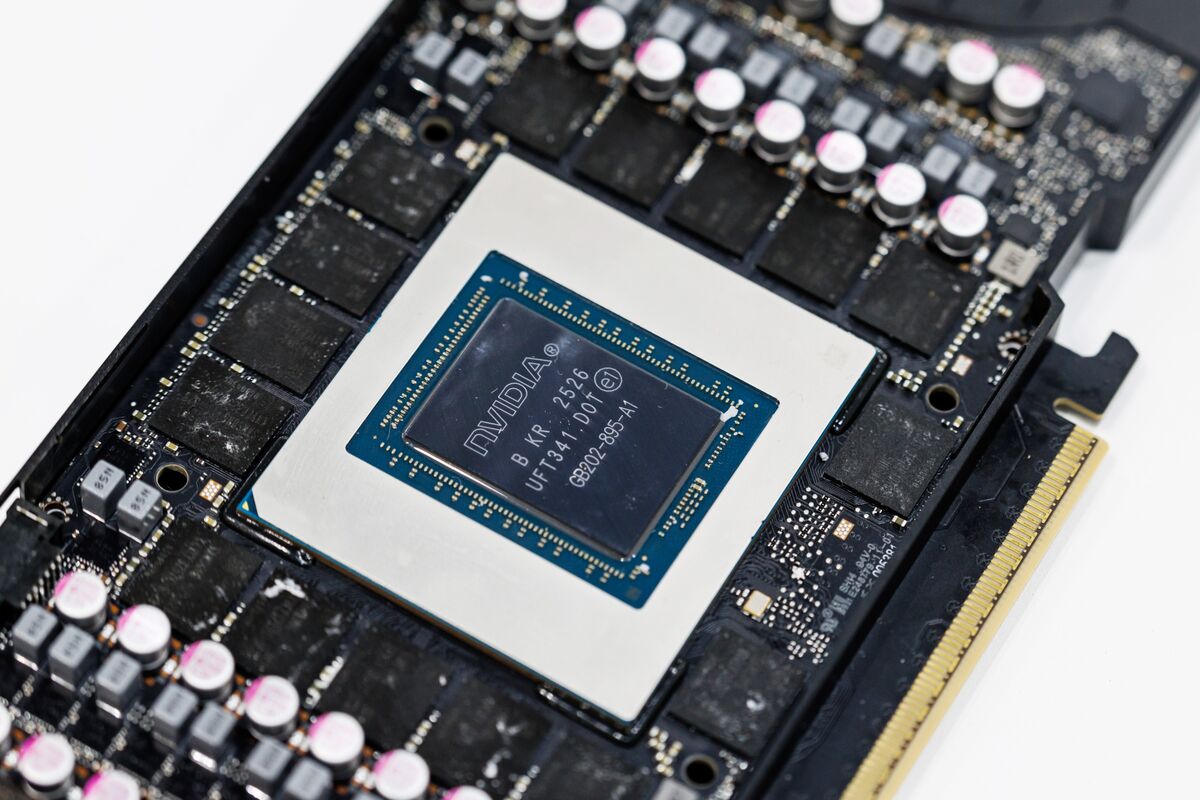
- •T-Head, Alibaba's chip design subsidiary, launched the Zhenwu M890 AI accelerator in May 2026, specifically engineered for agentic AI workloads with 144GB of HBM3 memory, and has a roadmap for annual Zhenwu releases through 2028.
- •The Qwen App, Alibaba's official AI assistant platform, has achieved rapid user adoption, surpassing 100 million monthly active users within two months of its November 2025 public beta launch and reaching 250 million users for AI-driven shopping experiences.
- •Alibaba is transitioning its Qwen AI strategy towards revenue-generating Model-as-a-Service (MaaS) offerings, integrating AI tools into its e-commerce ecosystem, and increasing the emphasis on proprietary models, moving away from a purely open-source approach due to high costs.
🛠️ Technical Deep Dive
- Qwen Model Architecture: Qwen models are built on a transformer-based architecture, incorporating innovations in attention mechanisms, training methodologies, and multilingual capabilities.
- Model Variants: The Qwen family includes both commercial models (Qwen-Max, Qwen-Plus, Qwen-Turbo) and open-source variants (Qwen3 series, Qwen2.5 series).
- Qwen3.8-Max Specifics: The cloud version of Qwen3.8-Max, released in August 2026, utilizes a sparse Mixture-of-Experts (MoE) architecture with approximately 95 billion parameters active per forward pass and supports an extended context window of up to one million tokens.
- Multilingual and Multimodal Capabilities: Qwen models support 119 languages/dialects and include multimodal variants like Qwen-VL (vision-language), Qwen-TTS (text-to-speech), Qwen-Audio, and Qwen3-Omni, which can process text, audio, and vision simultaneously.
- Hybrid Thinking Modes: Qwen3 models feature hybrid thinking modes ("Thinking" and "Non-Thinking") allowing flexible control over reasoning performance, speed, and costs.
- Underlying Mechanisms: Qwen models employ grouped-query attention to reduce memory overhead during inference, RoPE positional embeddings for stable long-context handling, and SwiGLU activations in feed-forward layers.
- T-Head Zhenwu M890 AI Accelerator: This chip, unveiled in May 2026, is purpose-built for agentic AI workloads, featuring 144GB of HBM3 memory and 800GB/s interchip bandwidth. It supports both training and inference on a single chip, with Alibaba planning annual Zhenwu releases through 2028.
🔮 Future ImplicationsAI analysis grounded in cited sources
⏳ Timeline
📎 Sources (16)
Factual claims are grounded in the sources below. Forward-looking analysis is AI-generated interpretation.
Weekly AI Recap
Read this week's curated digest of top AI events →
👉Related Updates

AI-curated news aggregator. All content rights belong to original publishers.
Original source: 虎嗅 ↗
This is a summary, not the original. Read the source, or get the weekly briefing.
Weekly AI briefing
One email a week. Unsubscribe anytime.