Nvidia Explores Deal With Korean AI Chip Startup
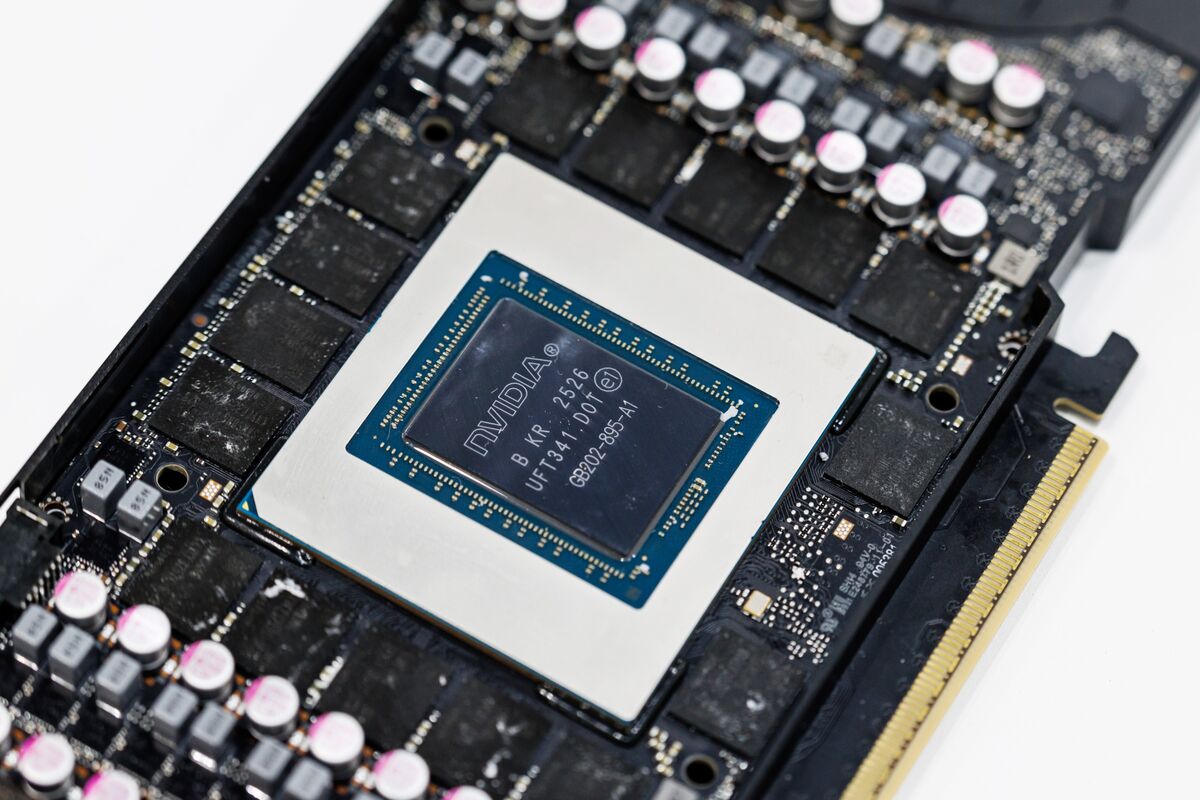
💡Nvidia may be expanding its AI chip strategy through a Korean startup partnership, investment, or acquisition.
⚡ 30-Second TL;DR
What Changed
Nvidia is in early-stage talks with Korean AI chip designer Rebellions.
Why It Matters
A deal could strengthen Nvidia's access to Korean AI semiconductor talent and expand its position across specialized accelerator markets. However, the talks are preliminary and may not result in a finalized transaction.
What To Do Next
Monitor official Nvidia and Rebellions announcements and benchmark any disclosed accelerator compatibility before revising your hardware roadmap.
Key Points
- •Nvidia is in early-stage talks with Korean AI chip designer Rebellions.
- •Potential arrangements include a technical partnership, investment, or acquisition.
- •The discussions could affect Nvidia's strategy in AI accelerator infrastructure and regional chip ecosystems.
🧠 Deep Insight
Background and context from public sources — not the original article. 14 sources cited.
🔑 Enhanced Key Takeaways
- •Rebellions has raised significant funding, totaling over $850 million, including a $400 million pre-IPO round in March 2026, valuing it at approximately $2.34 billion.
- •Rebellions' ATOM NPU, manufactured on Samsung's 5nm process, is specifically optimized for AI inference tasks, delivering high throughput and low latency for LLM serving with greater energy efficiency than traditional GPUs.
- •The company's second-generation product, REBEL-Quad (also known as Rebel100), launched in August 2025, features a quad-chiplet SoC design utilizing UCIe-Advanced interconnects and 144GB of HBM3E memory for large language model inference.
- •Nvidia has recently intensified its investment in South Korea's AI infrastructure, committing $1 billion to Naver for an AI data center and forming a $500 billion commercial partnership with SK Group for data centers and memory chips.
- •Rebellions was the first AI semiconductor startup to receive direct investment from the National Growth Fund under the South Korean government's "K-NVIDIA" initiative, aimed at fostering domestic AI chip development.
📊 Competitor Analysis▸ Show
| Feature/Metric | Rebellions ATOM | Rebellions REBEL-Quad (Rebel100) | Nvidia H200 (for comparison) |
|---|---|---|---|
| Primary Use | AI Inference (Edge/Cloud) | LLM Inference (Datacenters) | AI Training & Inference |
| Architecture | Multi-core SoC, CGRA | 4-chiplet SoC, UCIe-Advanced | GPU (Hopper) |
| Process Node | Samsung 5nm | Samsung 4nm | (Advanced node) |
| FP16 Performance | 32 TFLOPS (single chip) | 1 PFLOPS | ~1 PFLOPS (at 700W) |
| FP8 Performance | 128 TOPS (INT8/INT4) | 2 PFLOPS | (Supports FP8) |
| Memory | 16 GB GDDR6 (256 GB/s) | 144 GB HBM3E (4.8 TB/s) | 141 GB HBM3e (4.8 TB/s) |
| Power (TDP) | 60-150W (configurable) | Up to 600W | 700W |
🛠️ Technical Deep Dive
- Rebellions ATOM NPU: Manufactured on Samsung's advanced 5nm process, it is a multi-core System-on-Chip (SoC) integrating Neural Engines, a Command Processor, and a hierarchical memory structure.
- It delivers 32 TFLOPS for FP16 and 128 TOPS for INT8/INT4, featuring 64 MB of on-chip SRAM and 16 GB of off-chip GDDR6 memory with 256 GB/s bandwidth.
- The ATOM NPU utilizes a Coarse-Grained Reconfigurable Array (CGRA) compute model, a programmable dataflow fabric optimized for neural network inference graphs, reducing overhead compared to GPU-style shader dispatch.
- It supports PCIe Gen5 and GDDR6 high-speed I/O technologies, and its multi-instance NPU capability allows hardware isolation for up to 16 independent tasks.
- Rebellions REBEL-Quad (Rebel100): This is a second-generation, 4-homogeneous-chiplet SoC based on UCIe-Advanced interconnects, built on Samsung's 4nm process.
- It offers 1,024 TFLOPS (FP16) and 2,048 TFLOPS (FP8) for dense compute, with 144 GB of HBM3E external memory providing 4.8 TB/s bandwidth.
- The chiplet interface uses UCIe-Advanced at 16Gbps, delivering 1TB/s per channel, and connects to hosts via two PCIe Gen5 x16 interfaces.
- REBEL-Quad features a predictive, software-controlled DMA engine and hardware-accelerated, full-mesh synchronization across 256 routers to sustain high utilization in sparse or imbalanced workloads.
- It supports a PyTorch-native software framework, including graph-mode optimization, vLLM-based serving, and precision-aware execution.
🔮 Future ImplicationsAI analysis grounded in cited sources
⏳ Timeline
📎 Sources (14)
Factual claims are grounded in the sources below. Forward-looking analysis is AI-generated interpretation.
Weekly AI Recap
Read this week's curated digest of top AI events →
👉Related Updates

AI-curated news aggregator. All content rights belong to original publishers.
Original source: Bloomberg Technology ↗
This is a summary, not the original. Read the source, or get the weekly briefing.
Weekly AI briefing
One email a week. Unsubscribe anytime.