Harness Turns AI Intelligence Into Production
💡Model quality is only half the story—Harness design can triple benchmark performance and cut token use.
⚡ 30-Second TL;DR
What Changed
DeepSeek opened DeepSeek Harness on August 13, while OpenAI open-sourced the core Harness behind Codex.
Why It Matters
The competitive advantage of AI products may increasingly come from orchestration and workflow design rather than model capability alone. Open-source Harness layers could lower the barrier for startups building domain-specific agents, while also intensifying competition around developer ecosystems and reusable workflows.
What To Do Next
Prototype a Harness around your current LLM using explicit task loops, tool permissions, memory handling, and output validators before switching models.
Key Points
- •DeepSeek opened DeepSeek Harness on August 13, while OpenAI open-sourced the core Harness behind Codex.
- •Changing the external execution layer reportedly improved ARC-AGI-3 performance from 13.3% to 38.3% while reducing output tokens to about one-sixth.
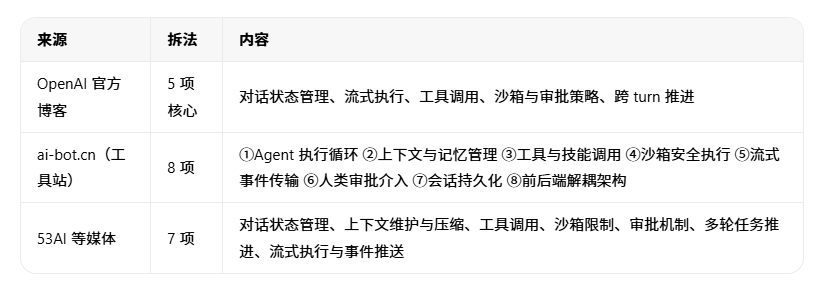
- •A Harness typically covers five to eight functions, including task loops, context and memory management, and tool invocation.
- •The open-source approach lets developers adapt a general model to industry-specific tools, workflows, permissions, data, and acceptance criteria.
- •The article frames Harness as an Android-like platform layer for turning tacit human expertise into reusable production assets.
🧠 Deep Insight
Background and context from public sources — not the original article. 17 sources cited.
🔑 Enhanced Key Takeaways
- •DeepSeek Harness is built upon Cordis, a meta-framework that enables 'Spatiotemporal Composability,' allowing all components, from models to user interfaces, to be modular and swappable plugins.
- •DeepSeek Harness (dsh) was released as an MIT-licensed developer preview on August 13, 2026, and rapidly accumulated over 169,000 GitHub stars and 18,100 forks within its first week, indicating strong developer interest.
- •OpenAI's open-sourced Codex Harness, released on August 20, 2026, operates under the Apache-2.0 license and comprises three main components: the
codex execCLI tool, the Codex SDK, and theapp-server. - •The significant performance boost on the ARC-AGI-3 benchmark (from 13.3% to 38.3%) and a sixfold reduction in token consumption for OpenAI's GPT-5.6 Sol model were achieved solely through optimizations to the Harness design.
- •DeepSeek Harness adopts a local-first design philosophy, ensuring that session data and user credentials remain on the user's device by default, which enhances privacy and mitigates vendor lock-in concerns.
- •The concept of an 'AI agent harness' is increasingly recognized as the 'operating system' for AI agents, responsible for managing the entire lifecycle of agent operations, including tool integration, memory, error recovery, human approvals, and context engineering.
📊 Competitor Analysis▸ Show
| Feature/Aspect | DeepSeek Harness (DeepSeek) | OpenAI Codex Harness (OpenAI) | Claude Code (Anthropic) | Google ADK (Google) |
|---|---|---|---|---|
| License | MIT License (Open Source) | Apache-2.0 License (Open Source) | Proprietary | Proprietary |
| Core Architecture | Plugin-only, built on Cordis (Spatiotemporal Composability) | Shared Rust library (Codex core), App Server JSON-RPC protocol | Vertically integrated agent | Integrated with Google ecosystem |
| Key Differentiator | Cost-effective (for DeepSeek models), everything is a plugin, local-first philosophy | Powers cross-platform coding agents, broad OpenAI ecosystem integration | Best reasoning depth and tool reliability | Multimodal capabilities, deep Google ecosystem integration |
| Performance Impact | Reportedly cost-effective, benchmarks for V4-Pro-0813 on Terminal Bench 2.1 (87.9), Toolathlon-Verified (74.1), DSBench-FullStack (71.1) | Improved ARC-AGI-3 from 13.3% to 38.3% for GPT-5.6 Sol, 6x token reduction | Strong reasoning and tool reliability | Runs on Gemini 3.x |
| Primary Use Case | Building autonomous AI agents, coding agents, flexible runtime | Embedding AI agent loops into products, engineering tools, operations dashboards | Coding agent, managing codebases, filesystem access | Building AI agents with multimodal and ecosystem integration |
| Memory/Context | Append-only session log, resumable, searchable, forkable, replayable sessions | Manages conversation state, prompt caching, context compression via /responses/compact | Manages memory across sessions | N/A (not specified in search results) |
🛠️ Technical Deep Dive
- DeepSeek Harness is built on Cordis, a meta-framework that formalizes "Spatiotemporal Composability." This includes spatial composability (mounting, replacing, or extending any part of the agent system as plugins) and temporal composability (composing behaviors and workflows across time, sequential steps, and persistent state).
- It employs a micro-kernel architecture where runtime components, such as model adapters, tool registries, sandboxing environments, session state handlers, event dispatchers, and user interfaces, function as isolated and interchangeable plugins.
- All agent runs are recorded in an append-only session log, which allows for full traceability, inspection, resumption, forking, searching, and replaying of sessions.
- OpenAI's Codex Harness is implemented as a shared Rust library known as "Codex core," which encapsulates the agent loop, thread lifecycle management (create, resume, fork, archive), configuration, authentication, and sandboxed tool execution.
- The Codex agent loop constructs an ever-growing JSON prompt, with prompt caching being a critical optimization that places static content at the beginning of the prompt to ensure cache hits on prior context for new turns.
- To manage context window limitations, Codex utilizes a
/responses/compactendpoint that returns an opaqueencrypted_contentitem, encoding the model's latent understanding in a smaller, privacy-preserving format. - The Codex App Server exposes the core harness functionality to clients via a bidirectional JSON-RPC protocol over stdio, using fundamental primitives like Item (atomic I/O), Turn (a unit of agent work), and Thread (persistent conversation container).
🔮 Future ImplicationsAI analysis grounded in cited sources
⏳ Timeline
📎 Sources (17)
Factual claims are grounded in the sources below. Forward-looking analysis is AI-generated interpretation.
Weekly AI Recap
Read this week's curated digest of top AI events →
👉Related Updates

AI-curated news aggregator. All content rights belong to original publishers.
Original source: 虎嗅 ↗
This is a summary, not the original. Read the source, or get the weekly briefing.
Weekly AI briefing
One email a week. Unsubscribe anytime.