⚙️
Callosum Raises $100 Million to Cut AI Costs
Callosum has raised $100 million in early financing to develop software that matches specific AI tasks with suitable models and chips. Backers include the UK’s public AI fund.
10 results on this page
Callosum has raised $100 million in early financing to develop software that matches specific AI tasks with suitable models and chips. Backers include the UK’s public AI fund.

Xiaomi stabilized in Q2 2026 while expanding its AI strategy across models, chips, and robotics. Its MiMo-V2.5 model led OpenRouter call charts, the Xuanjie chip passed mass verification, and a humanoid robot began factory operations with a reported 98% success rate.

British AI-chip startup Fractile is reportedly in advanced talks to raise funds at a $6.5 billion pre-money valuation. The proposed valuation is more than six times its level three months ago, following a chip-supply deal with Anthropic.
Marvell and Google are deepening their partnership on custom AI chip development. Marvell is giving Google the right to purchase up to $12.2 billion in Marvell stock, strengthening their long-term alignment in the AI hardware race.

Cerebras launched the CS-4, its first system to combine three wafer-scale processors in a single rack. The inference-focused machine is shipping this quarter, with Cerebras claiming up to 30 times the speed of GPU-based systems for frontier models.
China has reportedly allowed ByteDance and Tencent to import 10,000 NVIDIA H200 chips each, according to the Financial Times. Other Chinese companies could receive similar approval, potentially easing access to advanced AI computing hardware.
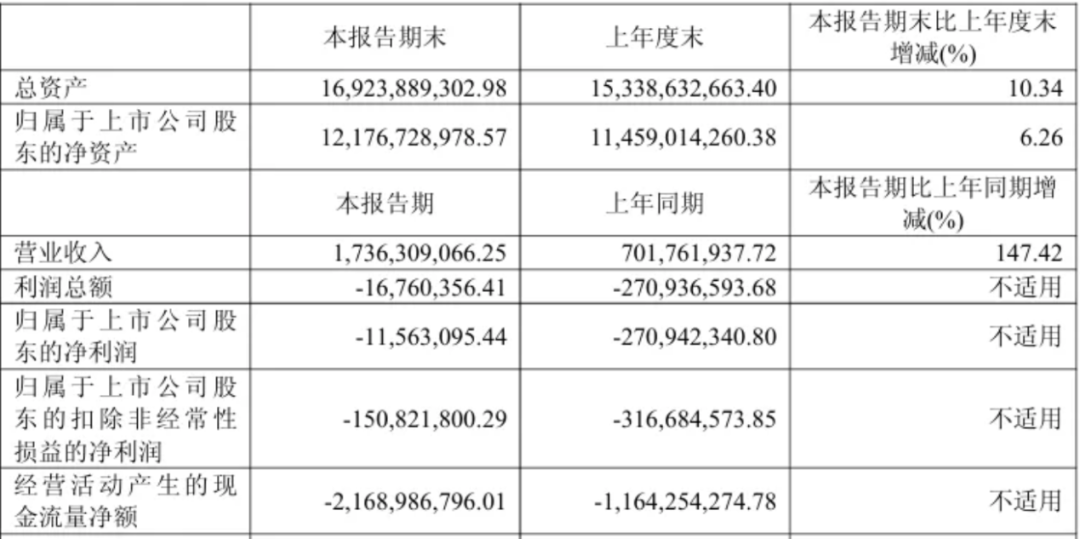
Moore Threads’ first post-IPO half-year report shows revenue rising 147% to RMB 1.736 billion, while attributable losses narrowed sharply. However, the improvement relies heavily on concentrated cloud-computing sales, government subsidies, investment gains, and IPO-funded cash reserves rather than a clear recovery in core operations.

Chinese AI companies are optimising software to handle growing inference demand while access to high-end Nvidia processors remains limited. Domestic chips can support some inference workloads, but complex coding tasks still depend partly on scarce Nvidia capacity.
China has approved five automotive-chip certification and accreditation standards built around a “1+4” framework, effective October 1, 2026. The standards aim to unify evaluations for chip design, certification, testing, and automotive computing, reducing duplicated validation and improving trust in domestic suppliers.

China is increasingly deploying supernodes—clusters of dozens or hundreds of chips and supporting hardware—to scale AI computing. By combining larger quantities of domestic chips, these systems aim to deliver competitive performance despite US export restrictions on advanced AI chips.