Xiaomi Pushes AI Beyond Phones
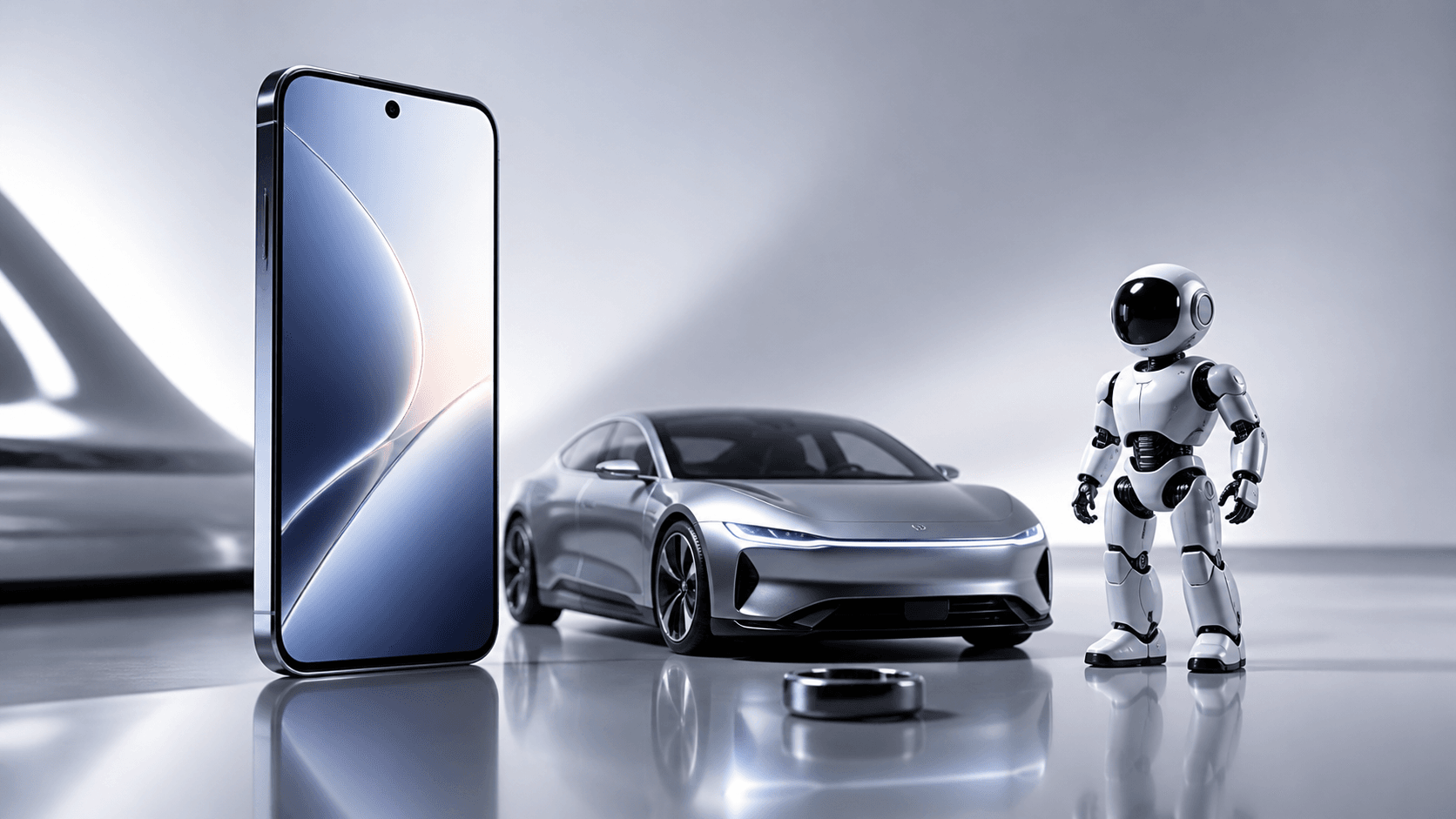
💡See how Xiaomi is combining models, custom chips, and humanoid robots into one AI stack.
⚡ 30-Second TL;DR
What Changed
MiMo-V2.5 topped OpenRouter's monthly and weekly call charts.
Why It Matters
Xiaomi is building a vertically integrated AI stack spanning foundation models, silicon, and embodied systems. For AI companies, this signals stronger competition from hardware-led ecosystems that can deploy models directly into devices, factories, and robots.
What To Do Next
Evaluate MiMo-V2.5 on OpenRouter for your workload, then compare its latency, cost, and task quality with your current model stack.
Key Points
- •MiMo-V2.5 topped OpenRouter's monthly and weekly call charts.
- •Xiaomi's self-developed Xuanjie chip passed mass-production verification.
- •A new humanoid robot entered factory work with a reported 98% success rate.
- •Xiaomi reported Q2 2026 revenue of 108.92 billion yuan and doubled attributable net profit.
🧠 Deep Insight
AI-generated analysis for this event.
🔑 Enhanced Key Takeaways
- •Xiaomi's Q2 2026 financial performance was bolstered by a 14% year-over-year increase in EV deliveries, specifically the SU7 Ultra series, which contributed significantly to the automotive segment's gross margin expansion.
- •The MiMo-V2.5 model utilizes a proprietary 'Dynamic Sparse Attention' architecture, which Xiaomi claims reduces inference latency by 30% compared to standard Transformer-based models on mobile hardware.
- •The Xuanjie chip is manufactured using a 3nm process node, marking Xiaomi's first successful transition to sub-5nm silicon for edge-AI applications.
- •Xiaomi's humanoid robot, internally codenamed 'CyberOne-Gen3', utilizes a new reinforcement learning framework that allows for real-time adaptation to unstructured factory floor environments without pre-programmed paths.
- •The company has officially integrated its AI-driven 'HyperOS 3.0' across its entire ecosystem, enabling cross-device task offloading between smartphones, EVs, and industrial robotics.
📊 Competitor Analysis▸ Show
| Feature | Xiaomi (MiMo-V2.5) | Tesla (Optimus/FSD) | Huawei (Pangu/Ascend) |
|---|---|---|---|
| Primary Focus | Edge-AI/Consumer Ecosystem | Autonomous Robotics/Driving | Enterprise AI/Cloud-Edge |
| Chip Tech | Xuanjie (3nm Edge) | Dojo/FSD Chip (Custom) | Ascend 910/910C |
| Market Position | High-Volume Consumer/Auto | Premium Robotics/Auto | Enterprise/Infrastructure |
🛠️ Technical Deep Dive
- MiMo-V2.5 Architecture: Employs a Mixture-of-Experts (MoE) approach with a focus on sparse activation to optimize memory bandwidth on mobile devices.
- Xuanjie Chip: Features a dedicated Neural Processing Unit (NPU) with 45 TOPS of INT8 performance, specifically optimized for transformer-based token generation.
- CyberOne-Gen3: Incorporates 21 degrees of freedom and utilizes tactile sensors with 0.1mm precision for delicate object manipulation in factory settings.
- HyperOS 3.0: Implements a distributed computing kernel that allows the Xuanjie chip to act as a local AI accelerator for connected home and automotive devices.
🔮 Future ImplicationsAI analysis grounded in cited sources
⏳ Timeline
Weekly AI Recap
Read this week's curated digest of top AI events →
👉Related Updates


AI-curated news aggregator. All content rights belong to original publishers.
Original source: Pandaily ↗