
Ornith-1.5 Launches Three Open Model Sizes
Ornith-1.5 launches open models in 397B, 35B, and 9B parameter sizes. The models feature self-improving task and scaffold generation and report strong performance on coding and reasoning benchmarks.
10 results on this page
Ornith-1.5 launches open models in 397B, 35B, and 9B parameter sizes. The models feature self-improving task and scaffold generation and report strong performance on coding and reasoning benchmarks.

ChatGPT's latest Mac update integrates with Apple Messages, allowing users to bring conversations from Apple's messaging app into the AI assistant. The feature expands ChatGPT's access to personal communication workflows on macOS.
Qwen Code v0.21.15 improves Web Shell performance, file attachments, sidebar synchronization, and Goal v3 controls. It also adds reasoning toggles for hybrid Qwen models, resume support for reviews, and authenticated HTTPS Git extension installs.
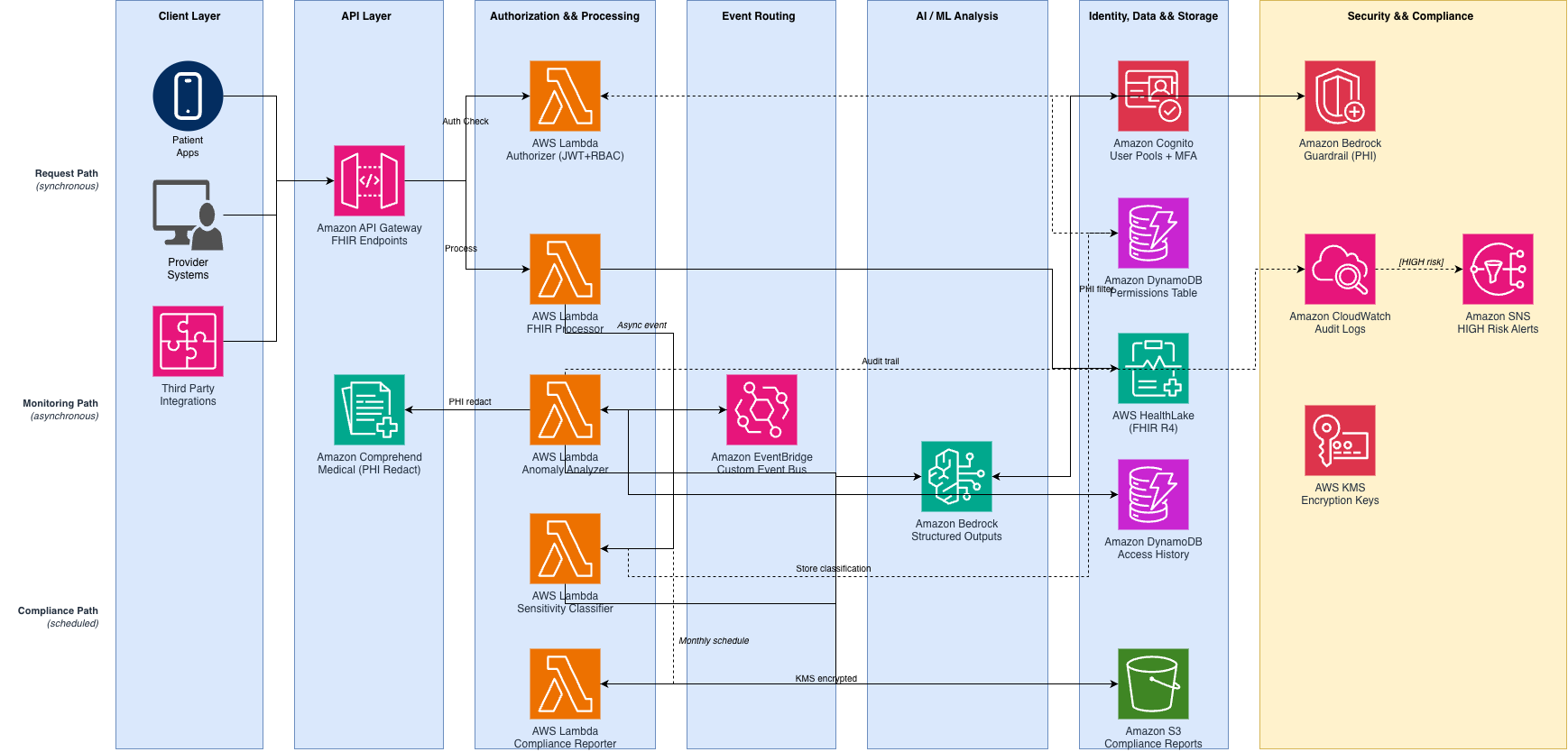
AWS demonstrates how Amazon Bedrock can add context-aware security monitoring to healthcare FHIR APIs. The approach detects anomalous access patterns, classifies data sensitivity, and generates natural-language compliance reports without adding latency to clinical workflows.

Chinese AI companies are optimising software to handle growing inference demand while access to high-end Nvidia processors remains limited. Domestic chips can support some inference workloads, but complex coding tasks still depend partly on scarce Nvidia capacity.
Moonshot and ZAI are reportedly approaching the performance of models from OpenAI and Anthropic. The models can reportedly build passable websites at a cost 75% lower than Claude, highlighting potential advantages in cost-sensitive coding workflows.

Claude is expanding into protein design, adding a scientific research capability to its existing AI portfolio. The update suggests potential use in computational biology and biotech workflows, though the article excerpt does not provide implementation or benchmark details.

ByteDance's Coze launched a desktop client with cloud-drive integration and deep screenshot capabilities. The client improves local file access and automatically recognizes Codex CLI and Claude Code as agents for multi-agent workflows.

This survey frames self-evolving LLM agents as dynamic graphs whose memories, tools, skills, workflows, and relationships change over time. It presents four evolution taxonomies, connects nine dynamic-graph-learning fields to agent capabilities, and proposes graph-aware evaluation and governance protocols.

MORPHI made its first systematic domestic appearance at WRC, showcasing its newly released embodied-intelligence model architecture, MoRA. The demonstration focused on how a robot’s embodied brain supports practical long-horizon tasks.