🇨🇳cnBeta (Full RSS)•較早收集於 13h
民眾對AI數據中心的排斥感高於核電廠
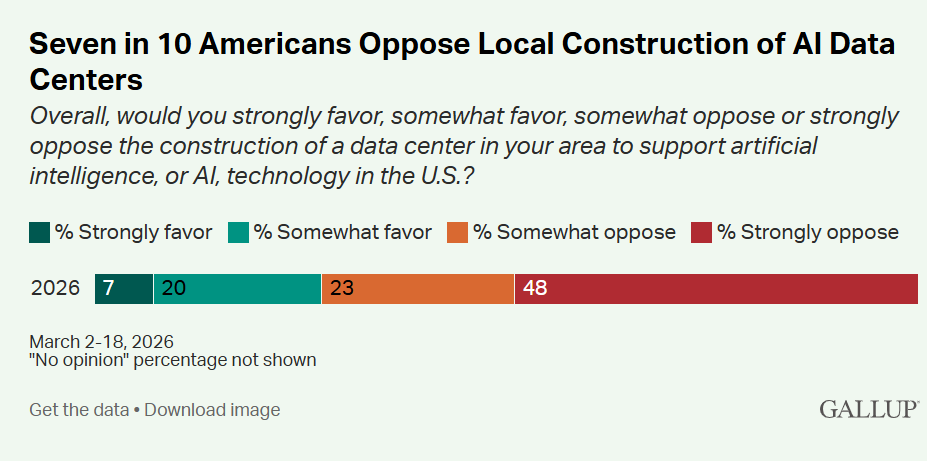
💡基礎設施擴張遭遇社會阻力;了解為何AI數據中心面臨的抵制比核電廠更嚴重。
⚡ 30-Second TL;DR
有什麼變化
71%的美國民眾反對在社區興建AI數據中心
為什麼重要
這種社會阻力可能導致更嚴格的土地分區法規、更長的審批流程,以及企業擴展AI運算能力時的營運成本增加。
下一步行動
規劃新的數據中心部署時,應優先採取社區參與策略與永續能源透明化,以減輕當地民眾的抵制。
誰應關注:Enterprise & Security Teams
關鍵要點
- •71%的美國民眾反對在社區興建AI數據中心
- •公眾對AI數據中心的負面觀感高於核反應堆
- •日益增長的社會阻力成為基礎設施擴張的重大障礙
🧠 深度解析
Web-grounded analysis with 31 cited sources.
🔑 增強重點摘要
- •Public opposition is primarily fueled by environmental concerns, including excessive water and energy consumption, air and noise pollution, and the conversion of agricultural land.
- •The backlash has prompted legislative action, with calls for and implementation of moratoriums and bans on new AI data center construction at local and state levels, such as Senator Bernie Sanders' proposed Artificial Intelligence Data Center Moratorium Act and Maine's statewide moratorium.
- •Despite developers' promises of economic benefits like tax revenue and job creation, communities often find these advantages are outweighed by increased utility costs, strain on public services, and the limited number of permanent jobs offered by data centers.
- •A lack of transparency, often involving non-disclosure agreements between developers and local officials, exacerbates public mistrust by limiting access to crucial information about project scope and environmental impact.
- •The surge in AI-driven data center demand has transformed development from a routine process into a highly contested political issue, making community alignment a critical factor for project feasibility and timelines.
🛠️ 技術深入
- Power Consumption: AI-focused "hyperscale" data centers can consume electricity equivalent to 100,000 homes or more, with some planned facilities projected to draw power exceeding entire cities.
- Water Consumption: Large data centers require 1 to 5 million gallons of water daily for cooling, comparable to the usage of a small town (10,000-50,000 residents), with demand potentially tripling in warmer months.
- Cooling Systems: Cooling accounts for nearly 40% of a data center's power usage, and while more efficient closed-loop or immersion cooling technologies exist, many facilities still rely on water-intensive evaporative cooling.
- Noise Pollution: Operations generate significant noise from rooftop cooling units, industrial-grade diesel backup generators, and on-site natural gas turbines, leading to complaints about both audible disturbances and "inaudible but felt" infrasound.
- Land Footprint: Modern AI data centers can sprawl over hundreds to thousands of acres, converting agricultural or undeveloped land into impermeable surfaces and necessitating new infrastructure like transmission lines.
- Air Quality Impact: Many data centers contribute to air pollution through reliance on fossil fuel-powered grids and the use of diesel backup generators, which can emit significantly higher levels of nitrous oxides than natural gas plants.
🔮 前景展望AI analysis grounded in cited sources
The rapid expansion of AI infrastructure will face significant delays and cost increases.
Widespread public opposition, legislative moratoriums, and challenges in securing adequate power and water resources will slow down development and necessitate more expensive, community-friendly solutions.
Data center siting will increasingly shift towards regions with abundant renewable energy and water resources, or those offering substantial economic incentives and less organized opposition.
The environmental and resource demands of AI data centers are forcing developers to reconsider traditional locations and seek areas where these concerns can be more easily mitigated or where local resistance is lower.
Governments will implement stricter regulations and transparency requirements for AI data center development.
Growing public and political pressure regarding environmental impact, utility costs, and lack of transparency will lead to new policies, including mandatory disclosure of resource consumption and community benefit agreements.
⏳ 時間線
2023
A Washington Post/Schar School poll indicates 69% of Virginians were comfortable with new data centers, a sentiment that significantly declined by 2026.
2024
Data center project cancellations more than quadrupled to 25 in 2025 from six in 2024, indicating growing resistance.
2025-12
Over 230 environmental groups and Senator Bernie Sanders call for a national moratorium on new data center construction.
2026-03
Senator Bernie Sanders introduces the Artificial Intelligence Data Center Moratorium Act, aiming to halt new construction until environmental and worker protections are in place.
2026-03
Maine passes a statewide moratorium on hyperscale data centers, and Fayetteville, Georgia, bans new data centers in all zoning districts.
2026-05-13
Gallup releases a poll revealing 71% of Americans oppose the construction of AI data centers near their homes.
📎 來源 (31)
Factual claims are grounded in the sources below. Forward-looking analysis is AI-generated interpretation.
- Google Search Source
- Google Search Source
- Google Search Source
- Google Search Source
- Google Search Source
- Google Search Source
- Google Search Source
- Google Search Source
- Google Search Source
- Google Search Source
- Google Search Source
- Google Search Source
- Google Search Source
- Google Search Source
- Google Search Source
- Google Search Source
- Google Search Source
- Google Search Source
- Google Search Source
- Google Search Source
- Google Search Source
- Google Search Source
- Google Search Source
- Google Search Source
- Google Search Source
- Google Search Source
- Google Search Source
- Google Search Source
- Google Search Source
- Google Search Source
- Google Search Source
📰
AI 週報
閱讀本週精選 AI 大事摘要 →
👉相關動態

AI 策展新聞聚合。所有內容版權歸原始發布者所有。
原始來源: cnBeta (Full RSS) ↗