Non-Abelian Anyons Enable Universal Quantum Computing
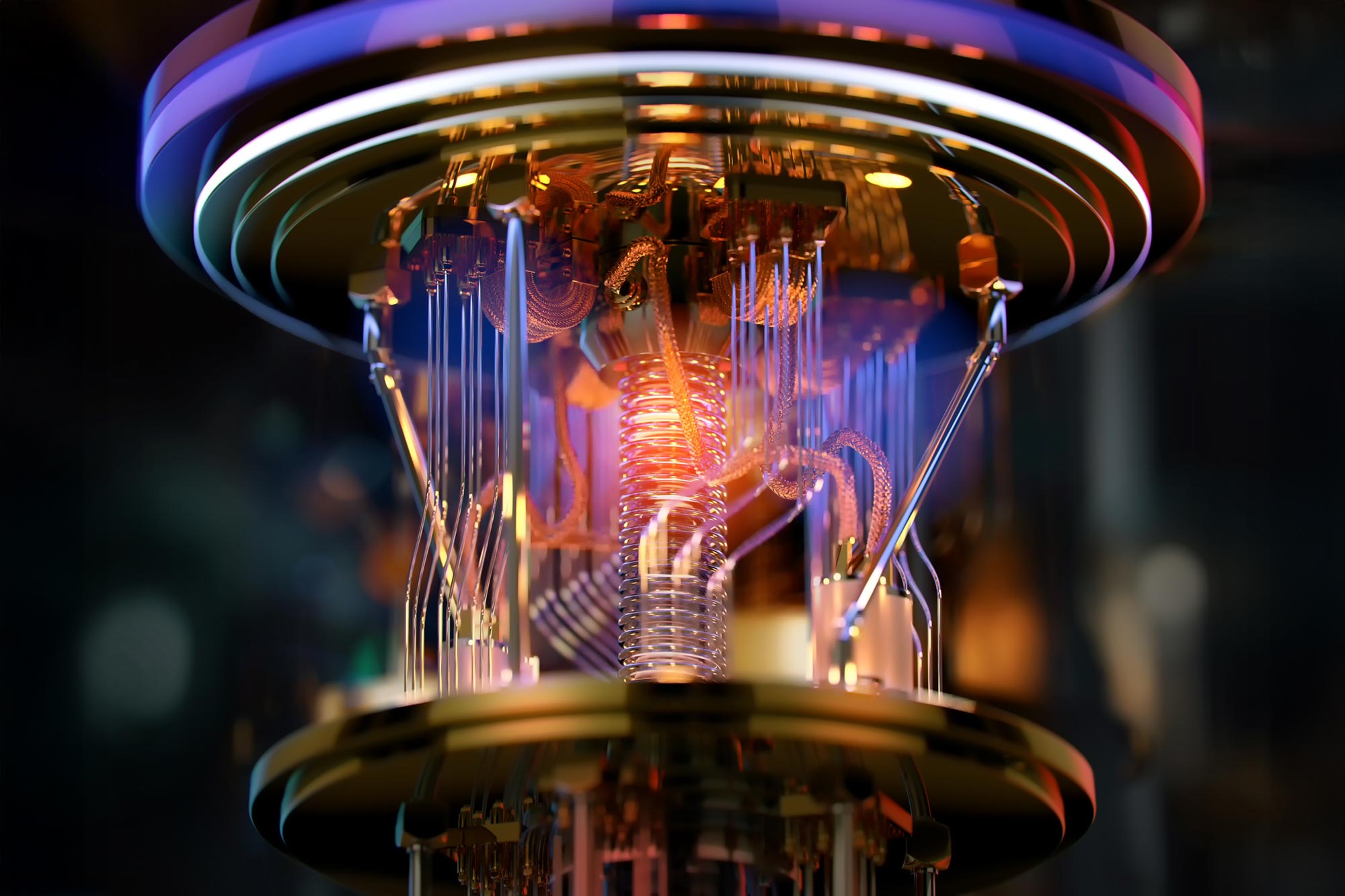
A breakthrough in fault-tolerant quantum computing that could redefine the limits of future AI hardware.
30-Second TL;DR
What Changed
First demonstration of universal quantum operations using non-Abelian anyons
Why It Matters
This breakthrough provides a more robust path toward fault-tolerant quantum computing. It could accelerate the timeline for solving complex problems currently beyond classical AI capabilities.
What To Do Next
Review the latest research papers on topological quantum computing to understand how non-Abelian anyons impact future algorithm design.
Key Points
- •First demonstration of universal quantum operations using non-Abelian anyons
- •Collaboration between academic institutions and Quantinuum hardware
- •Overcomes a major hurdle in fault-tolerant quantum computing development
Deep Insight
AI-generated analysis for this event — not the original article.
Enhanced Key Takeaways
- •The experiment utilized Quantinuum's H2 quantum processor to create non-Abelian anyons within a topological state of matter, specifically using a trapped-ion platform.
- •The researchers successfully demonstrated the braiding of non-Abelian anyons, a process essential for topological quantum computing where information is stored globally rather than locally.
- •This achievement validates the theoretical model of Fibonacci anyons, which are considered the 'gold standard' for universal topological quantum computation due to their ability to perform any quantum gate.
- •By encoding quantum information in the topological properties of the system, the experiment demonstrated inherent protection against local decoherence and noise, a primary requirement for fault tolerance.
- •The collaboration successfully executed a series of gates that prove the non-Abelian nature of the anyons, distinguishing them from Abelian anyons which lack the computational power for universal quantum logic.
Competitor Analysis
- Quantinuum (Topological)
- Trapped-Ion / Topological
- Google Quantum AI (Superconducting)
- Transmon (Superconducting)
- IBM Quantum (Superconducting)
- Transmon (Superconducting)
- Quantinuum (Topological)
- Topological Protection (Braiding)
- Google Quantum AI (Superconducting)
- Surface Code / Logical Qubits
- IBM Quantum (Superconducting)
- Surface Code / Logical Qubits
- Quantinuum (Topological)
- Non-Abelian Anyon Braiding
- Google Quantum AI (Superconducting)
- Gate-based Circuitry
- IBM Quantum (Superconducting)
- Gate-based Circuitry
- Quantinuum (Topological)
- Inherent fault tolerance
- Google Quantum AI (Superconducting)
- High-speed gate operations
- IBM Quantum (Superconducting)
- Large-scale ecosystem/access
| Feature | Quantinuum (Topological) | Google Quantum AI (Superconducting) | IBM Quantum (Superconducting) |
|---|---|---|---|
| Qubit Modality | Trapped-Ion / Topological | Transmon (Superconducting) | Transmon (Superconducting) |
| Error Correction | Topological Protection (Braiding) | Surface Code / Logical Qubits | Surface Code / Logical Qubits |
| Universal Logic | Non-Abelian Anyon Braiding | Gate-based Circuitry | Gate-based Circuitry |
| Primary Advantage | Inherent fault tolerance | High-speed gate operations | Large-scale ecosystem/access |
Technical Deep Dive
- The implementation involved creating a lattice of trapped ions to simulate a topological phase of matter known as the Toric Code or similar topological order.
- Non-Abelian anyons were generated by creating and manipulating quasiparticle excitations within the trapped-ion array.
- The braiding operations were performed by physically moving the ions or adjusting the laser-induced interactions to swap the positions of the anyons in a controlled sequence.
- The system utilized high-fidelity two-qubit gates to simulate the braiding statistics, confirming the non-Abelian exchange phase.
- The experiment achieved a topological state that is robust against local perturbations, demonstrating that the quantum information remains encoded in the global state of the system.
Future ImplicationsAI analysis grounded in cited sources
Timeline
- 2023-06Quantinuum and partners demonstrate the first creation and manipulation of non-Abelian anyons on a quantum processor.
- 2024-03Quantinuum announces a breakthrough in logical qubit error rates, outperforming physical qubits.
- 2026-08Successful demonstration of universal quantum operations using non-Abelian anyons.
Weekly AI Recap
Read this week's curated digest of top AI events →
Related Updates

AI-curated news aggregator. All content rights belong to original publishers.
Original source: cnBeta (Full RSS) ↗
This is a summary, not the original. Read the source, or get the weekly briefing.
The weekly digest
One email a week. Unsubscribe anytime.