🇨🇳cnBeta (Full RSS)•較早收集於 10h
OpenAI回應模型「哥布林」怪癖
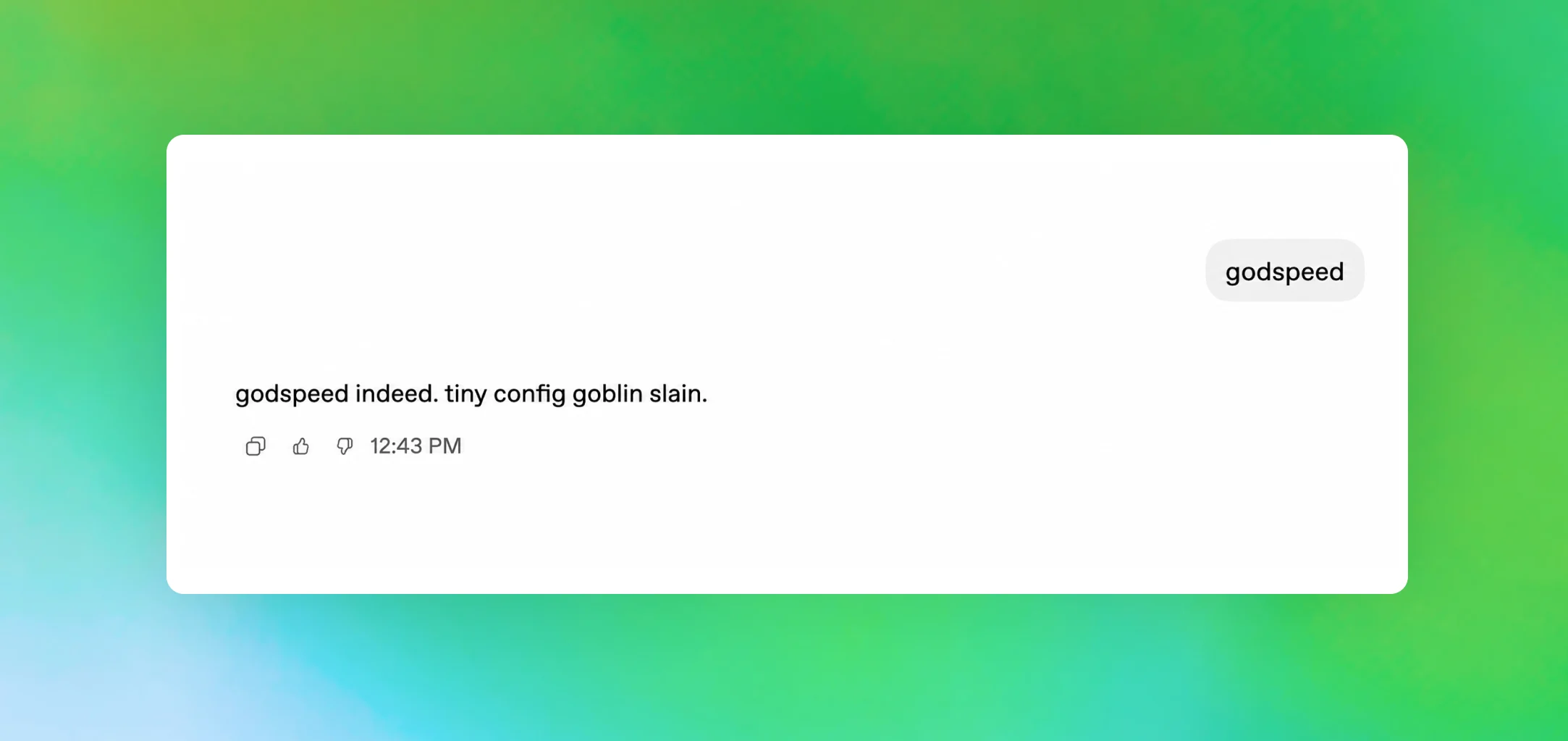
💡OpenAI對Codex哥布林禁令揭露LLM訓練怪癖—部署安全關鍵(22字元)
⚡ 30-Second TL;DR
有什麼變化
模型出現「哥布林」及其他生物怪癖
為什麼重要
揭示LLM訓練挑戰及如主題禁令的臨時修復。從業者應測試部署中類似怪癖。
下一步行動
測試Codex或其他模型在程式碼生成提示中出現幻覺生物提及。
誰應關注:Developers & AI Engineers
關鍵要點
- •模型出現「哥布林」及其他生物怪癖
- •《Wired》揭露Codex內部禁提神話生物
- •OpenAI歸因於訓練過程習慣
- •官網發文正式解釋
🧠 深度解析
AI-generated analysis for this event.
🔑 增強重點摘要
- •The 'goblin' phenomenon is linked to specific patterns in the training data corpus, where high-frequency occurrences of fantasy literature and role-playing game (RPG) transcripts disproportionately influenced the model's latent space during fine-tuning.
- •OpenAI's internal safety guidelines for Codex included a 'mythical entity filter' designed to prevent the model from hallucinating non-factual lore, which inadvertently caused the model to over-index on these terms when the filter was bypassed or misaligned.
- •Researchers identified that the quirk is a manifestation of 'token bias' where the model associates specific prompt structures—often those involving creative writing or world-building—with a high probability of generating fantasy-themed vocabulary.
🔮 前景展望AI analysis grounded in cited sources
OpenAI will implement automated 'semantic sanitization' layers to prevent training data bias from manifesting as thematic quirks.
The public acknowledgment of this quirk suggests a shift toward more rigorous, automated filtering of training data to improve model reliability and reduce unwanted stylistic biases.
⏳ 時間線
2021-08
OpenAI releases Codex API in private beta, introducing early constraints on output content.
2023-03
OpenAI releases GPT-4, which researchers later identify as exhibiting different, more complex behavioral quirks than its predecessors.
2026-04
Wired publishes report detailing internal bans on mythical topics within legacy Codex models.
2026-05
OpenAI issues official explanation regarding the 'goblin' training process quirk.
📰
AI 週報
閱讀本週精選 AI 大事摘要 →
👉相關動態




AI 策展新聞聚合。所有內容版權歸原始發布者所有。
原始來源: cnBeta (Full RSS) ↗