First atmosphere detected on habitable-zone exoplanet
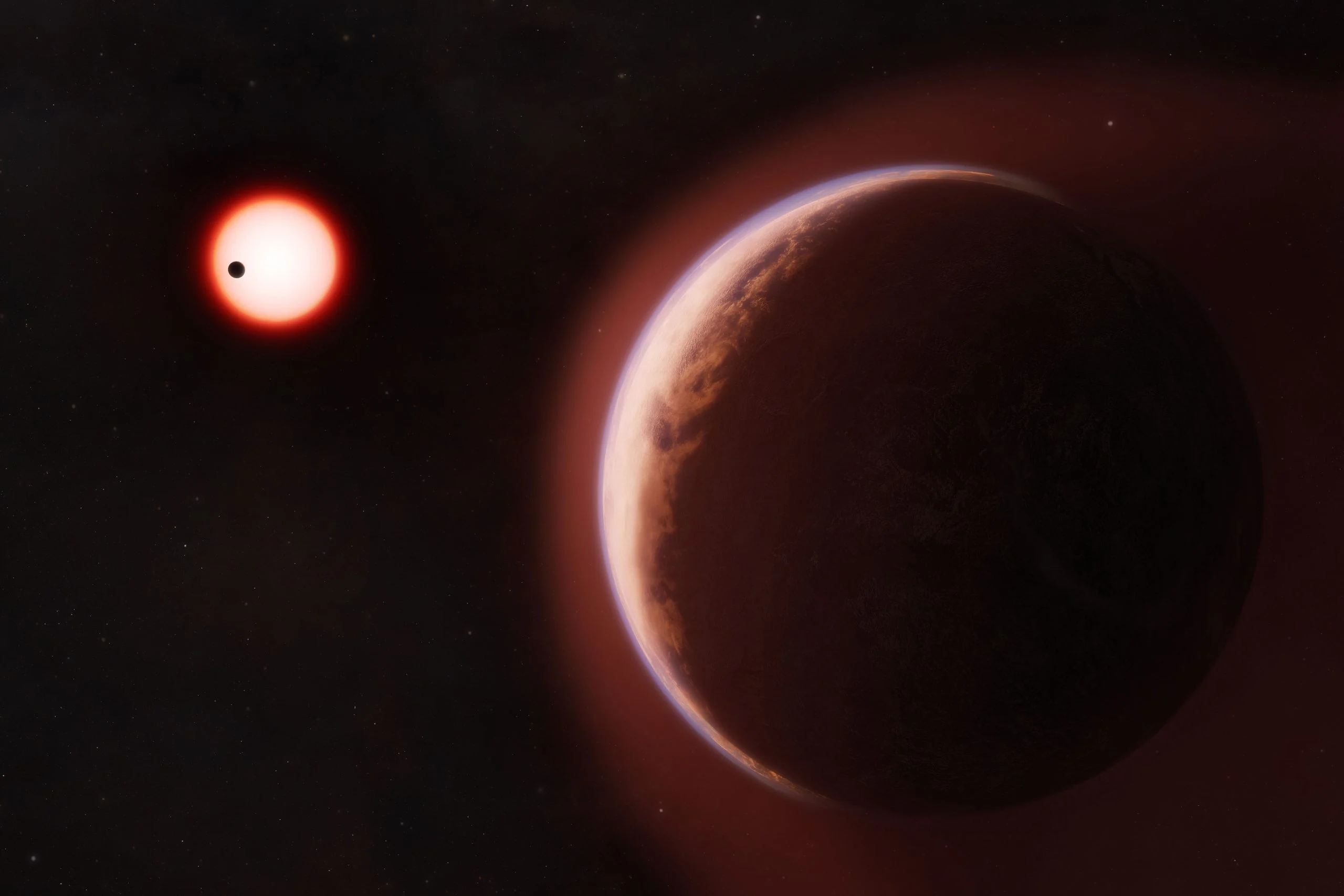
💡A breakthrough in space exploration data that sets new benchmarks for planetary atmospheric detection models.
⚡ 30-Second TL;DR
What Changed
Detected slow-leaking helium streams on LHS 1140 b
Why It Matters
This finding provides a new target for atmospheric composition analysis, potentially informing future astrobiology research and data modeling techniques.
What To Do Next
Incorporate exoplanet atmospheric data sets into your climate modeling or pattern recognition algorithms to refine planetary classification.
Key Points
- •Detected slow-leaking helium streams on LHS 1140 b
- •Confirms the planet retains its own atmosphere
- •First clear atmospheric detection in a habitable zone
🧠 Deep Insight
AI-generated analysis for this event — not the original article.
🔑 Enhanced Key Takeaways
- •LHS 1140 b is classified as a 'super-Earth' with a radius approximately 1.7 times that of Earth, suggesting it may be a 'water world' or 'eyeball planet' rather than a purely rocky terrestrial body.
- •The atmospheric detection was made possible primarily through observations by the James Webb Space Telescope (JWST), specifically utilizing the NIRISS and NIRSpec instruments.
- •Data analysis suggests the planet may possess a nitrogen-rich atmosphere, which is a critical component for potential habitability compared to hydrogen-dominated atmospheres found on mini-Neptunes.
- •The planet orbits a red dwarf star, and its atmospheric stability is surprising given the high levels of stellar activity typically associated with such stars, which often strip atmospheres away.
- •Researchers utilized transmission spectroscopy, a method that analyzes starlight filtering through the planet's atmosphere during transit, to identify the chemical signatures.
🛠️ Technical Deep Dive
- Host Star: LHS 1140, an M-dwarf star located in the constellation Cetus.
- Orbital Period: Approximately 24.7 days, placing it firmly within the conservative habitable zone.
- Detection Method: Transmission spectroscopy using JWST's Near-Infrared Imager and Slitless Spectrograph (NIRISS) and Near-Infrared Spectrograph (NIRSpec).
- Atmospheric Composition Hypothesis: Models favor a nitrogen-dominated atmosphere, potentially with a significant liquid water ocean at the substellar point.
- Surface Gravity: Estimated to be significantly higher than Earth's, influencing atmospheric retention and potential geological activity.
🔮 Future ImplicationsAI analysis grounded in cited sources
⏳ Timeline
Weekly AI Recap
Read this week's curated digest of top AI events →
👉Related Updates
AI-curated news aggregator. All content rights belong to original publishers.
Original source: cnBeta (Full RSS) ↗
This is a summary, not the original. Read the source, or get the weekly briefing.
The weekly digest
One email a week. Unsubscribe anytime.