All Updates
Page 88 of 802
April 15, 2026
Public Skepticism Persists for Robotaxis
Polls over a decade show deep public distrust of autonomous vehicles despite safety advantages. Robotaxis now operate in about a dozen cities, with Waymo securing customers, but broad acceptance remains elusive. Skepticism endures amid technology ups and downs.
ML Paper Publish Criteria for Modest Results
New researcher seeks advice on publishing ML paper at conference for stock index forecasting with robust but low predictive power. Uses SHAP on random forest to highlight regime shift issues. Wonders if framing as interpretability diagnostic aids acceptance.
AI Vibe-Coding Obsoletes Pure Coders
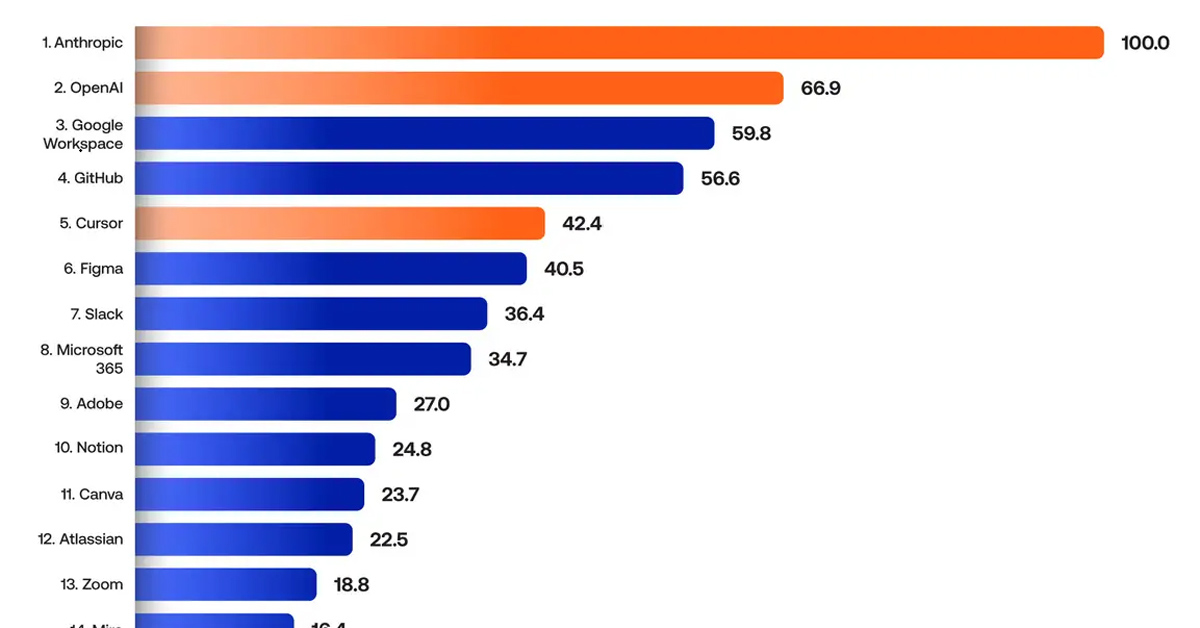
Anthropic's Claude drives $300B ARR via enterprise AI coding tools, enabling non-coders to prototype rapidly. Vibe-Coding shifts focus from code control to intent expression, with Chinese firms like ByteDance's Trae and Alibaba's Qwen3-Coder accelerating the trend. Traditional programmers face devaluation as AI handles full dev workflows.
Spotify Adds Physical Books and Global Page Match
Spotify launched physical book sales in the US and UK via partnership with Bookshop.org, using affiliate links on audiobook pages in the app. Page Match feature, which syncs scanned book pages with audiobooks, now supports over 30 languages. This enhances the audiobook experience alongside digital offerings.
Humwork Launches First A2P AI-Human Marketplace
Humwork has launched the first A2P marketplace connecting AI agents to verified human experts. Connections occur via MCP in under 30 seconds. The platform is backed by Y Combinator.
Microsoft Cuts Windows 365 SMB Prices 20%
Microsoft will reduce Windows 365 Business prices by 20% for SMBs starting May 1, 2026, making a prior promo permanent. A new on-demand start feature will slightly delay Cloud PC startups after prolonged disconnection. Analysts foresee limited adoption boost despite PC price hikes from memory shortages.
Gemini 3.1 Flash TTS Launches Expressive Controls
DeepMind unveils Gemini 3.1 Flash TTS, the next generation of expressive AI speech synthesis. The model introduces granular audio tags for precise control over AI-generated audio. This enables highly customizable and natural-sounding speech output.
US Gov to Survey Data Center Power Use
The US Energy Information Administration plans a mandatory assessment of data centers' energy use. This follows a letter sent to two senators, obtained by WIRED. It addresses rising power demands from tech infrastructure.
TSMC Stock Surges to Record High on AI Boom
Retail investor buying has driven TSMC shares to a record high. The surge aligns with the roaring return of the AI trade, signaling renewed demand for semiconductors.
Blancco Launches Rapid Mac Erasure Solution
Blancco and Cambrionix introduce a solution erasing 16 Macs in under 20 minutes amid accelerating enterprise Mac adoption and strong second-user demand. It certifies data removal to standards, reinstalls OS, and scales to 48 Macs/hour. High residual value and sustainability drive Mac reuse growth.
Big Tech Quietly Pays AI Agent Bug Bounties
Security researcher Aonan Guan exploited prompt injection vulnerabilities in AI agents from Anthropic, Google, and Microsoft via GitHub Actions integrations, stealing API keys and tokens. The companies paid bug bounties—$100 from Anthropic, $500 from GitHub, and an undisclosed amount from Google—but issued no public advisories.
Networks Fail AI Traffic, Experts Warn
AI is reshaping network infrastructure demands, leaving many organizations unprepared, including neocloud providers. Experts highlight overfocus on compute at the expense of data movement. Alarms are sounding over inadequate network capacity for AI workloads.
Qwen-Code v0.14.5: CLI Boost & Agent Fixes
Qwen-Code releases v0.14.5 with key additions like /context usage exposure in CLI/SDK non-interactive mode, startup performance profiler, and fork subagents for context sharing. Fixes cover rate-limit detection, VSCode tab overflow, and Gemini baseUrl respect. It discontinues Qwen OAuth free tier by 2026-04-15.
English-to-Neural Programs Compiler Launched
ProgramasWeights compiles English function descriptions into 22MB LoRA adapters and pseudo-programs that run locally via llama.cpp on a fixed Qwen 0.6B interpreter. Trained on 10M synthetic examples by a 4B LM compiler. Achieves 73.4% on FuzzyBench, matching 32B prompting at low cost.
Google Bans Back Button Hijacking as Spam
Google now classifies back button hijacking as spam, targeting sites abusing the browser History API to trap users. Enforcement starts June 15, 2026, with penalties including manual actions and ranking demotions. Site owners remain liable even for third-party code.
China L2 ADAS Safety Standard Draft Released
MIIT released the draft mandatory national standard for safety requirements of L2 combined driving assistance systems, co-drafted by Huawei Yinwang, Xiaomi Auto, BYD, Tesla, and others. Public comments are open from April 16-22, 2026, with implementation planned for January 1, 2027. The standard emphasizes driver engagement, monitoring, and system disablement to prevent misuse.
Allbirds Pivots to AI Services
Fashion brand Allbirds is desperately pivoting to an AI services company to boost its stock. The move is likened to the 2017 'Long Island Blockchain' hype frenzy. It's highlighted in Ars Technica's Bubble Watch series.
Rich Custom Tooltips in QuickSight
Amazon QuickSight introduces sheet tooltips for dashboard authors. Users can design custom layouts using free-form sheets that combine charts, KPI metrics, text, and visuals. These tooltips render dynamically when hovering over data points.
Speculative Decoding Boosts LLM Inference
Learn how speculative decoding accelerates decode-heavy LLM inference on AWS Trainium2. It reduces cost per generated token using vLLM integration. The post explains the technique and benefits.
590GB SEC EDGAR Dataset Open-Sourced
Datamule, Teraflop AI, and Eventual released a 590GB SEC EDGAR dataset on Hugging Face with 8 million filings and 43 billion tokens. It offers free access to parsed financial reports like 10-K and 10-Q, bypassing costly APIs. Data was collected via datamule-python and parsed using selectolax and custom libraries.