Waymo Recalls 3,800 Vehicles Over Construction Zone Risks
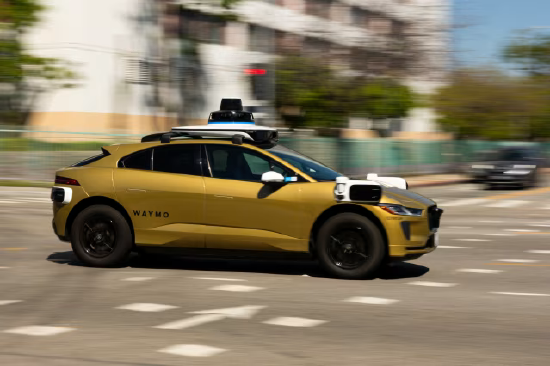
💡Critical safety recall for Waymo's 5th-gen stack reveals limitations in real-world construction zone navigation.
⚡ 30-Second TL;DR
What Changed
Recall affects 3,800+ vehicles with 5th-gen autonomous systems
Why It Matters
This highlights the critical challenge of edge-case perception in autonomous driving. It underscores the need for more robust semantic segmentation and map-data integration in real-world deployment.
What To Do Next
Review your computer vision pipeline's ability to handle non-standard signage and dynamic environmental changes.
Key Points
- •Recall affects 3,800+ vehicles with 5th-gen autonomous systems
- •Vehicles failed to detect highway construction zone signage
- •Safety incidents triggered the mandatory software/system update
🧠 Deep Insight
AI-generated analysis for this event — not the original article.
🔑 Enhanced Key Takeaways
- •The recall specifically targets the Waymo Driver software version 4.31.0, which exhibited a regression in its perception stack's ability to classify traffic cones and temporary barriers in high-speed environments.
- •NHTSA documentation indicates that while no collisions resulted in injuries, the software error led to at least two documented instances of vehicles driving onto closed highway shoulders.
- •Waymo has already deployed an over-the-air (OTA) update to the affected fleet, meaning the recall is primarily a regulatory compliance action rather than a physical service center requirement.
📊 Competitor Analysis▸ Show
| Feature | Waymo (5th Gen) | Tesla (FSD) | Zoox |
|---|---|---|---|
| Sensor Suite | LiDAR, Radar, Cameras | Cameras Only | LiDAR, Radar, Cameras |
| Operational Design Domain | Geofenced Urban/Suburban | Unrestricted (Level 2) | Geofenced Urban |
| Regulatory Status | Robotaxi (Driverless) | ADAS (Supervised) | Robotaxi (Testing) |
🛠️ Technical Deep Dive
- The issue stems from the perception system's 'Object Detection and Classification' module, specifically the neural network's failure to weight temporary construction signage as high-priority obstacles.
- The 5th-generation hardware suite utilizes a combination of long-range LiDAR and high-resolution cameras; the failure occurred when the sensor fusion layer incorrectly prioritized map data over real-time visual input from construction cones.
- Waymo's software architecture relies on a 'Behavior Prediction' layer that failed to interpret the erratic movement of traffic cones as a dynamic boundary change, leading the path planner to treat the construction zone as a drivable lane.
🔮 Future ImplicationsAI analysis grounded in cited sources
⏳ Timeline
📰 Event Coverage
Weekly AI Recap
Read this week's curated digest of top AI events →
👉Related Updates


AI-curated news aggregator. All content rights belong to original publishers.
Original source: cnBeta (Full RSS) ↗
This is a summary, not the original. Read the source, or get the weekly briefing.
Weekly AI briefing
One email a week. Unsubscribe anytime.