ZS Secures Ad-Hoc Analytics at Enterprise Scale
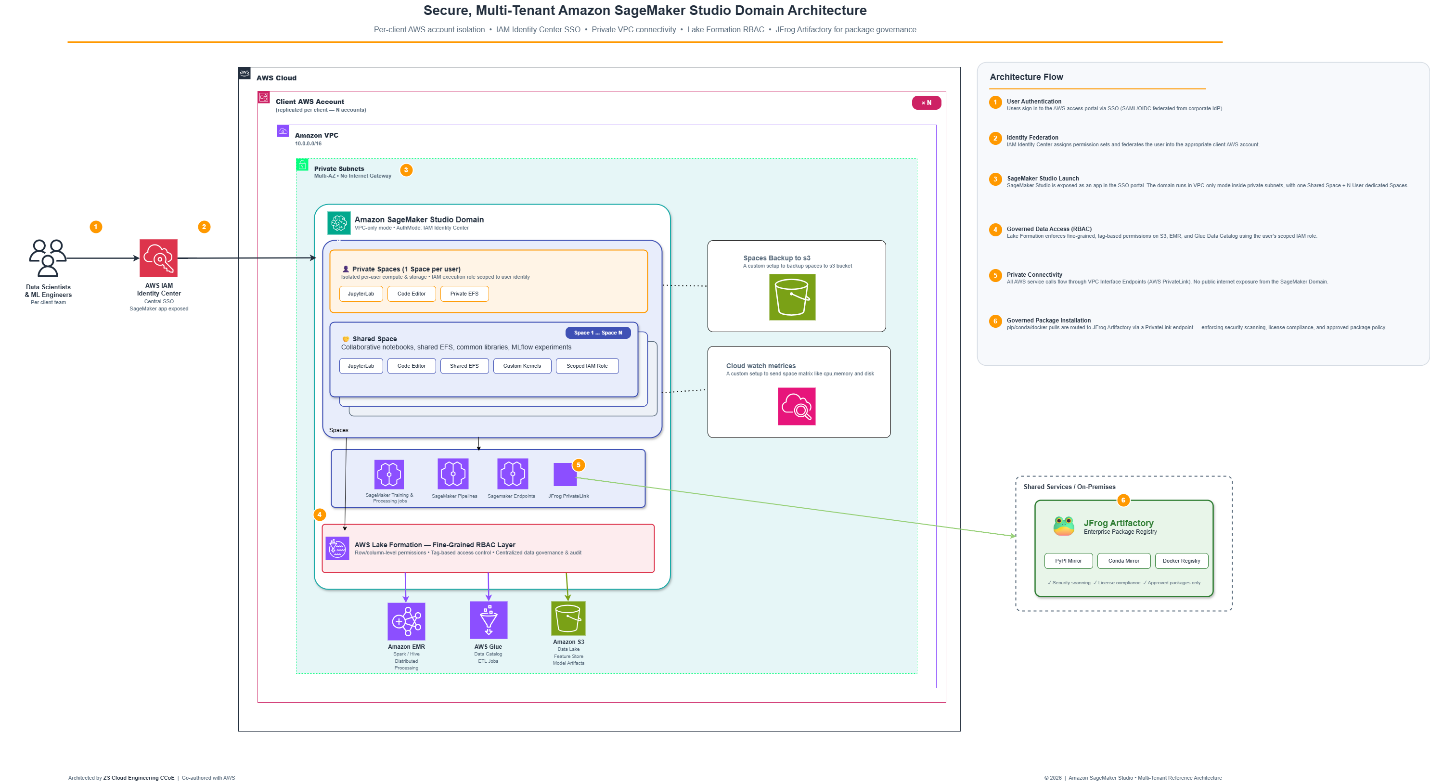
💡Learn how ZS serves 1,000+ daily users while maintaining healthcare-grade SageMaker governance.
⚡ 30-Second TL;DR
What Changed
The platform supports secure ad-hoc analytics workflows
Why It Matters
ZS demonstrates that governed self-service analytics can scale beyond a small data science team. Its approach is relevant to enterprises that need to provide broad model and data access without weakening compliance controls.
What To Do Next
Map your SageMaker domain architecture against ZS's scale, then define governance controls for self-service analytics before expanding access to more teams.
Key Points
- •The platform supports secure ad-hoc analytics workflows
- •Healthcare-grade governance is integrated into the SageMaker environment
- •More than 1,000 daily active users rely on the platform
- •The deployment spans over 200 SageMaker domains
🧠 Deep Insight
Background and context from public sources — not the original article. 7 sources cited.
🔑 Enhanced Key Takeaways
- •ZS leverages Amazon FSx for NetApp ONTAP to provide dynamic, isolated storage volumes for high-performance, storage-intensive analytics workloads.
- •The firm utilizes a hybrid search architecture combining Amazon OpenSearch Service and Amazon Neptune to enhance clinical knowledge retrieval.
- •ZS holds the AWS Generative AI Software Competency, reflecting their specialized capability in deploying production-grade AI models within the AWS ecosystem.
- •The company's 'ZS Atlas Intelligence' platform serves as the foundational layer for their AI-led analytics, supporting large-scale enterprise clients like Sanofi.
- •ZS focuses on transitioning clients from legacy, siloed data environments to cloud-native architectures that bridge the gap between ad-hoc exploration and production AI.
🛠️ Technical Deep Dive
- Integration of Amazon FSx for NetApp ONTAP for high-performance, private, and isolated storage mounting.
- Hybrid search implementation using Amazon OpenSearch Service for full-text indexing and Amazon Neptune for graph-based relationship mapping.
- Deployment of Amazon Bedrock and Amazon SageMaker as core components for industry-specific generative AI workflows.
- Utilization of Amazon Redshift for scalable data warehousing as part of their certified delivery designation.
🔮 Future ImplicationsAI analysis grounded in cited sources
⏳ Timeline
📎 Sources (7)
Factual claims are grounded in the sources below. Forward-looking analysis is AI-generated interpretation.
Weekly AI Recap
Read this week's curated digest of top AI events →
👉Related Updates
Same topic
Explore #secure-analytics
Same product
More on amazon-sagemaker
Same source
Latest from AWS Machine Learning Blog

ChatGPT Health Connects Clinicians to Epic Records
Atos Trains 400 Engineers in Agentic AI
Jamf Enforces Real-Time Bedrock Spending Limits
Boomi Scribe Automates Enterprise Integration Documentation
AI-curated news aggregator. All content rights belong to original publishers.
Original source: AWS Machine Learning Blog ↗
This is a summary, not the original. Read the source, or get the weekly briefing.
Weekly AI briefing
One email a week. Unsubscribe anytime.