Xreal reveals Android XR Aura glasses for later launch
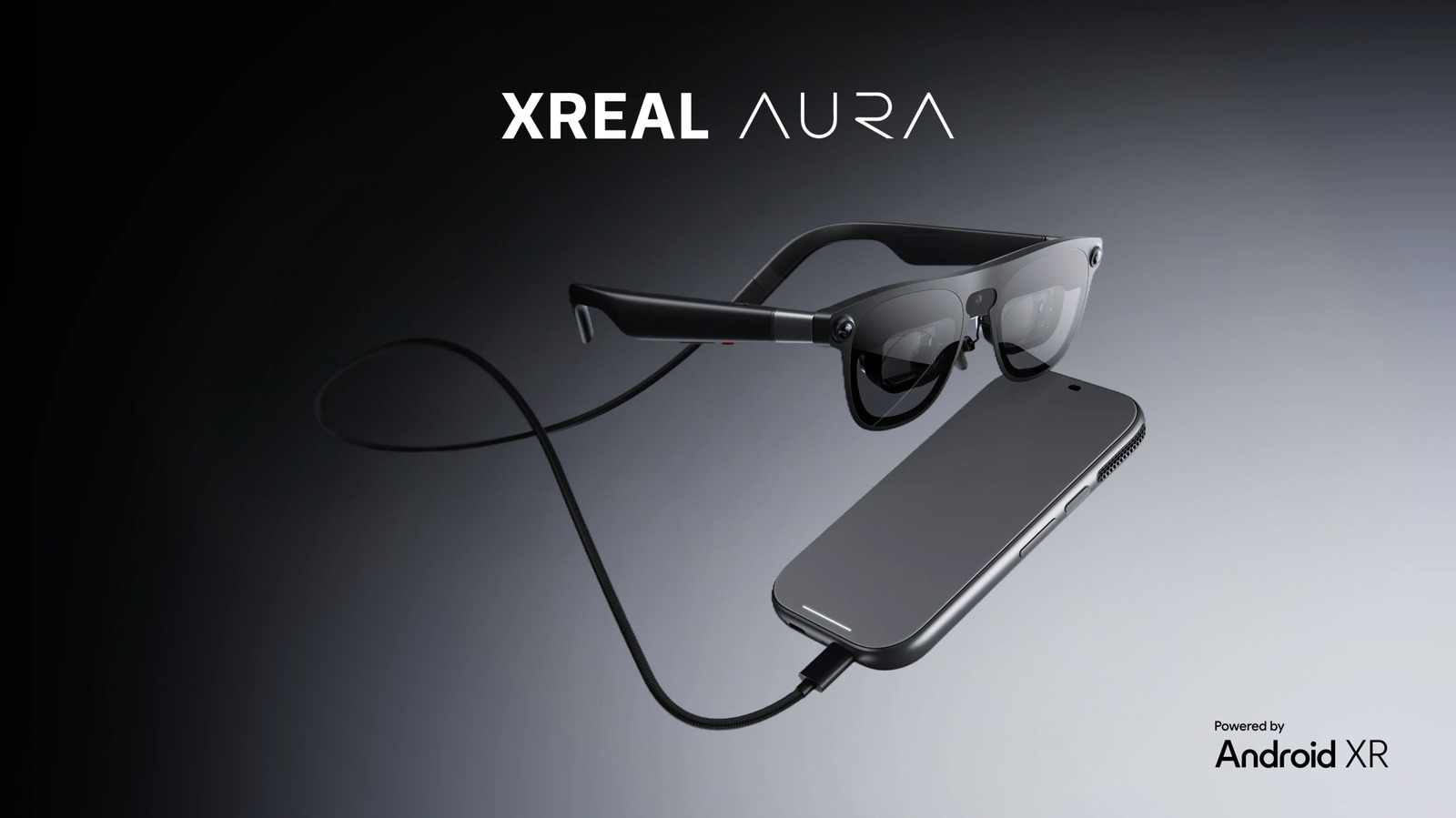
💡New Android-based XR hardware provides a broader canvas for deploying mobile AI applications in spatial environments.
⚡ 30-Second TL;DR
What Changed
Android-based XR platform integration
Why It Matters
The entry of Android-based XR hardware expands the ecosystem for developers building spatial applications outside of proprietary walled gardens.
What To Do Next
Evaluate the Android XR SDK to determine if your current mobile AI applications can be adapted for spatial display.
Key Points
- •Android-based XR platform integration
- •Paid reservation system now active
- •Full product launch slated for later this year
🧠 Deep Insight
Background and context from public sources — not the original article. 21 sources cited.
🔑 Enhanced Key Takeaways
- •The Aura glasses are designed for a "premium spatial computing experience" and are positioned as a "maximalist" take on Android XR, offering more immersive AR than previous Xreal models or minimalist smart glasses.
- •They feature a 70-degree field of view (FOV), which is the largest of any Xreal glasses to date, and include world-facing sensors for hand tracking, 6DoF tracking, and multimodal AI experiences.
- •The Aura glasses will be powered by Google's Android XR operating system, which integrates deeply with Gemini AI for intelligent interaction, voice commands, and real-time contextual information.
- •Unlike previous Xreal models that often functioned as virtual monitors, Aura is a full Android XR platform with a tethered computing puck that houses the main compute and battery, similar to Apple's Vision Pro.
- •Xreal is offering a limited-time reservation deal where a $99 deposit provides a $199 credit towards the final purchase, effectively a $100 discount, with the product launching in Fall 2026 in select markets including the US, UK, Japan, Canada, and South Korea.
📊 Competitor Analysis▸ Show
| Feature/Product | Xreal Aura | Viture Beast | Rokid Glasses | Ray-Ban Meta Display |
|---|---|---|---|---|
| Primary Use Case | Spatial Computing, Immersive AR, AI | Immersive Media, Gaming | Real-time Info Overlay, AI Assistant | AI, Camera, Audio, AR Display |
| Operating System | Android XR | Android XR (via Mobile Dock) | Proprietary (with Gemini integration) | Meta OS |
| Field of View (FOV) | 70° optical see-through | Not specified, but 174-inch virtual screen | Not specified, but visible micro-LED display | Not specified, in-lens screen |
| Tracking | Hand tracking, 6DoF tracking | 3DoF tracking | Not specified, likely 3DoF for display | Neural gesture control (with band) |
| AI Integration | Deep Gemini AI integration | Not specified | Native Google Gemini integration | Meta AI |
| Compute Architecture | Tethered computing puck (Snapdragon Reality Elite, X1S Spatial Coprocessor) | Requires neckband or tethered device | Standalone (49g) | Standalone (with neural gesture band) |
| Special Features | Electronically dimming lenses, fingerprint sensor on puck | Built-in myopia adjustment, electrochromic dimming | Lightweight (49g) | Live-captioning, socially acceptable design |
| Price | $99 reservation (for $199 credit), final price unannounced | $549 | AI Glasses Style: $299 | $799 |
| Availability | Fall 2026 (reservations open) | Available | Available | Available |
🛠️ Technical Deep Dive
- Operating System: Android XR
- Chipset: Snapdragon® Reality Elite platform and XREAL X1S Spatial Coprocessor, utilizing a dual-chip, split-compute architecture
- Display: 70° optical see-through display, described as "virtually borderless" and offering impressive sharpness and brightness.
- Tracking: World-facing sensor array supporting hand tracking and 6DoF (six degrees of freedom) tracking.
- Input Methods: Natively supports hands, voice, and a touchpad located on the computing puck. Also supports Bluetooth I/O devices like keyboards, mice, and game controllers.
- Memory/Storage Options: Available in configurations of 12GB RAM / 256GB storage and 16GB RAM / 512GB storage.
- Battery: 4455mAh (34.84Wh) battery housed within the tethered computing puck.
- Connectivity: Features Wi-Fi 6/6E and Bluetooth 5.3.
- Ports on Computing Puck: USB-C 1 for connecting glasses (5V⎓2A max, USB 3.1, full ADB support) and USB-C 2 for charging/DP-in (5-20V⎓3.25A, 65W Max, supports QC3.0/PD3.0 with PPS, DP Alt Mode Support).
- Special Features: Electronically-controlled dimming lenses that can adjust real-world visibility from 0% to nearly 100% light blocking, and a fingerprint button on the computing puck for power, system lock, secure data, and purchases.
- Weight: The glasses frames weigh less than 95g.
🔮 Future ImplicationsAI analysis grounded in cited sources
⏳ Timeline
📎 Sources (21)
Factual claims are grounded in the sources below. Forward-looking analysis is AI-generated interpretation.
Weekly AI Recap
Read this week's curated digest of top AI events →
👉Related Updates
AI-curated news aggregator. All content rights belong to original publishers.
Original source: Engadget ↗
This is a summary, not the original. Read the source, or get the weekly briefing.
Weekly AI briefing
One email a week. Unsubscribe anytime.