Tesla Robotaxis May Be Driving Unsupervised
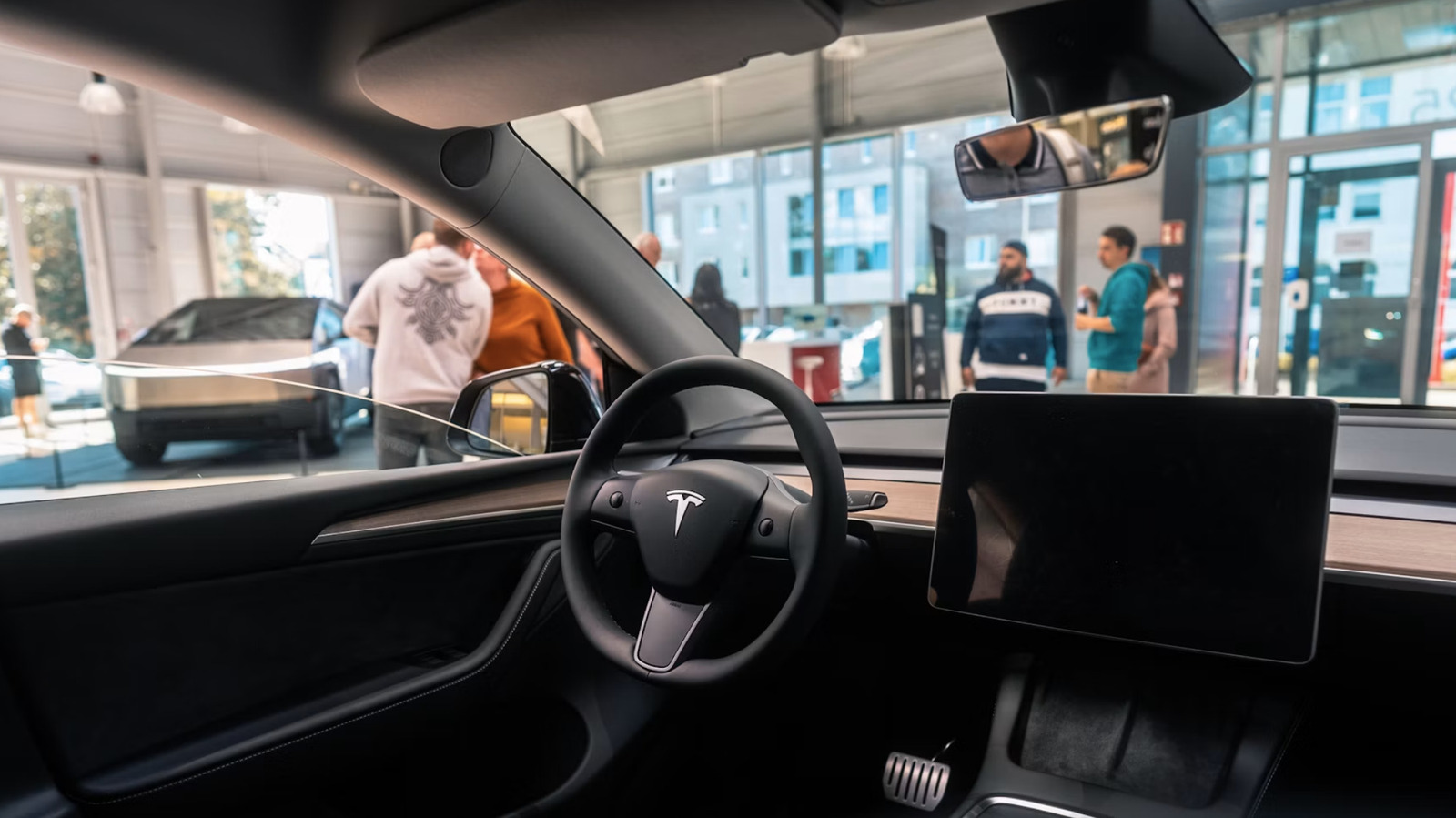
💡Tesla’s Austin fleet may mark a major step from supervised autonomy to real-world driverless operations.
⚡ 30-Second TL;DR
What Changed
The reported fleet is operating in Austin
Why It Matters
Unsupervised operation would represent a meaningful milestone for autonomous-vehicle deployment and real-world embodied AI. It could also raise new questions for developers about safety validation, operational monitoring, and regulatory readiness.
What To Do Next
Track Tesla Robotaxi’s Austin deployment updates and compare its stated supervision requirements with your own autonomous-system safety checklist.
Key Points
- •The reported fleet is operating in Austin
- •The vehicles may be driving fully autonomously
- •The development remains tentative rather than officially confirmed
🧠 Deep Insight
Background and context from public sources — not the original article. 13 sources cited.
🔑 Enhanced Key Takeaways
- •Tesla's unsupervised Robotaxi service in Austin has expanded to cover the entire metro area, including suburbs and the airport, a significant increase from its initial limited zone.
- •The expansion was quietly announced by Tesla's VP of AI, Ashok Elluswamy, on X, rather than through a formal press release.
- •An independent monitoring project, Robotaxi Tracker, observed 170 fully unsupervised trips across 54 vehicles in Austin over two weeks, confirming the shift to driverless operations.
- •Despite a recent claim by Tesla's VP of AI of "zero notable incidents" over 380,000 miles of unsupervised driving, a Tesla Robotaxi was filmed driving through plastic bollards in Austin on August 18, 2026.
- •Tesla is preparing to introduce its purpose-built Cybercab, a vehicle designed without a steering wheel or pedals, to the Austin fleet as early as August 2026, with initial rides for employees.
📊 Competitor Analysis▸ Show
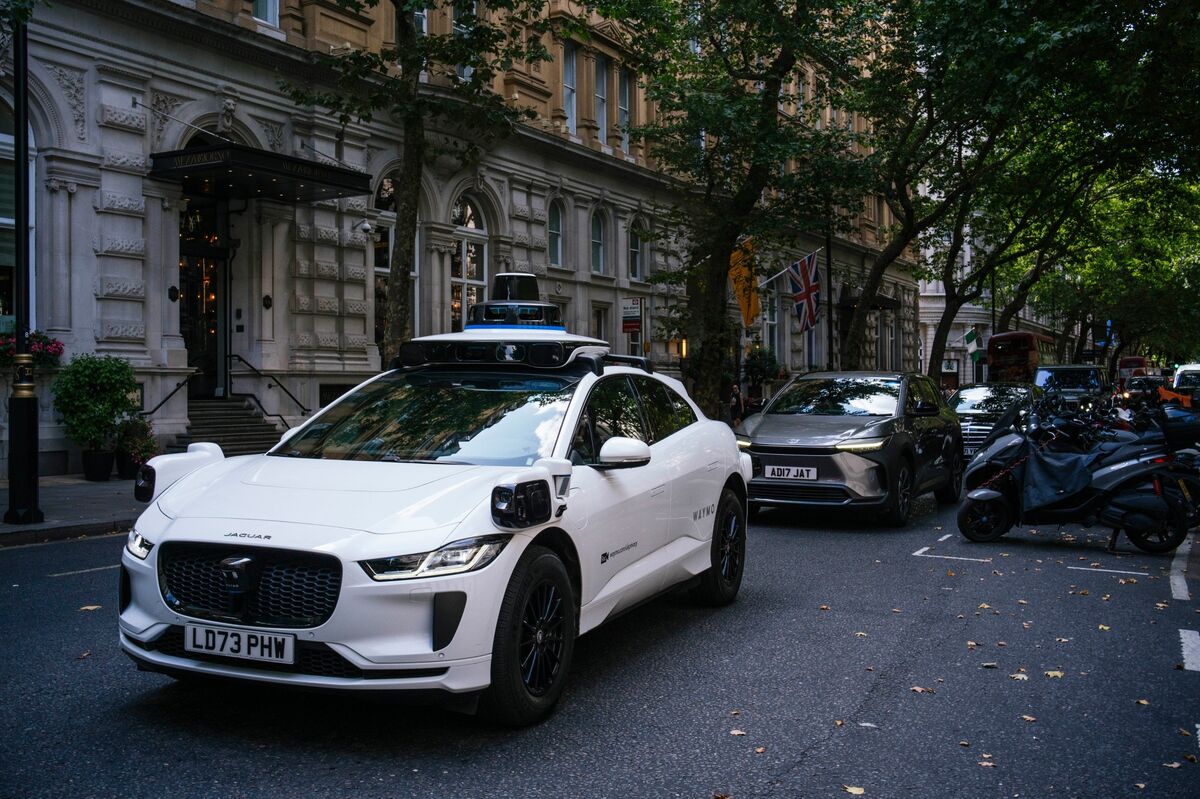
| Feature/Company | Tesla Robotaxi (Austin) | Waymo | Zoox | |---|---|---| | Operational Status | Fully unsupervised in Austin metro area; expanding to Dallas, Houston. | Commercial Robotaxi Network in multiple U.S. cities (e.g., Phoenix, San Francisco, Austin). | Limited service in Las Vegas and San Francisco. | | Fleet Size (Austin) | ~54 verified fully unsupervised vehicles (as of Aug 2026). | Over 250 vehicles in Austin area (as of June 2026). | N/A (not operating in Austin) | | Total Unsupervised Miles | >380,000 miles across six cities in two states (as of July 2026). | >220 million rider-only miles. | N/A (data not found) | | Sensor Suite | Pure vision (8 cameras). | LiDAR, radar, cameras, HD maps. | N/A (not explicitly detailed in search results, but generally uses a multi-sensor approach like Waymo) | | Pricing | Expected to undercut Uber and Waymo. | Broadly competitive with standard UberX fares. | N/A (not explicitly detailed in search results) | | Safety Incidents | One reported incident of driving through bollards (Aug 2026). | N/A (no specific recent incidents found in search results for comparison) | N/A (no specific recent incidents found in search results for comparison) | | Vehicle Type | Modified Model Ys; purpose-built Cybercab coming soon. | Custom-built autonomous vehicles (e.g., Jaguar I-Pace with Waymo Driver). | Purpose-built, bidirectional autonomous vehicles. |
🛠️ Technical Deep Dive
- Perception System: Pure vision-based solution utilizing 8 cameras providing a 360-degree field of view with a detection range of up to 250 meters.
- Environmental Modeling: Employs an Occupancy Network for 3D environment perception and motion prediction.
- Decision Making: Generates a Bird's Eye View (BEV) space from multi-camera data fusion to aid in decision-making and planning.
- Neural Network Architecture:
- Uses RegNets (a variant of Residual Neural Networks) as a feature extractor to process video streams from cameras, generating multi-scale feature representations.
- Leverages Transformer architecture to process time series data from continuous video frames, capturing long-distance dependencies through self-attention mechanisms.
- FSD V13 (Summer 2025) represents a significant architectural shift towards a more unified, end-to-end artificial intelligence, moving away from siloed neural networks and human-written code.
- The system is trained end-to-end from images to control commands (steering, acceleration, deceleration).
- Hardware:
- Custom multiprocessor System-on-a-Chip (SoC), the Tesla FSD chip, capable of 144 trillion operations per second.
- Each FSD computer includes two identical chips for redundancy, ensuring fault tolerance and reliability.
- Processing is done entirely within the vehicle, without reliance on cloud-based computation for real-time driving.
- Training Infrastructure: Relies on NVIDIA GPUs and Tesla's custom-built supercomputer, Dojo, optimized for video training workloads and high-bandwidth data movement.
- Learning Mechanism: Utilizes a "shadow mode" where the AI learns from human driving decisions in the background, incrementally training existing models with global anonymous driving data.
🔮 Future ImplicationsAI analysis grounded in cited sources
⏳ Timeline
📎 Sources (13)
Factual claims are grounded in the sources below. Forward-looking analysis is AI-generated interpretation.
Weekly AI Recap
Read this week's curated digest of top AI events →
👉Related Updates

AI-curated news aggregator. All content rights belong to original publishers.
Original source: Engadget ↗
This is a summary, not the original. Read the source, or get the weekly briefing.
Weekly AI briefing
One email a week. Unsubscribe anytime.