XPeng 2nd-Gen VLA Rolls Out This Month
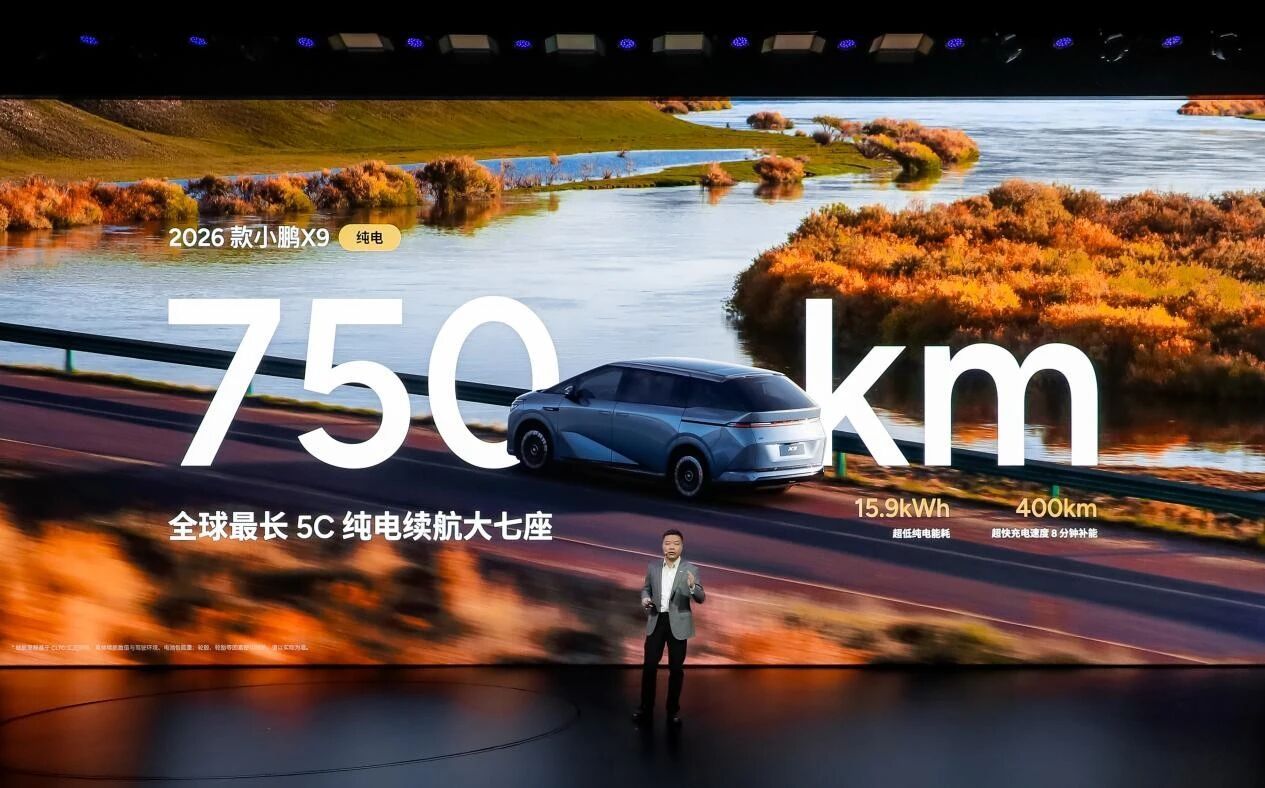
XPeng's 2nd-gen VLA launches—embodied AI boost for AV builders
30-Second TL;DR
What Changed
Second-gen VLA model launches this month
Why It Matters
Accelerates XPeng's embodied AI for autonomous driving. Competitive X9 pricing strengthens EV market position against rivals like Tesla.
What To Do Next
Benchmark XPeng's new VLA against open-source VLAs for AV simulation tasks.
Key Points
- •Second-gen VLA model launches this month
- •2026 X9 BEV priced from $42,800 to $51,000
- •VLA enables vision-language-action integration for vehicles
- •Part of XPeng's AI-driven EV advancements
Deep Insight
Background and context from public sources — not the original article. 8 sources cited.
Enhanced Key Takeaways
- •XPeng VLA 2.0 adopts a 'Vision-Implicit Token-Action' architecture, bypassing traditional language translation for direct visual-to-action generation.[1][2][3]
- •The model was trained on nearly 100 million unannotated driving video clips, equivalent to 65,000 years of human driving experience.[3][4][6]
- •Powered by Turing AI chips delivering 2,250 TOPS per chip, enabling 12x inference efficiency gains and deployment across cars, robots, and flying cars.[1][2][6]
- •VLA 2.0 serves as XPeng's first mass-produced physical world model, capable of self-evolving learning and cross-domain applications.[3][5]
Technical Deep Dive
- •Architecture shift to 'Vision-Implicit Token-Action' (V-Implicit Token-A) eliminates V-L-A language bottleneck, enabling end-to-end V-A output for human-like reflexes.[1][2][3]
- •Trained without data annotation using ~100 million real-world driving clips covering long-tail scenarios; generates adversarial scenarios for self-improvement.[3][4][6]
- •Deployed via custom compiler on Turing AI chip (2,250 TOPS/chip); model parameters 10x larger than mainstream, with 12x inference efficiency.[1][6]
- •Combines with VLT (Vision-Language-Thinking) and VLM for high-order capabilities like conversation, walking, and interaction in robots like IRON.[2][3][6]
- •XPeng World Base Models trained at 1B, 3B, 7B, 72B parameters; four-stage factory process: pre-training, distillation, continued training, vehicle deployment.[7]
Future ImplicationsAI analysis grounded in cited sources
Timeline
- 2024-Q2Turing AI chip enters mass production for VLA deployment.
- 2025-11XPeng AI Day unveils VLA 2.0, Robotaxi, next-gen IRON robot, and flying car applications.
- 2025-11FastDriveVLA optimization introduced for L4 autonomy on VLA 2.0 architecture.
- 2025-12Detailed analysis of FastDriveVLA confirms 13x narrow-road performance gains.
- 2026-03Second-gen VLA rolls out for vehicles including 2026 X9 BEV.
Sources (8)
Factual claims are grounded in the sources below. Forward-looking analysis is AI-generated interpretation.
Weekly AI Recap
Read this week's curated digest of top AI events →
Related Updates


AI-curated news aggregator. All content rights belong to original publishers.
Original source: Pandaily ↗
This is a summary, not the original. Read the source, or get the weekly briefing.
The weekly digest
One email a week. Unsubscribe anytime.