Ferroelectric Junction Achieves Giant TER
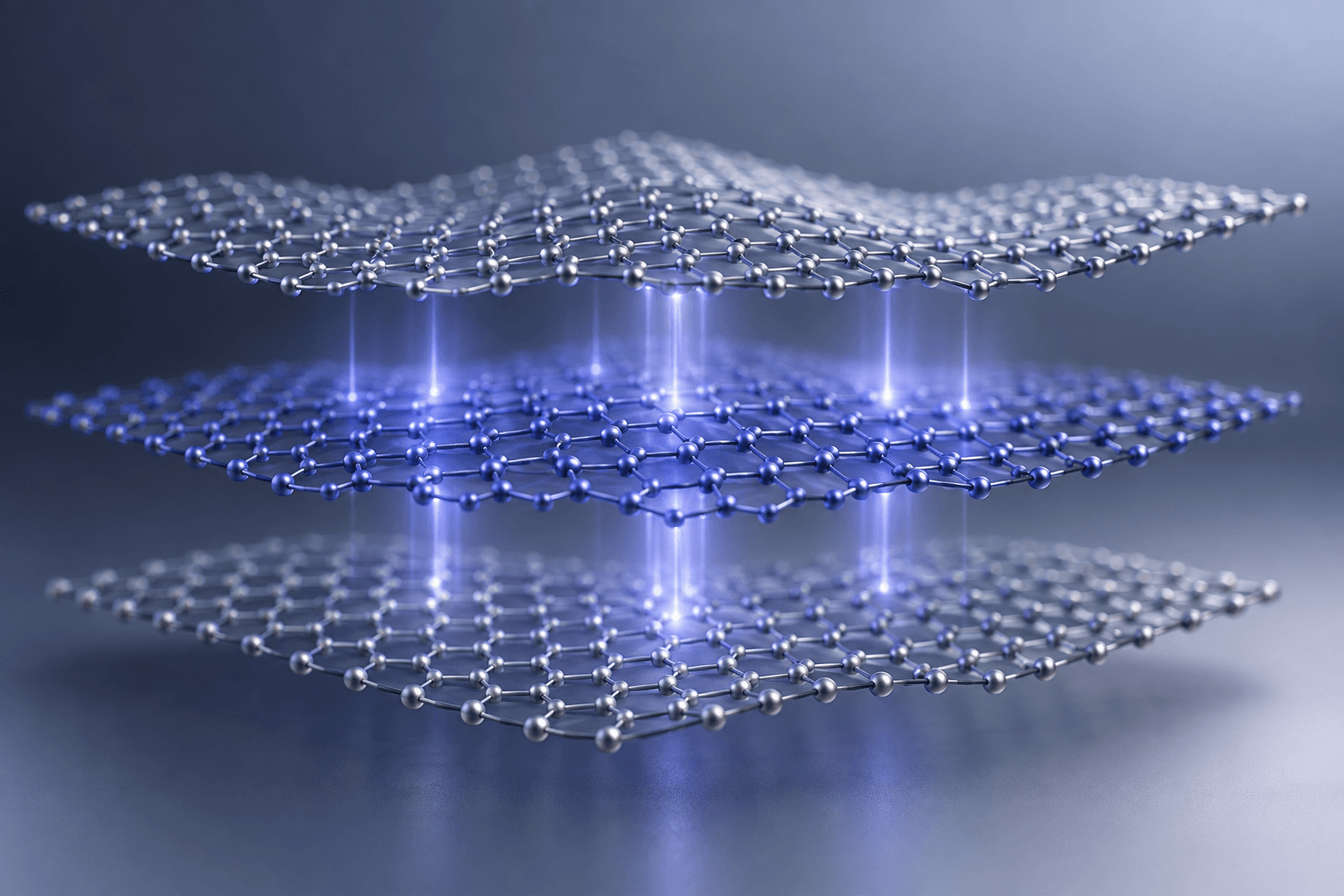
A research device pairs giant resistance contrast with ultra-low energy and extreme endurance for future AI memory.
30-Second TL;DR
What Changed
Tunnel electroresistance reached 1.9×10^7
Why It Matters
The combination of high resistance contrast, low energy, and endurance could support dense nonvolatile memory and neuromorphic hardware. Significant materials, fabrication, and integration work would still be needed before commercial deployment.
What To Do Next
Compare the reported junction metrics with your target memory or neuromorphic workload before considering it for prototype hardware.
Key Points
- •Tunnel electroresistance reached 1.9×10^7
- •Switching speed was reported at the nanosecond scale
- •Energy consumption was measured in femtojoules per bit with 10^11-cycle endurance
Deep Insight
Background and context from public sources — not the original article. 1 sources cited.
Enhanced Key Takeaways
- •The research was led by the Institute of Semiconductors of the Chinese Academy of Sciences (CAS) with collaborating institutions, published in Science.
- •The junction utilizes a vertical van der Waals heterostructure composed of Cr / h-BN / 3R-MoS2 / monolayer graphene, and demonstrated applicability with 1T'-ReS2.
- •The 1.9×10^7 TER ratio was measured at a read bias of 0.5 V, improving more than four orders of magnitude over prior sliding ferroelectric implementations.
- •Polarization reversal operates via interlayer atomic slip rather than conventional lattice ion displacement, preventing defect accumulation and structural breakdown.
- •The device couples the barrier height modulation of h-BN with the low density of states and weak electrostatic screening of monolayer graphene to overcome the weak polarization inherent to 2D ferroelectrics.
Competitor Analysis
- CAS 2D Sliding FTJ (Cr/h-BN/3R-MoS2/Graphene)
- Interlayer atomic sliding
- Conventional Oxide FTJ (Perovskite Oxides)
- Lattice ion displacement
- CAS 2D Sliding FTJ (Cr/h-BN/3R-MoS2/Graphene)
10^11 cycles
- Conventional Oxide FTJ (Perovskite Oxides)
- Typically 10^4 – 10^6 cycles (rapid wearout)
- CAS 2D Sliding FTJ (Cr/h-BN/3R-MoS2/Graphene)
- 1.9 × 10^7 (at 0.5 V read bias)
- Conventional Oxide FTJ (Perovskite Oxides)
- 10^2 – 10^4 (requires aggressive fields for higher)
- CAS 2D Sliding FTJ (Cr/h-BN/3R-MoS2/Graphene)
- Nanosecond-scale
- Conventional Oxide FTJ (Perovskite Oxides)
- Nanosecond-scale
- CAS 2D Sliding FTJ (Cr/h-BN/3R-MoS2/Graphene)
- Femtojoules per bit (fJ/bit)
- Conventional Oxide FTJ (Perovskite Oxides)
- Picojoules to Femtojoules per bit
- CAS 2D Sliding FTJ (Cr/h-BN/3R-MoS2/Graphene)
- 222 A/cm²
- Conventional Oxide FTJ (Perovskite Oxides)
- Variable / high tunneling attenuation
| Metric / Feature | CAS 2D Sliding FTJ (Cr/h-BN/3R-MoS2/Graphene) | Conventional Oxide FTJ (Perovskite Oxides) |
|---|---|---|
| Switching Mechanism | Interlayer atomic sliding | Lattice ion displacement |
| Fatigue / Endurance | 10^11 cycles | Typically 10^4 – 10^6 cycles (rapid wearout) |
| TER Contrast Ratio | 1.9 × 10^7 (at 0.5 V read bias) | 10^2 – 10^4 (requires aggressive fields for higher) |
| Switching Speed | Nanosecond-scale | Nanosecond-scale |
| Energy Consumption | Femtojoules per bit (fJ/bit) | Picojoules to Femtojoules per bit |
| On-State Current Density | 222 A/cm² | Variable / high tunneling attenuation |
Technical Deep Dive
- Heterostructure Stack: Vertical van der Waals (vdW) architecture configured as Cr / h-BN / 3R-MoS2 / monolayer graphene (also validated using 1T'-ReS2).
- Barrier and Screening Modulation: Compensates for remanent polarization 2 to 3 orders of magnitude weaker than perovskite oxides by pairing h-BN barrier height modulation with the low density of states and low electrostatic screening of monolayer graphene.
- Drive Performance: Delivers an on-state current density of 222 A/cm² alongside the giant on/off readout contrast.
- Polarization Reversal: Executes polarization through non-destructive interlayer slip instead of internal lattice defect-generating atomic shifts.
Future ImplicationsAI analysis grounded in cited sources
Timeline
- 2026-09CAS Institute of Semiconductors publishes breakthrough sliding ferroelectric tunnel junction in Science
Sources (1)
Factual claims are grounded in the sources below. Forward-looking analysis is AI-generated interpretation.
Weekly AI Recap
Read this week's curated digest of top AI events →
Related Updates



AI-curated news aggregator. All content rights belong to original publishers.
Original source: Pandaily ↗
This is a summary, not the original. Read the source, or get the weekly briefing.
The weekly digest
One email a week. Unsubscribe anytime.