Why AI Stalls Before Becoming Organizational Power
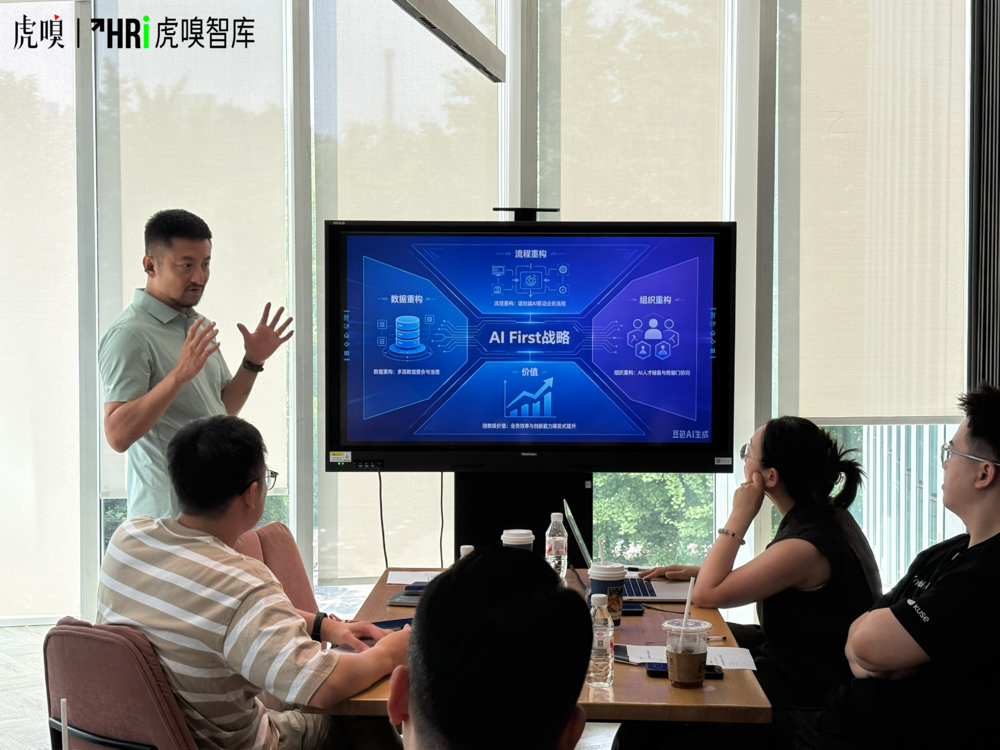
💡Learn why 200+ enterprise AI experiments still fail to become measurable operating gains.
⚡ 30-Second TL;DR
What Changed
Longfor’s company-wide Agent competition received more than 200 submissions, helping identify capable employees and viable business scenarios.
Why It Matters
The main enterprise AI bottleneck is organizational integration, not employee willingness to experiment. Projects that lack accountable owners, reliable data, workflow integration, and financial metrics are likely to remain demos instead of becoming durable capabilities.
What To Do Next
Prototype one Qwen Office Agent against a single revenue or cost KPI, log its inputs and outputs, and run a four-week controlled comparison before scaling it across teams.
Key Points
- •Longfor’s company-wide Agent competition received more than 200 submissions, helping identify capable employees and viable business scenarios.
- •AI projects should be evaluated against operating metrics such as cost, revenue, quality, and capacity rather than saved work hours alone.
- •Xiaoxiandun shifted from a knowledge assistant to analyzing complete customer and sales data, creating actionable service improvements.
- •Lola Rose reported that AI-assisted Xiaohongshu content planning increased direct-message initiation rates by approximately 50%.
🧠 Deep Insight
AI-generated analysis for this event.
🔑 Enhanced Key Takeaways
- •Enterprises are increasingly adopting 'Agent-as-a-Service' (AaaS) architectures to decouple AI logic from legacy ERP systems, allowing for modular updates without full-stack re-engineering.
- •The 'AI-Native Organization' framework is shifting focus from individual productivity tools to 'Human-in-the-loop' orchestration layers that manage cross-departmental data silos.
- •Recent industry data indicates that companies failing to integrate AI agents with real-time CRM and ERP data streams suffer from 'hallucination drift,' where AI outputs become disconnected from actual inventory and pricing realities.
- •The emergence of 'Agent Ops' (AOps) has become a critical discipline, focusing on the monitoring, version control, and performance tuning of autonomous agents in production environments.
- •Leading Chinese enterprises are moving away from general-purpose LLMs toward 'Small Language Models' (SLMs) for specific business tasks to reduce latency and operational costs while maintaining data privacy.
🛠️ Technical Deep Dive
- Implementation of RAG (Retrieval-Augmented Generation) pipelines is evolving from simple vector search to GraphRAG, which maps complex relationships between customer history and product catalogs to improve agent reasoning accuracy.
- Agentic workflows are increasingly utilizing ReAct (Reasoning and Acting) prompting patterns, allowing models to dynamically decide when to call external APIs versus when to generate text.
- Integration of multi-modal models allows agents to process unstructured data such as customer service call recordings and handwritten feedback forms, converting them into structured JSON payloads for downstream analytics.
- Deployment strategies now favor containerized micro-agents orchestrated via Kubernetes, enabling horizontal scaling of specific business functions like automated procurement or customer support triage.
🔮 Future ImplicationsAI analysis grounded in cited sources
⏳ Timeline
Weekly AI Recap
Read this week's curated digest of top AI events →
👉Related Updates




AI-curated news aggregator. All content rights belong to original publishers.
Original source: 虎嗅 ↗